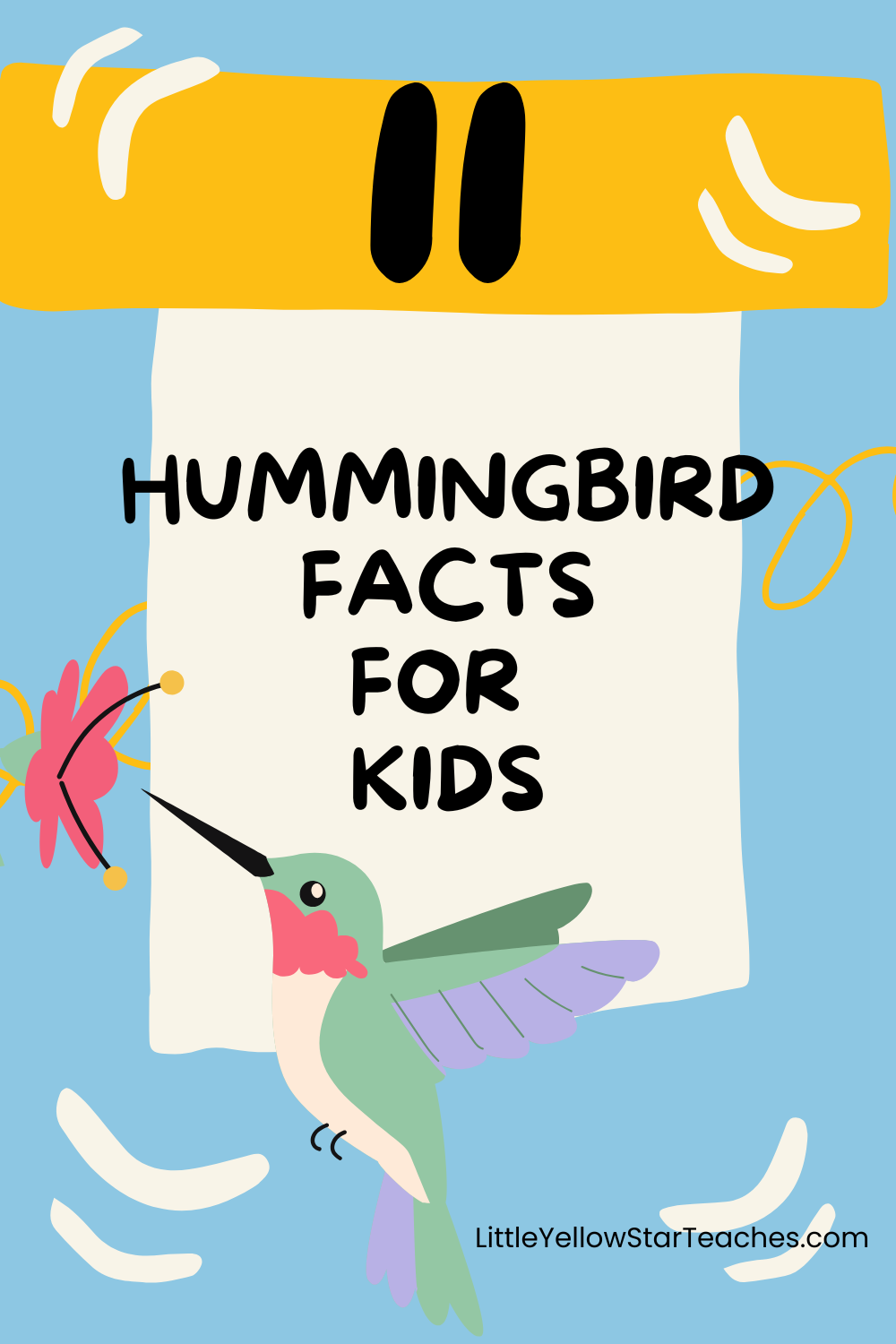
Have you ever seen a tiny bird hovering in front of a flower like a little helicopter? These hummingbird facts for kids will introduce you to one of the most amazing birds in the world. Hummingbirds are famous for their fast wings, bright colors, and love of sweet nectar. In this guide, you’ll learn what hummingbirds are, discover new vocabulary, try fun activities, and explore stories about these fascinating little birds.
***Disclosure: This post contains an Amazon affiliate link that at no additional cost to you, I may earn a small commission when you purchase through the link from my blog. Thank you for your support!
Table of Contents
- What is a Hummingbird?
- Teaching Resources
- 11 Hummingbird Facts For Kids
- Additional Resources
- Hummingbird Related Vocabulary Words
- Hummingbird Activity Ideas For Kids
- Hummingbird Related Stories and Myths
Check out these blog posts:
What is a Hummingbird?
A hummingbird is a very small bird known for its ability to hover in the air while drinking nectar from flowers. Hummingbirds get their name from the humming sound their wings make as they flap extremely fast—sometimes more than 50 times per second! These birds have long, thin beaks and special tongues that help them reach deep into flowers. Most hummingbirds live in North and South America and are important pollinators, helping flowers grow by spreading pollen.
Teaching Resources


11 Hummingbird Facts for Kids
1. Hummingbirds are tiny birds known for hovering while they drink nectar from flowers.
Hummingbirds are small birds that feed on nectar from flowers. They can hover in the air while drinking, which helps them reach nectar deep inside blossoms.
Source: National Geographic Kids
2. Hummingbirds are the only birds that can fly backward.
Unlike most birds, hummingbirds can fly in many directions, including backward. Their special wing movements allow them to maneuver easily while feeding from flowers.
Source: National Geographic
3. Their wings can beat 50 to 80 times per second.
Hummingbirds flap their wings incredibly fast—between 50 and 80 beats per second. This rapid motion helps them hover and move quickly through the air.
Source: Smithsonian National Zoo

4. Hummingbirds get their name from the humming sound their wings make.
When hummingbirds fly, their fast wingbeats create a soft buzzing or humming sound. This is how hummingbirds got their name.
Source: National Geographic Kids
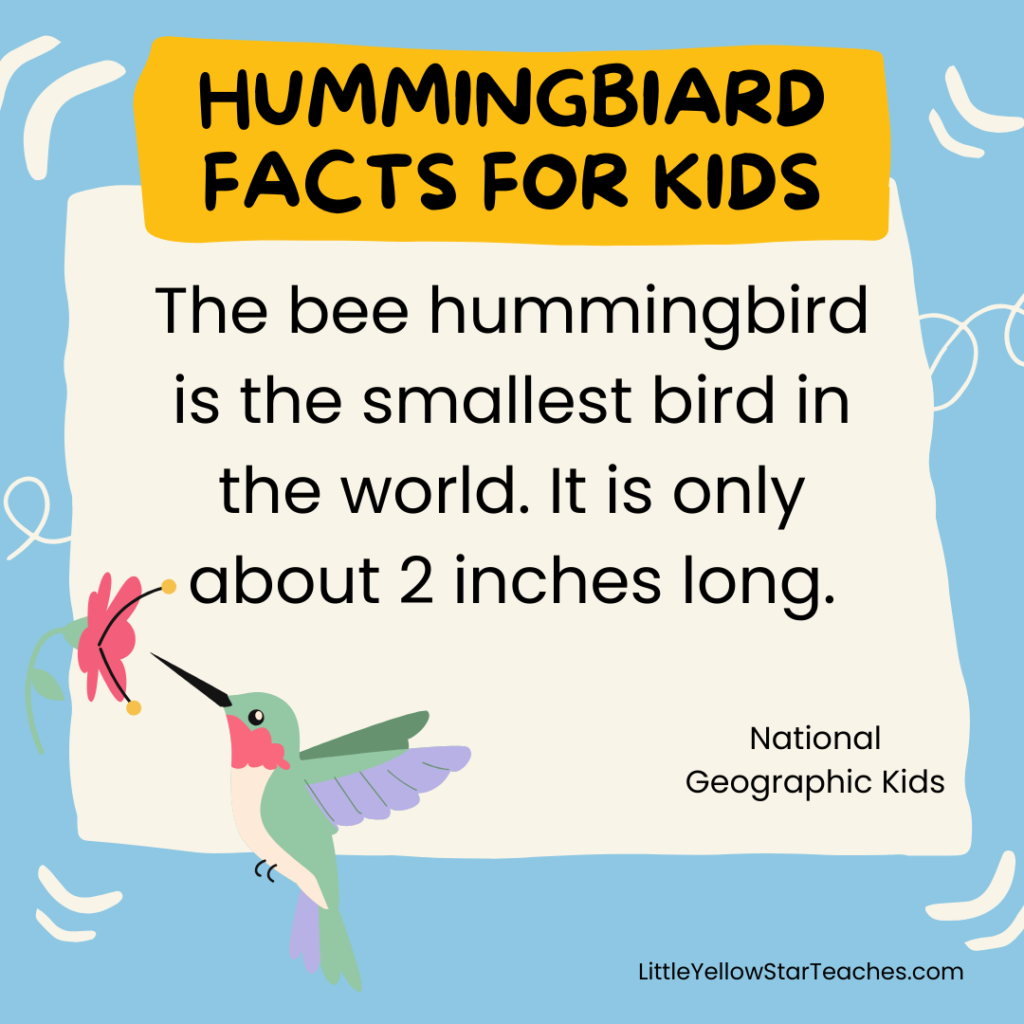
5. The bee hummingbird is the smallest bird in the world.
The bee hummingbird is the tiniest bird on Earth. It measures only about 2 inches (5 centimeters) long, which is about the size of a large insect.
Source: National Geographic Kids
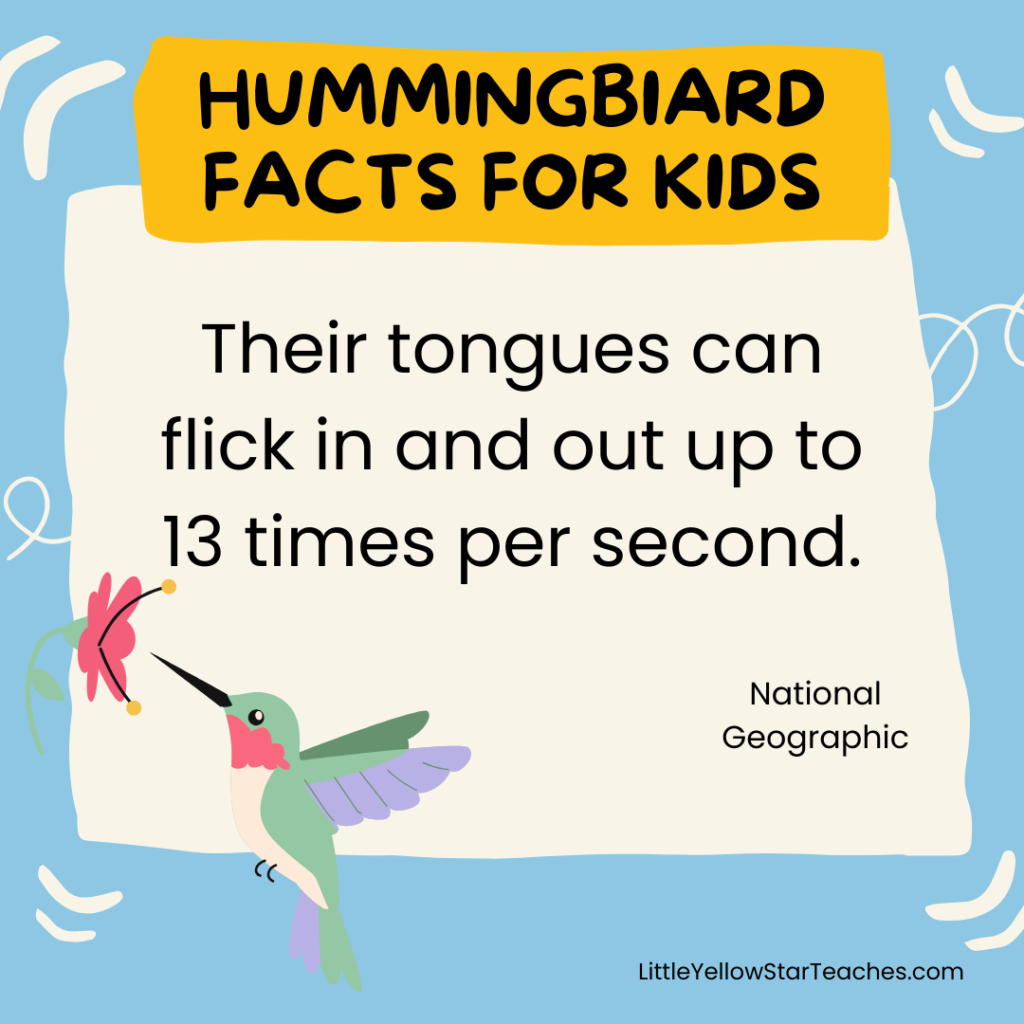
6. Their tongues can flick in and out up to 13 times per second.
Hummingbirds have long, flexible tongues that help them drink nectar quickly. Their tongues can flick in and out of flowers about 13 times every second.
Source: National Geographic
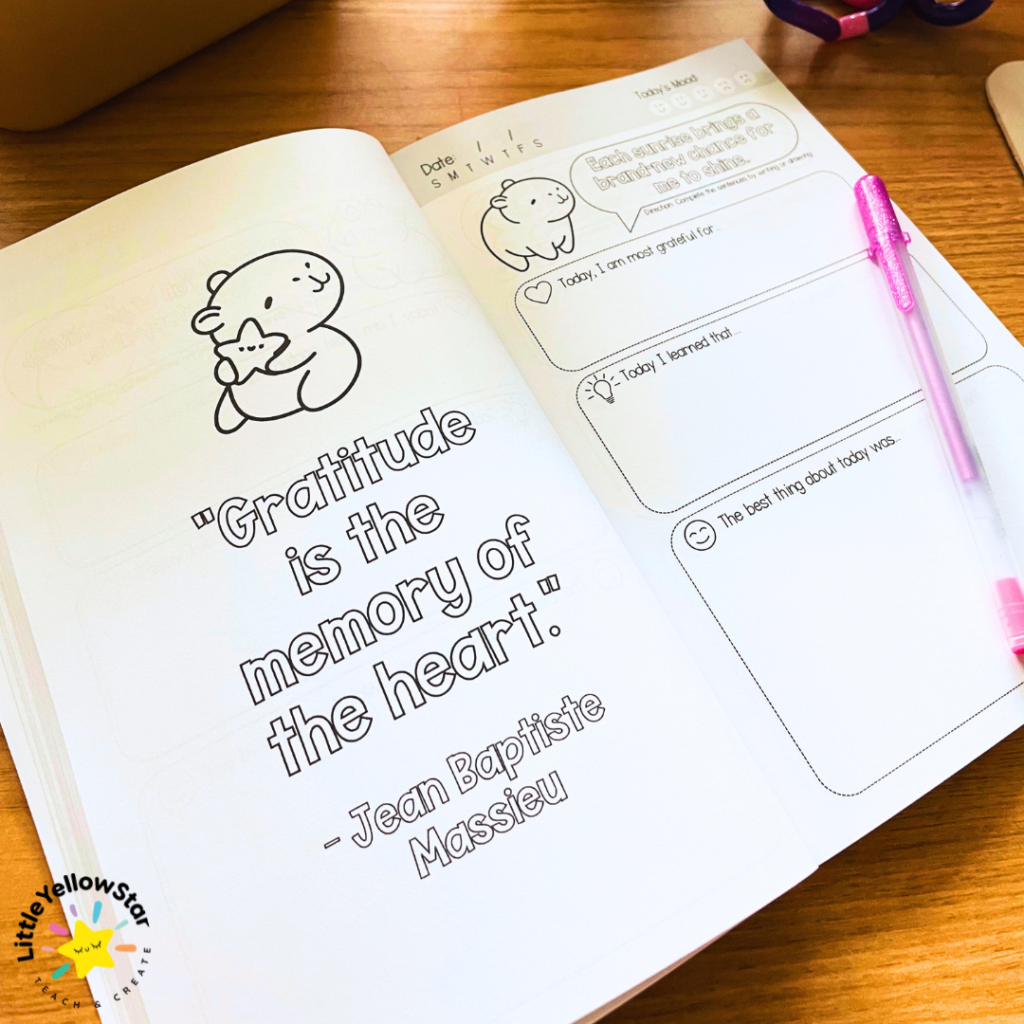
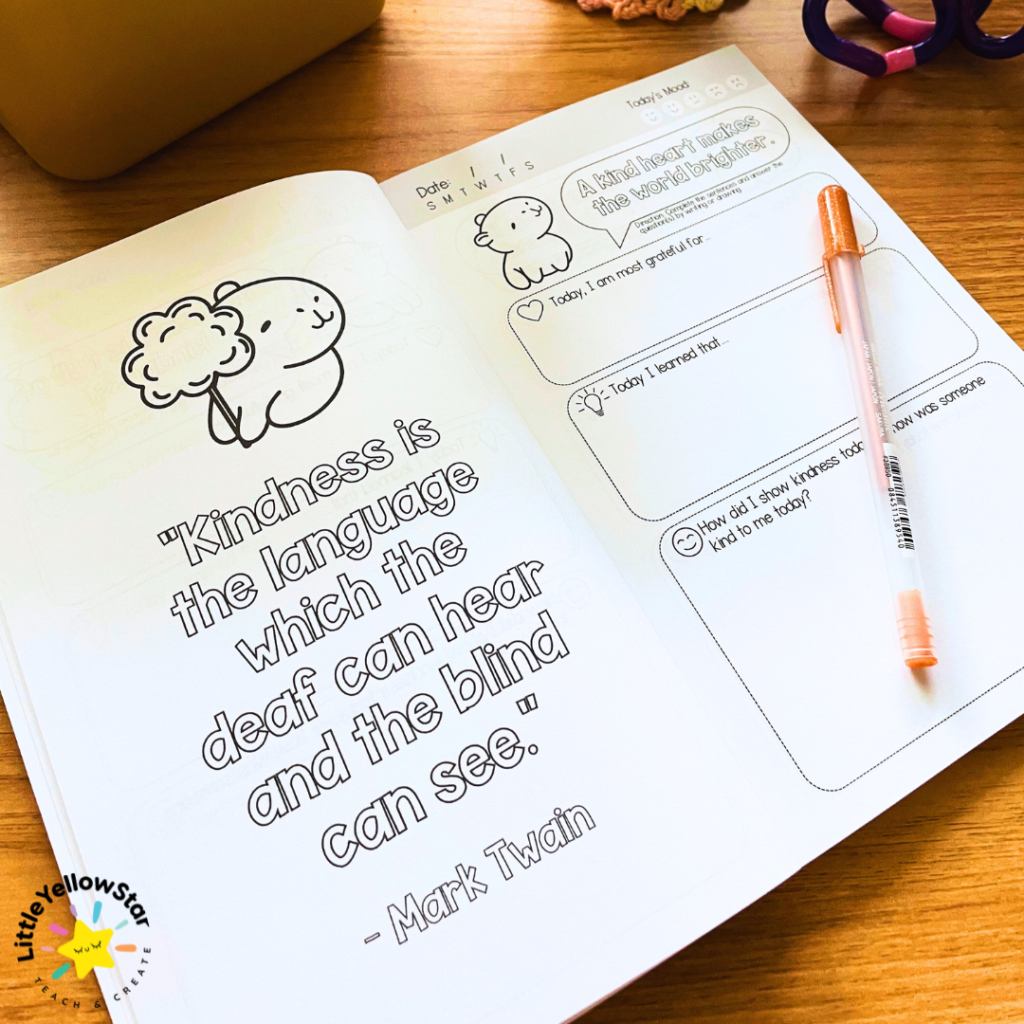
Check Out Capybara-Theme Daily Reflection Journals For Kids!
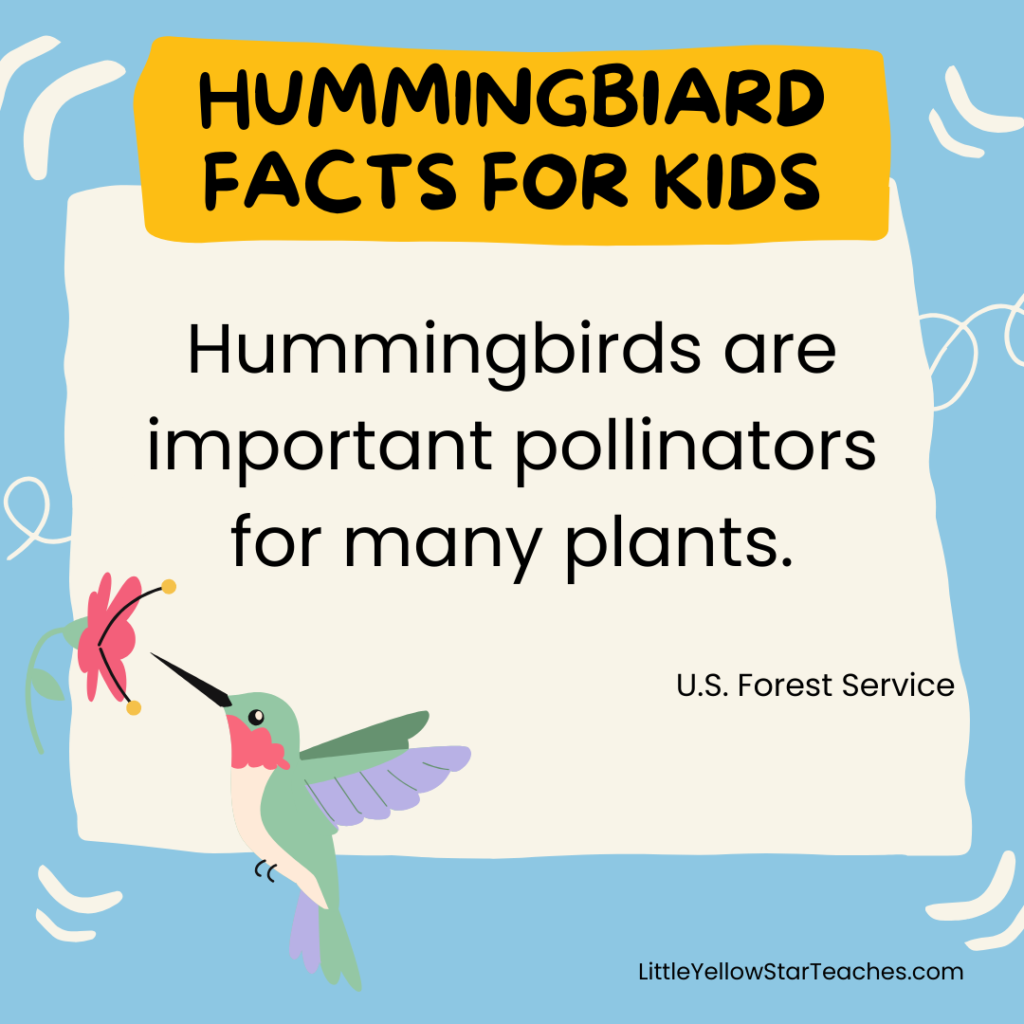
7. Hummingbirds are important pollinators for many plants.
As hummingbirds drink nectar, pollen sticks to their feathers and beaks. When they visit other flowers, they transfer the pollen and help plants reproduce.
Source: U.S. Forest Service
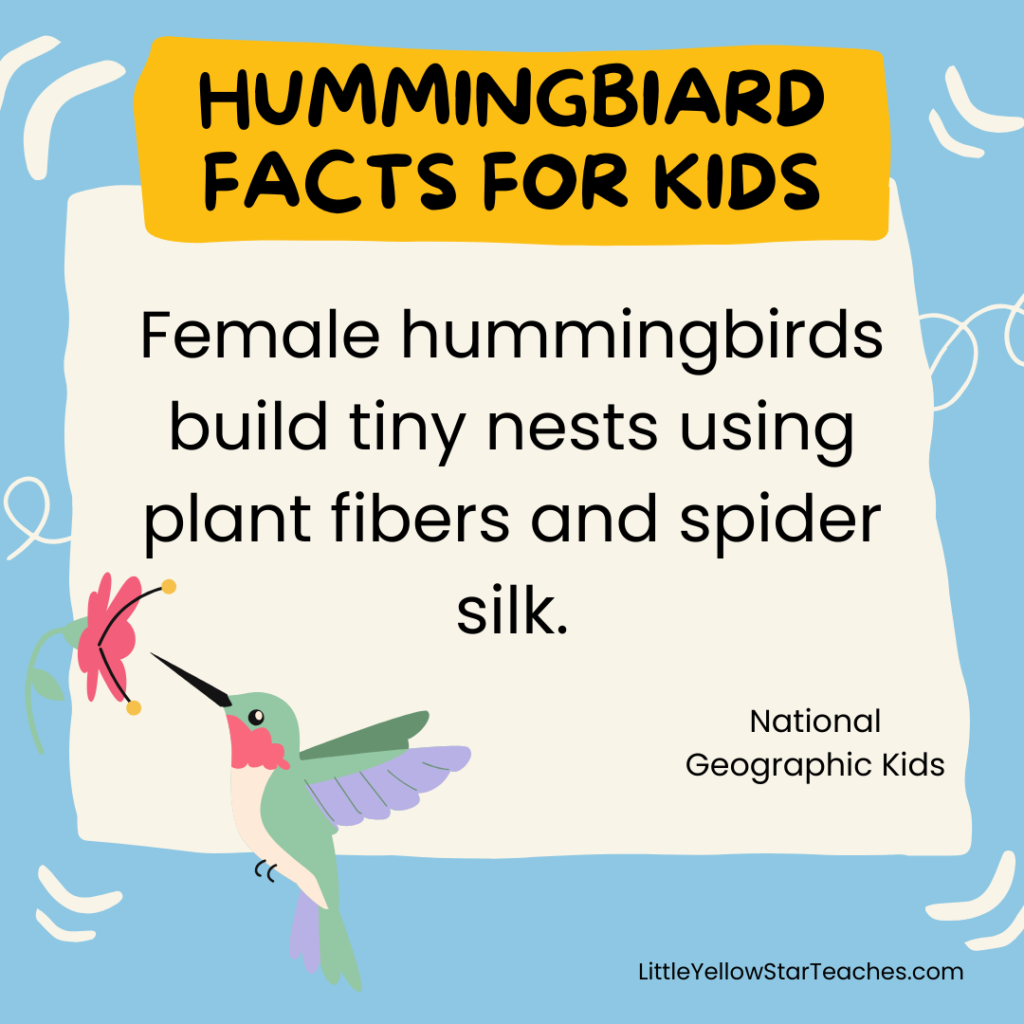
8. Female hummingbirds build tiny nests using plant fibers and spider silk.
Female hummingbirds carefully build very small nests from soft plant fibers. They often use spider silk to hold the nest together and attach it to tree branches.
Source: National Geographic Kids
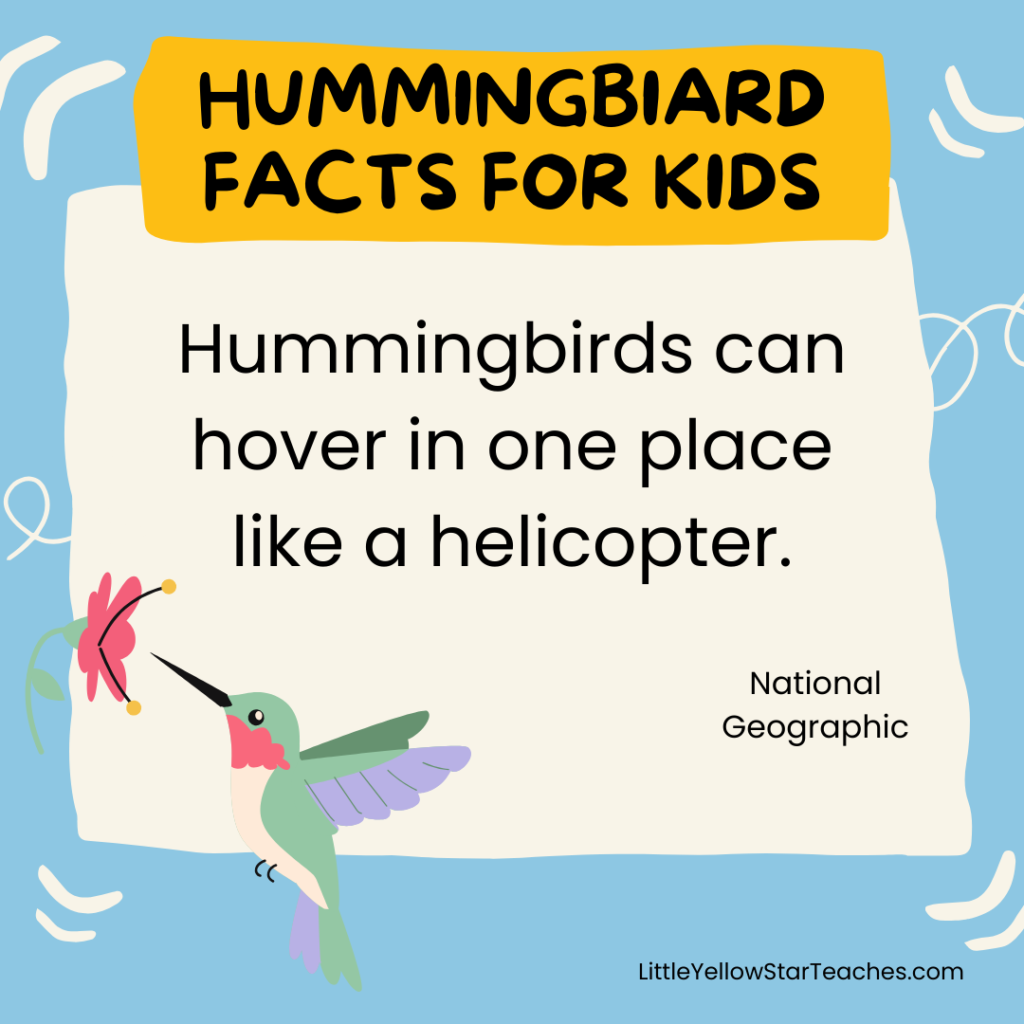
9. Hummingbirds can hover in one place like a helicopter.
Thanks to their fast wingbeats and flexible wings, hummingbirds can hover perfectly still in the air. This ability lets them drink nectar while staying in one spot.
Source: National Geographic
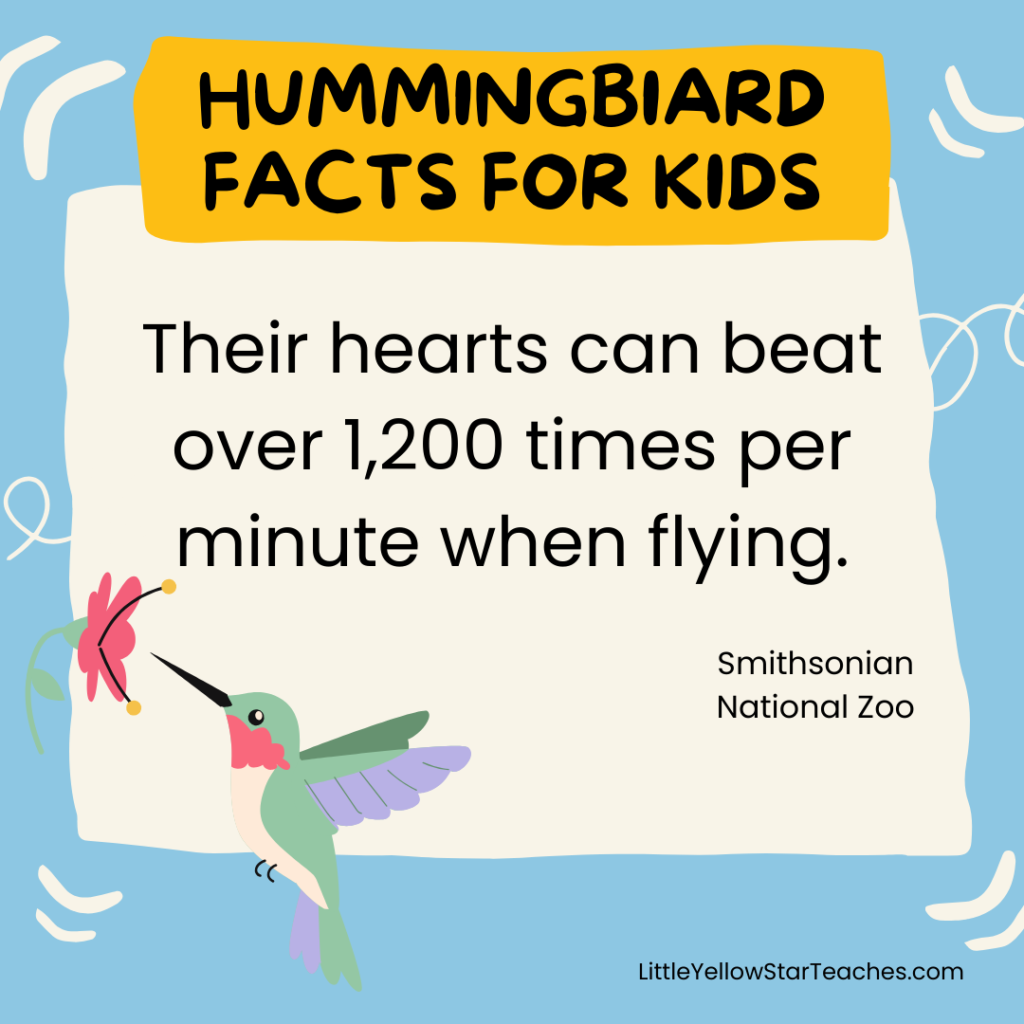
10. Their hearts can beat over 1,200 times per minute when flying.
Hummingbirds have incredibly fast metabolisms. When they are flying, their hearts can beat more than 1,200 times per minute to keep up with their high energy needs.
Source: Smithsonian National Zoo
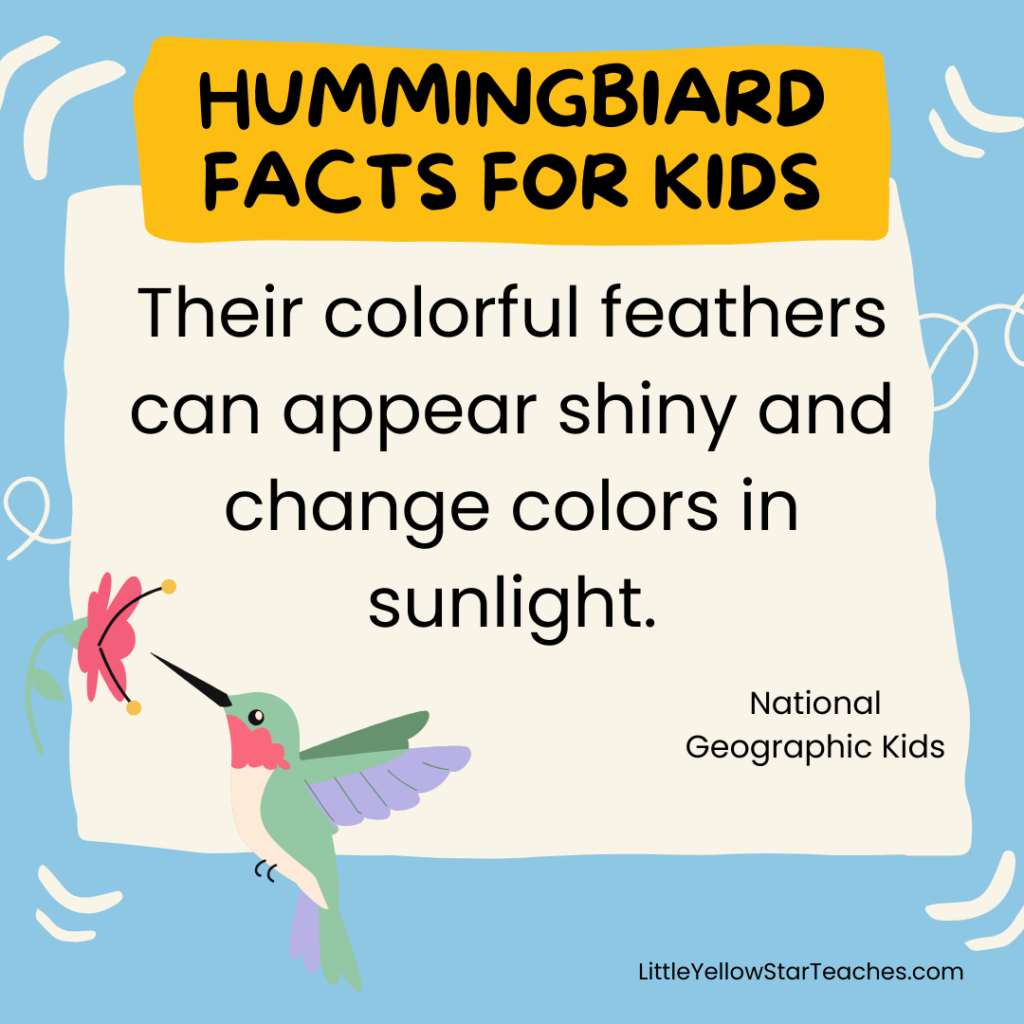
11. Their colorful feathers can appear shiny and change colors in sunlight.
Many hummingbirds have iridescent feathers that shine and change color in sunlight. The colors shift depending on the angle of the light.
Source: National Geographic Kids
Additional Resources
Hummingbird Related Vocabulary Words
Learn these important hummingbird words:
- Hover – To stay in one place in the air while flying
- Nectar – Sweet liquid in flowers that hummingbirds drink
- Pollination – The process of moving pollen between flowers
- Migration – When birds travel long distances during certain seasons
- Beak – The long mouth a hummingbird uses to drink nectar
- Wingspan – The distance from the tip of one wing to the other
Hummingbird Activity Ideas For Kids
Bring hummingbird facts for kids to life with these fun activities:
- Make a Hummingbird Feeder – Create a simple feeder using sugar water and a small bottle
- Hummingbird Art Project – Paint or draw colorful hummingbirds visiting flowers
- Plant a Pollinator Garden – Grow flowers that attract hummingbirds
- Bird Observation Journal – Record when and where you see hummingbirds
- Wing Speed Experiment – Wave your hand quickly to imagine how fast hummingbird wings move
- Build a Flower Habitat – Create a model garden with flowers for hummingbirds
Hummingbird Related Stories and Myths
Hummingbirds appear in many legends and cultural stories:
- Aztec Legends – Hummingbirds were believed to represent warriors and courage
- Native American Stories – Some tribes tell stories of hummingbirds bringing joy and love
- The Rainbow Bird – Folktales about hummingbirds carrying bright colors on their wings
- Garden Spirit Tales – Stories where hummingbirds help flowers bloom
- Messenger Bird Stories – Legends where hummingbirds deliver messages between worlds
- Nature Adventure Stories – Children’s books featuring hummingbirds exploring gardens and forests
What’s Your Favorite Hummingbird Fact?
Hummingbirds may be tiny, but they are some of the most incredible birds in nature. Now that you know these hummingbird facts for kids, you can watch for hummingbirds in gardens, plant flowers to attract them, and share what you’ve learned with others. Keep exploring nature—there are always more amazing facts for kids waiting to be discovered!
Bye for now,
Prima from LittleYellowStar
* * *
Other Blog Posts That You Might Enjoy:
- 15 Minutes Daily Social And Emotional Learning Activities For The Classroom (SEL Made Easy)
- 11 Classroom Essential First Year Teacher Must Haves That Won’t Break The Bank
- Meaningful And Fun Back To School Activity: Create A Classroom Wreath!