11 Beetle Facts for Kids
Have you ever spotted a shiny bug crawling on a leaf or flying through the air? These beetle facts for kids will introduce you to one of the most diverse groups of insects on Earth. Beetles come in many colors, shapes, and sizes, and they live almost everywhere in the world. In this guide, you’ll learn what beetles are, discover new vocabulary, try fun activities, and explore stories about these fascinating insects.
***Disclosure: This post contains an Amazon affiliate link that at no additional cost to you, I may earn a small commission when you purchase through the link from my blog. Thank you for your support!
Table of Contents
- What is a Beetle?
- Teaching Resources
- 11 Beetle Facts For Kids
- Additional Resources
Check out these blog posts:
What is a Beetle?
A beetle is a type of insect that belongs to the scientific group called Coleoptera. Beetles are known for their hard outer wings called elytra, which protect their delicate flying wings underneath. There are more than 350,000 species of beetles, making them the largest group of animals on Earth! Beetles live in forests, gardens, deserts, and even near water. Some beetles eat plants, others eat insects, and some help break down dead plants and animals in nature.
Teaching Resources


11 Beetle Facts for Kids
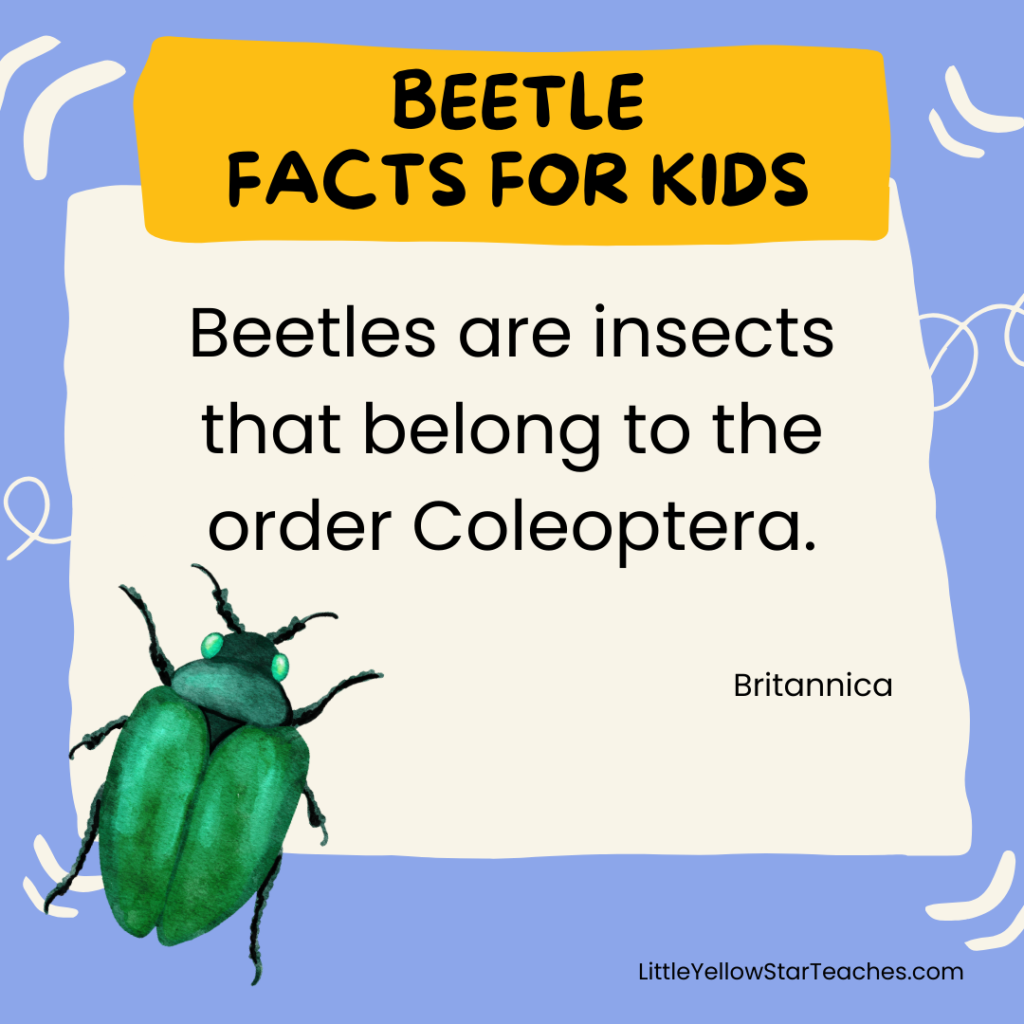
1. Beetles are insects that belong to the order Coleoptera.
Beetles are part of the insect group called Coleoptera, which is the largest order of insects. Scientists use this name to classify all beetle species around the world.
Source: Britannica
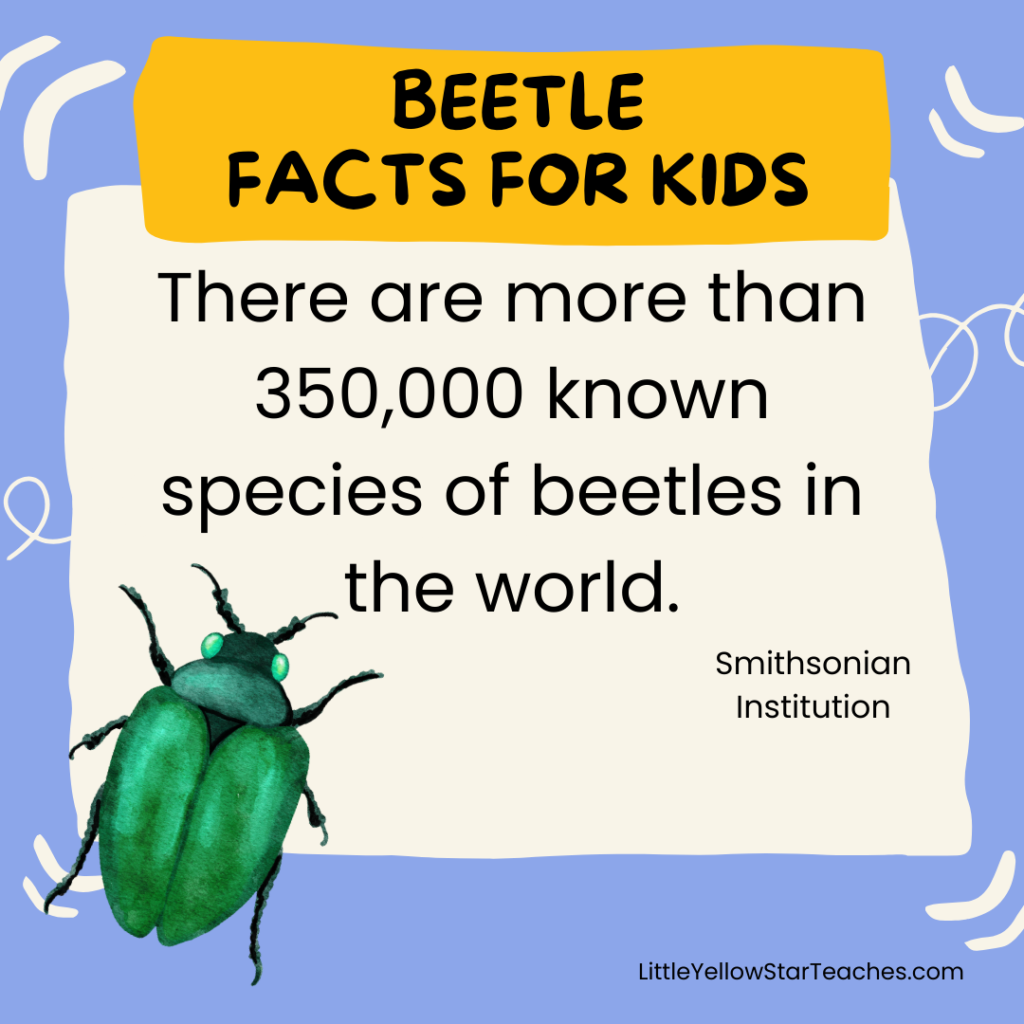
2. There are more than 350,000 known species of beetles in the world.
Beetles are incredibly diverse, with more than 350,000 different species discovered so far. Scientists believe there may still be many more beetle species waiting to be found.
Source: Smithsonian Institution
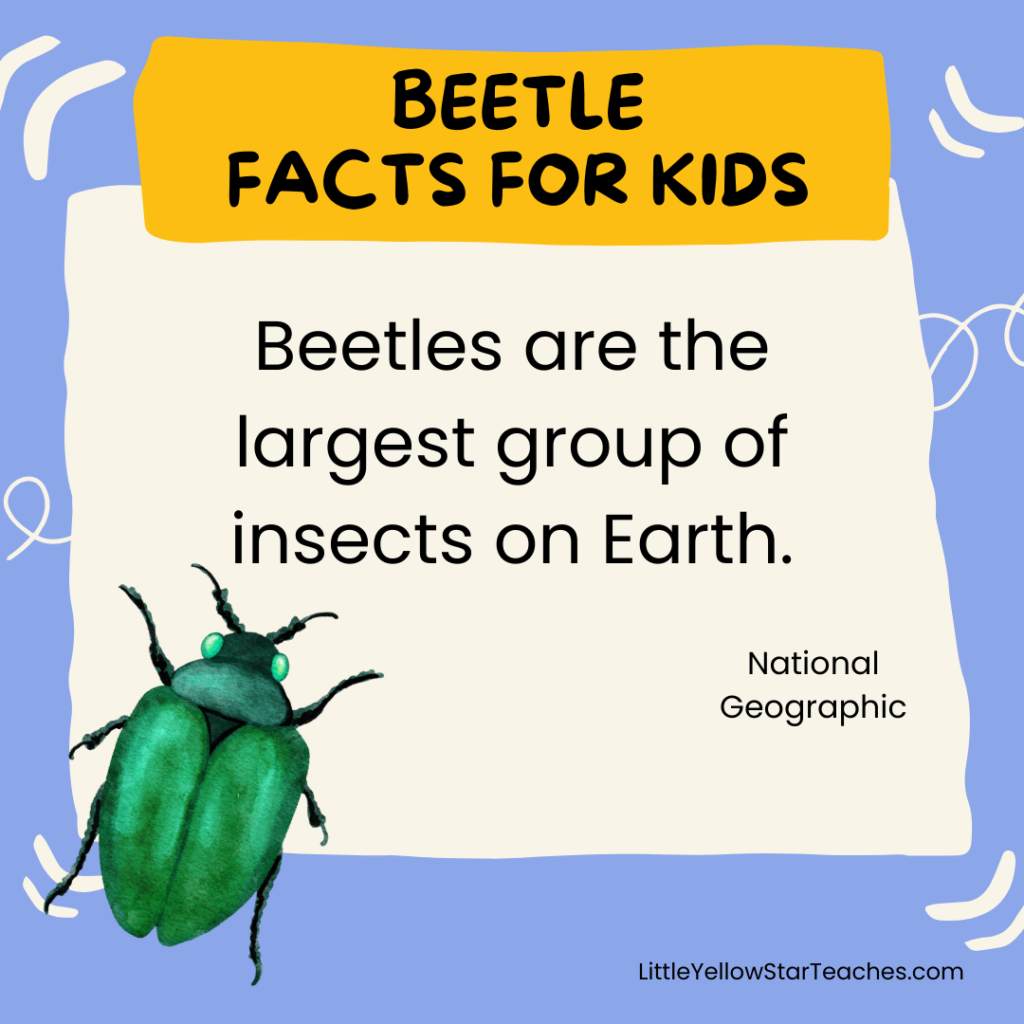
3. Beetles are the largest group of insects on Earth.
Beetles make up the biggest group of insects in the world. In fact, about one out of every four known animal species is a beetle!
Source: National Geographic

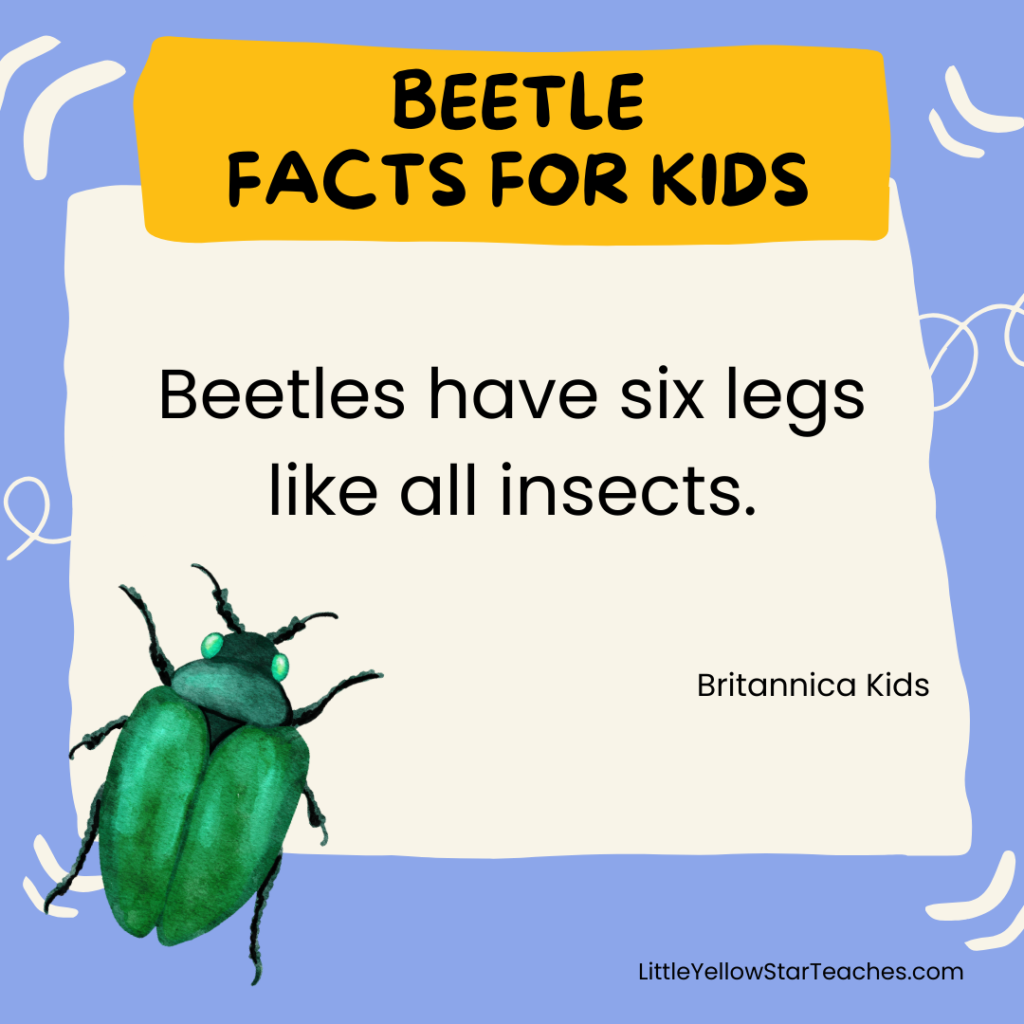
4. Beetles have six legs like all insects.
Like all insects, beetles have six legs, three body parts (head, thorax, and abdomen), and two antennae. These features help scientists identify them as insects.
Source: Britannica Kids
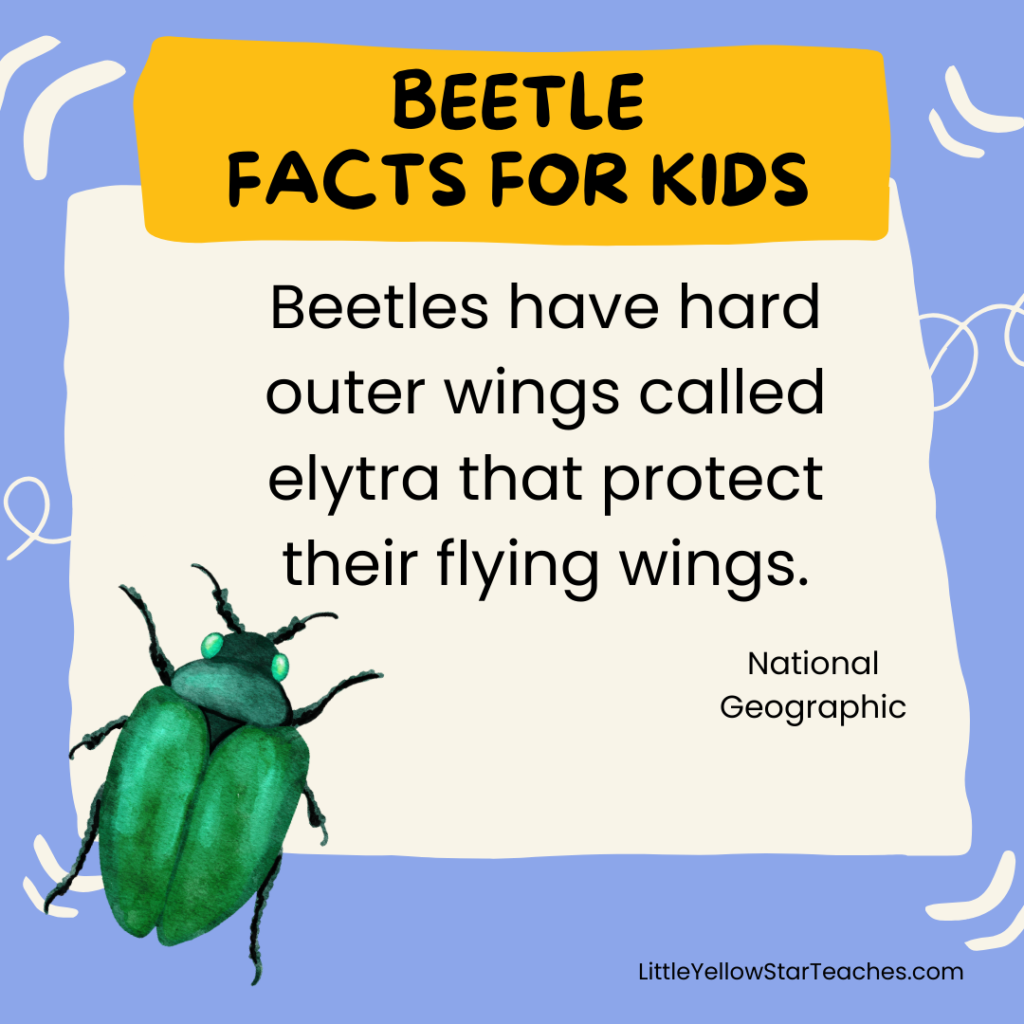
5. Beetles have hard outer wings called elytra that protect their flying wings.
Beetles have special hardened wing covers called elytra. These act like shields that protect their delicate flying wings underneath.
Source: National Geographic
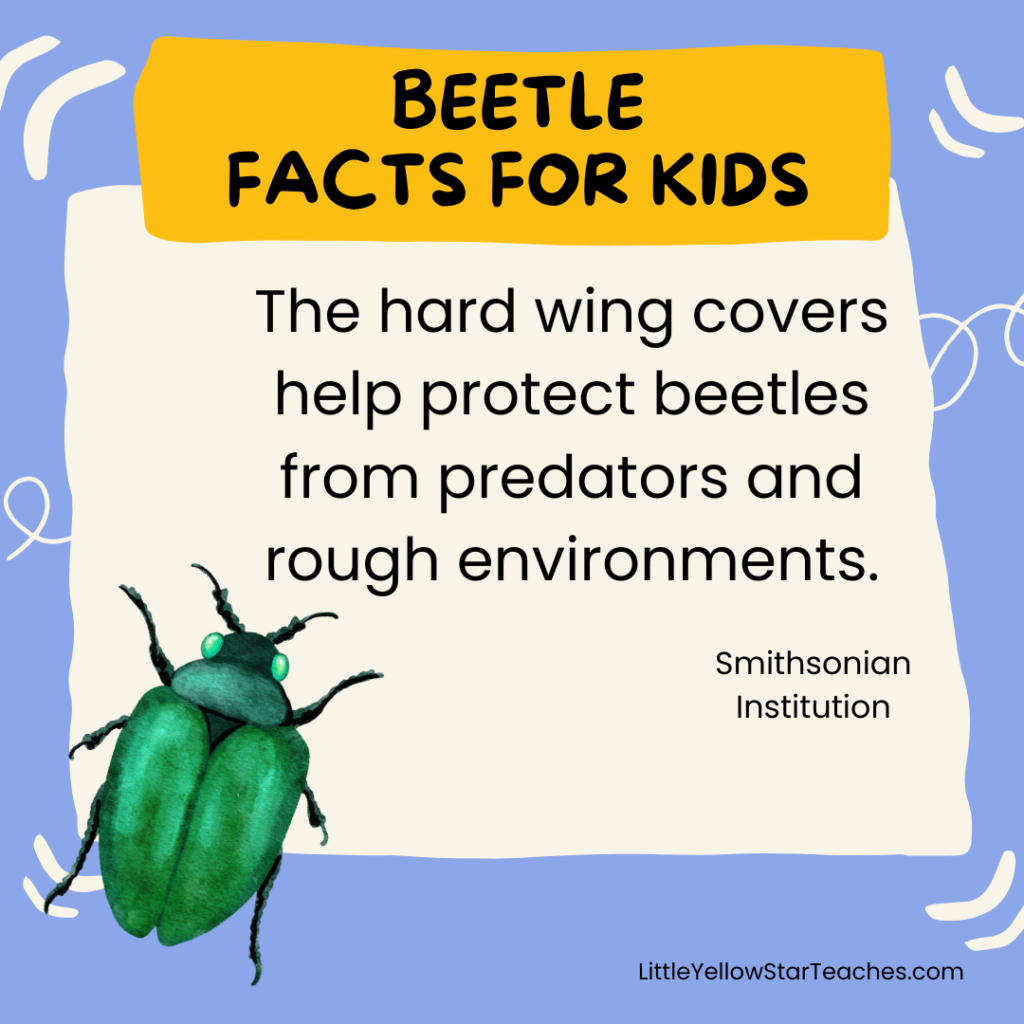
6. The hard wing covers help protect beetles from predators and rough environments.
The tough elytra help beetles survive in many habitats by protecting their bodies from predators, dirt, and damage while they crawl through plants or soil.
Source: Smithsonian Institution
Check Out Capybara-Theme Daily Reflection Journals For Kids!
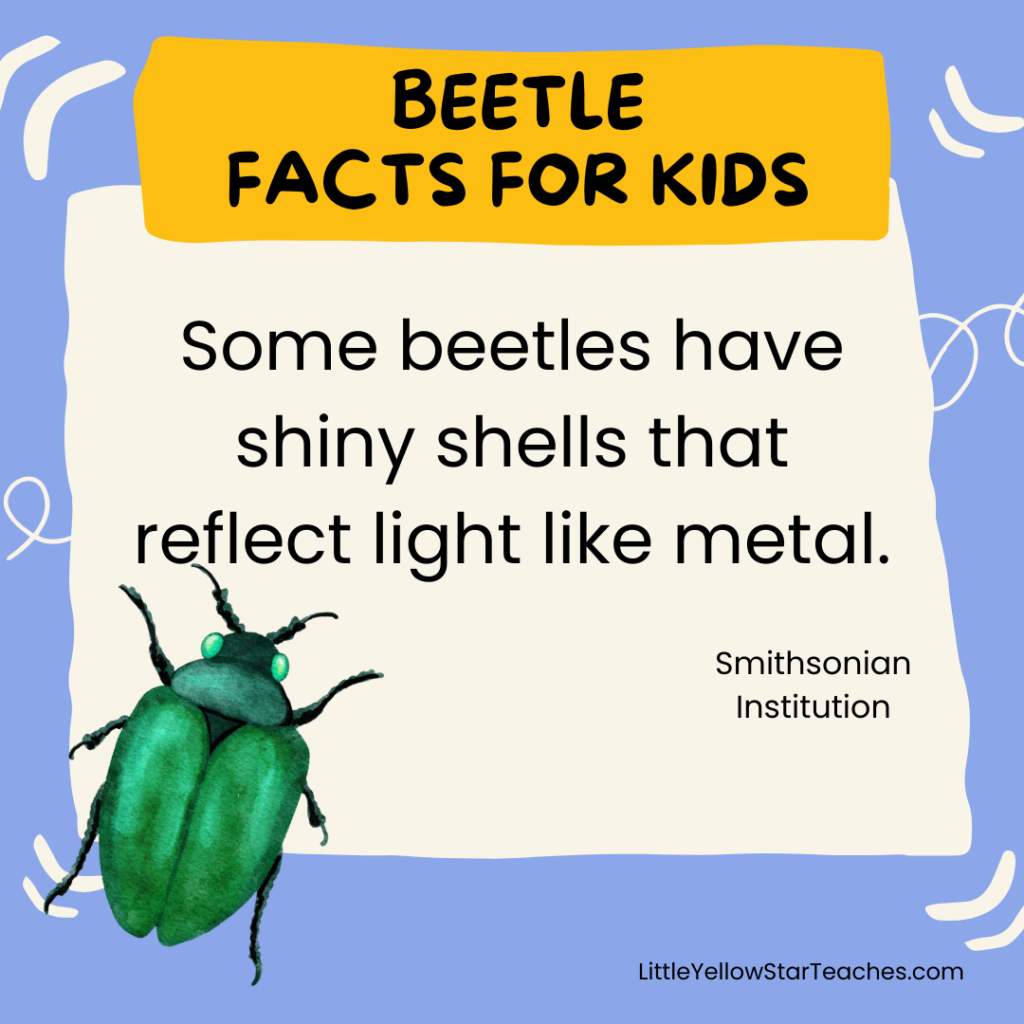
7. Some beetles have shiny shells that reflect light like metal.
Many beetles have bright, shiny shells that look metallic. These colorful shells can be green, gold, blue, or purple and sometimes help them blend into their surroundings.
Source: Smithsonian Institution
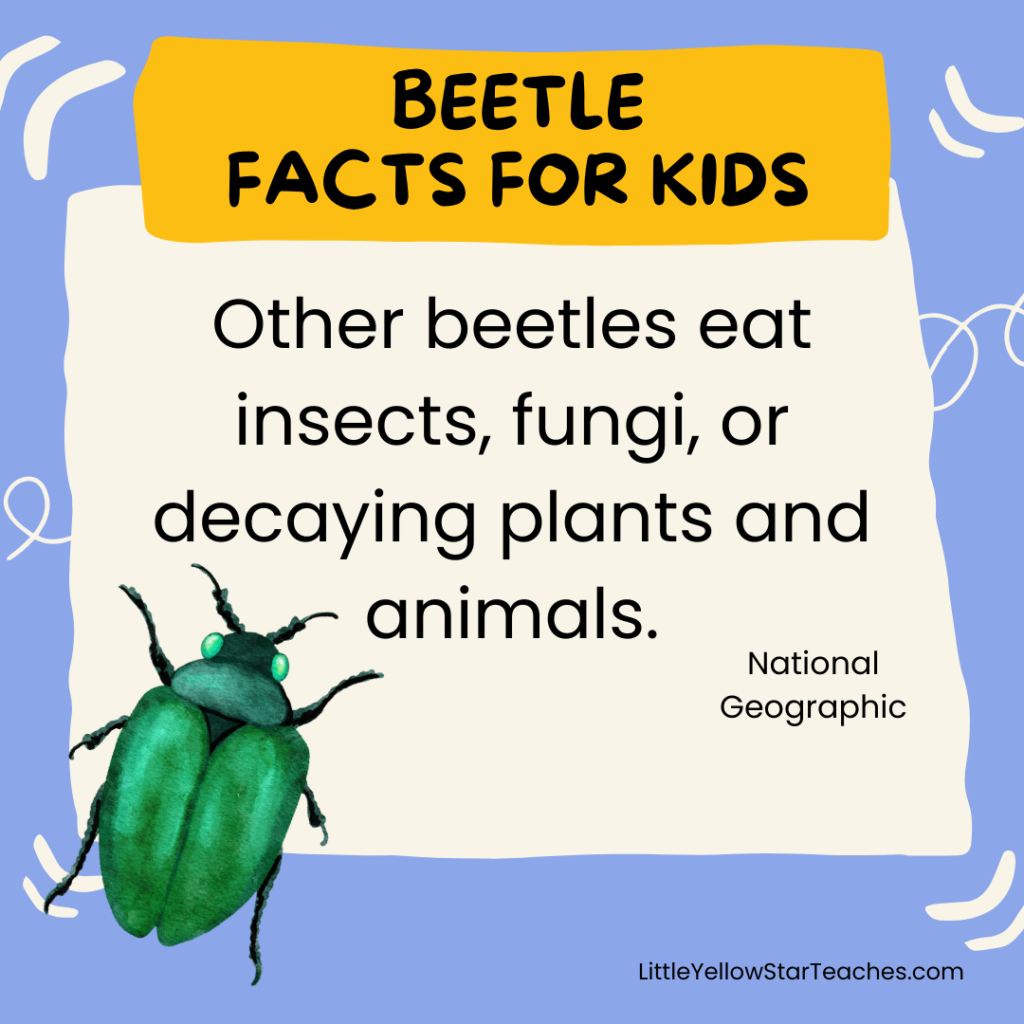
8. Other beetles eat insects, fungi, or decaying plants and animals.
Beetles have many different diets depending on the species. Some eat plants, while others feed on insects, fungi, or dead plants and animals.
Source: National Geographic
9. Beetles help recycle nutrients in ecosystems by breaking down dead plants and animals.
Many beetles act like nature’s recyclers. By breaking down dead plants, animals, and waste, they help return nutrients to the soil and keep ecosystems healthy.
Source: U.S. Forest Service
10. Some beetles, like ladybugs, help control pests by eating harmful insects.
Certain beetles are helpful to farmers and gardeners. For example, ladybugs eat pests like aphids that can damage plants.
Source: National Geographic Kids
11. The Goliath beetle is one of the largest beetles in the world.
The Goliath beetle is one of the biggest beetle species on Earth. Some can grow several inches long and weigh as much as a small apple.
Source: Britannica
Additional Resources
Beetle Related Vocabulary Words
Learn these important beetle words:
- Coleoptera – The scientific group that beetles belong to
- Elytra – The hard outer wings that protect a beetle’s flying wings
- Larva – The young stage of a beetle, sometimes called a grub
- Pupa – The stage where the larva changes into an adult beetle
- Habitat – The natural place where beetles live
- Exoskeleton – The hard outer covering that protects insects
Beetle Activity Ideas For Kids
Bring beetle facts for kids to life with these fun activities:
- Beetle Craft – Create a colorful beetle using paper, paint, or recycled materials
- Insect Observation Walk – Search for beetles under leaves, logs, or rocks
- Beetle Life Cycle Project – Draw or build the stages of a beetle’s life
- Bug Sorting Game – Sort different insects into groups and identify beetles
- Design Your Own Beetle – Draw a new beetle species with unique colors and patterns
- Nature Journal – Record and sketch insects you find outside
Beetle Related Stories and Myths
Beetles appear in many stories and traditions around the world:
- The Sacred Scarab – In ancient Egypt, scarab beetles symbolized life and renewal
- Ladybug Stories – Some beetles like ladybugs are believed to bring good luck
- Garden Bug Tales – Stories about beetles helping plants and gardens grow
- Nature Adventure Stories – Books where beetles explore forests and fields
- Insect Hero Stories – Tales where small bugs save the day
- Transformation Stories – Stories inspired by the amazing life cycle of insects
What’s Your Favorite Beetle Fact?
Beetles are some of the most interesting and diverse insects in the world. Now that you know these beetle facts for kids, you can observe beetles in nature, try fun activities, and learn more about insects that help our ecosystems. Keep exploring the natural world—there are always more amazing facts for kids waiting to be discovered!
Bye for now,
Prima from LittleYellowStar
* * *
Other Blog Posts That You Might Enjoy:
- 15 Minutes Daily Social And Emotional Learning Activities For The Classroom (SEL Made Easy)
- 11 Classroom Essential First Year Teacher Must Haves That Won’t Break The Bank
- Meaningful And Fun Back To School Activity: Create A Classroom Wreath!