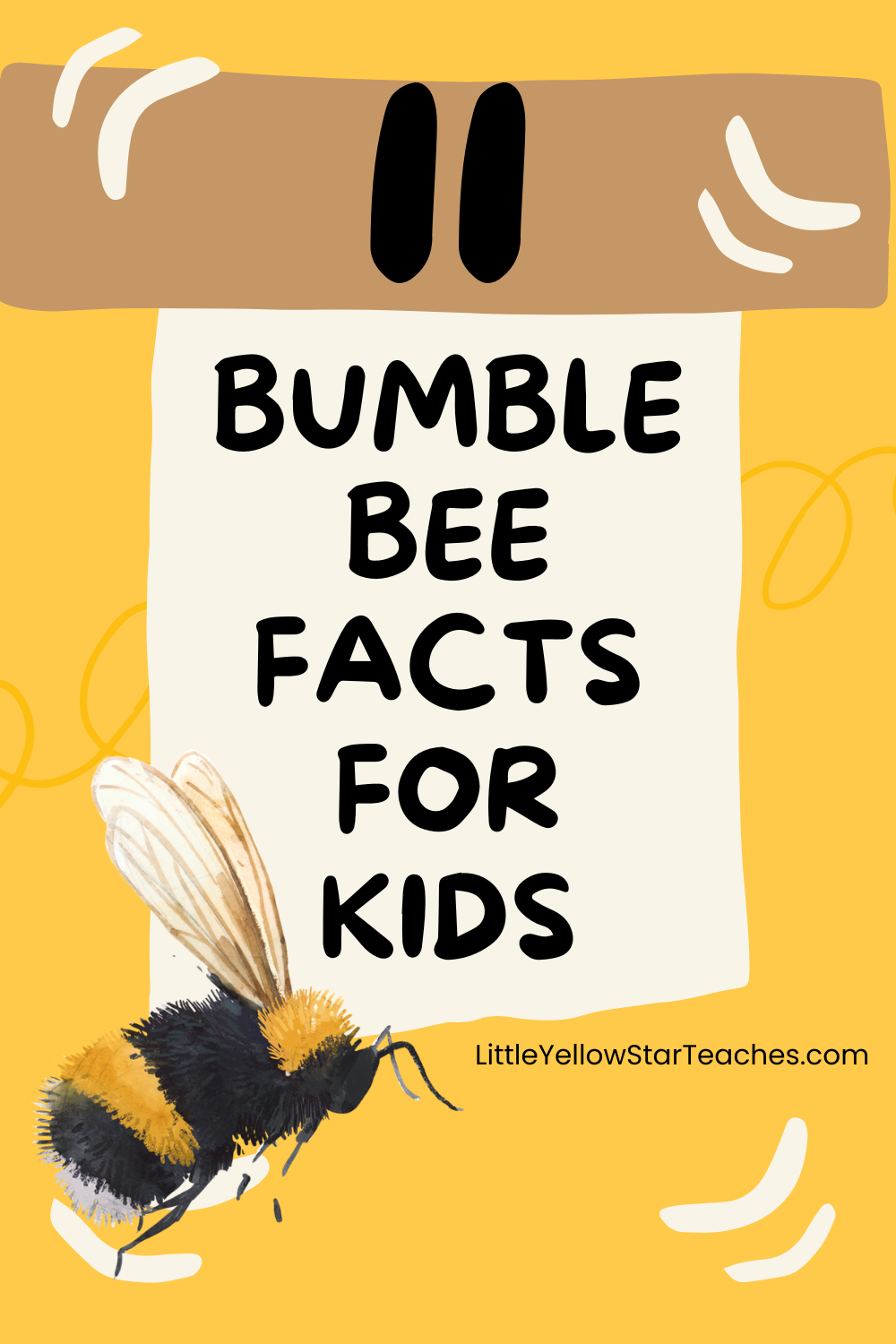
Have you ever seen a big, fuzzy bee buzzing from flower to flower? These bumble bee facts for kids will help you learn about one of nature’s most important pollinators. Bumble bees are known for their fluffy bodies, loud buzzing sound, and their amazing ability to help flowers grow. In this guide, you’ll discover how bumble bees live, learn new vocabulary, try fun activities, and explore stories about these hardworking insects.
***Disclosure: This post contains an Amazon affiliate link that at no additional cost to you, I may earn a small commission when you purchase through the link from my blog. Thank you for your support!
Table of Contents
- What is a Bumble Bee?
- Teaching Resources
- 11 Bumble Bee Facts For Kids
- Additional Resources
- Bumble Bee Related Vocabulary Words
- Bumble Bee Activity Ideas For Kids
- Bumble Bee Related Stories and Myths
Check out these blog posts:
What is a Bumble Bee?
A bumble bee is a type of bee that is larger and fuzzier than many other bees. Bumble bees belong to the group of insects called pollinators, which means they help plants grow by moving pollen from one flower to another. Bumble bees live in small groups called colonies, and each colony has a queen bee, worker bees, and sometimes male bees called drones. Unlike honeybees, bumble bees usually build their nests in the ground or in small hidden spaces.
Teaching Resources


11 Bumble Bee Facts for Kids
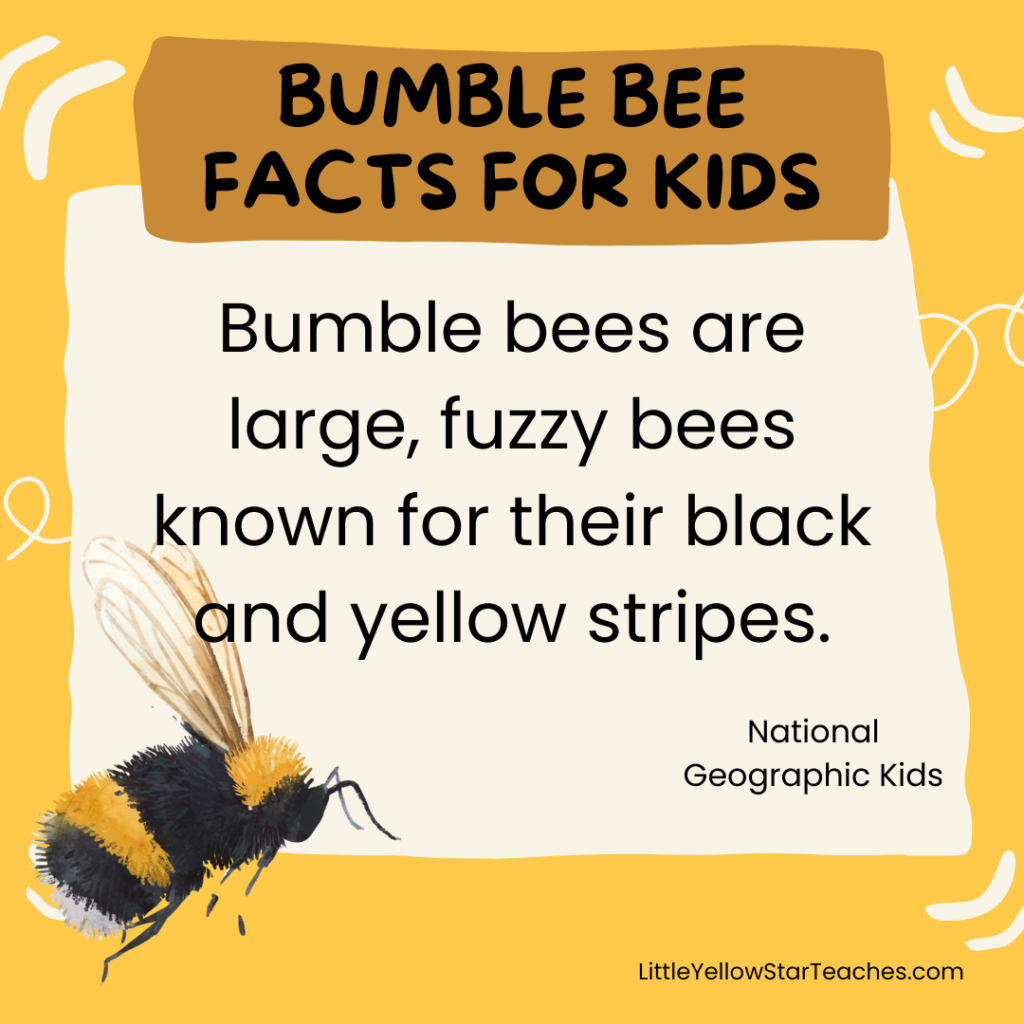
1. Bumble bees are large, fuzzy bees known for their black and yellow stripes.
Bumble bees are easy to recognize because of their round, fuzzy bodies and bright black and yellow stripes. Their thick hair helps them collect pollen and stay warm while flying.
Source: National Geographic Kids
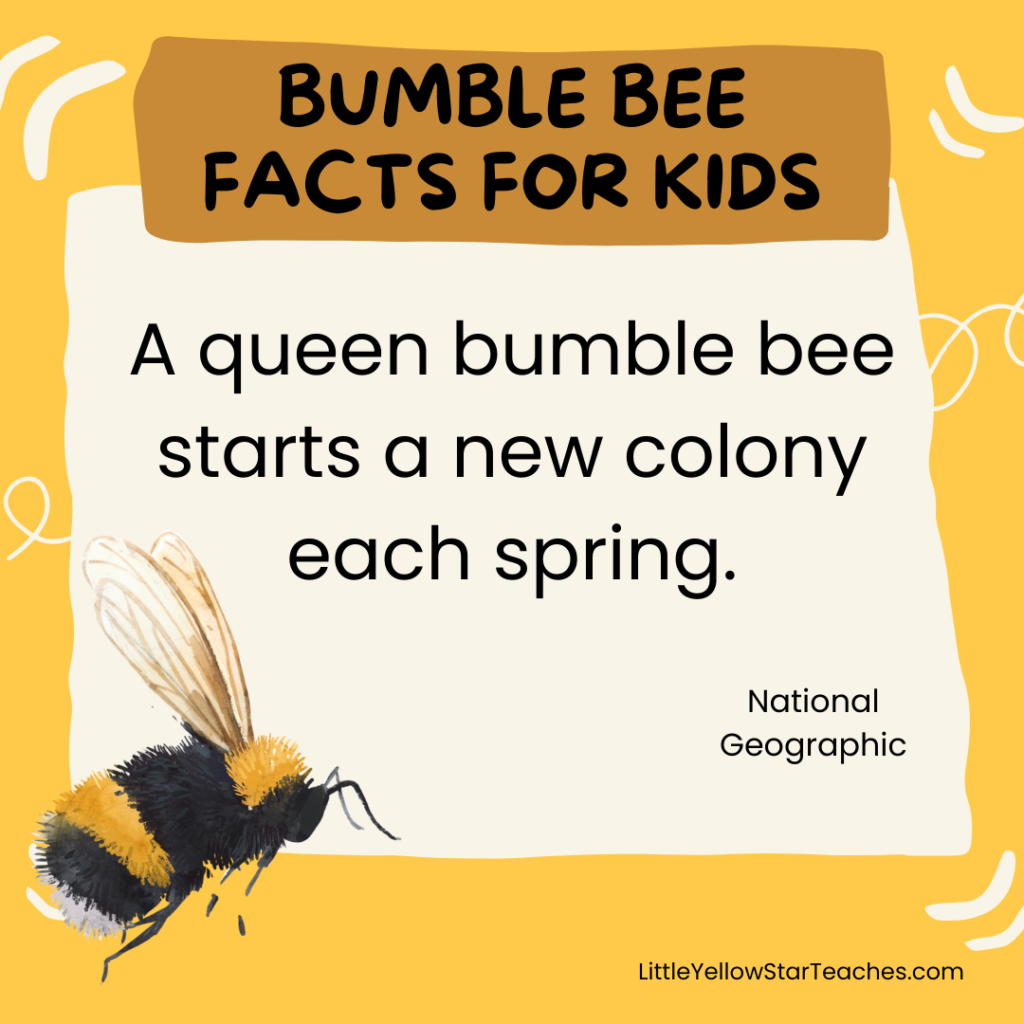
2. A queen bumble bee starts a new colony each spring.
Every spring, a queen bumble bee wakes up after winter and begins building a new colony. She lays eggs and raises the first worker bees that will help gather food for the colony.
Source: National Geographic
3. Bumble bees belong to the genus Bombus.
Scientists classify bumble bees in the genus Bombus. There are many different species of bumble bees found around the world.
Source: Britannica

4. Bumble bees can fly in cooler temperatures than many other bees.
Because their bodies are covered in thick hair, bumble bees can stay warm and fly even when the weather is cooler. This allows them to pollinate flowers early in the morning and in colder climates.
Source: Xerces Society
5. Bumble bees can see ultraviolet patterns on flowers.
Many flowers have special ultraviolet patterns that humans cannot see. Bumble bees can see these patterns, which help guide them to the nectar inside the flower.
Source: National Geographic
6. Their fuzzy bodies help them carry pollen from flower to flower.
When bumble bees land on flowers, pollen sticks to their fuzzy bodies. As they move from flower to flower, they spread the pollen and help plants grow fruits and seeds.
Source: U.S. Forest Service
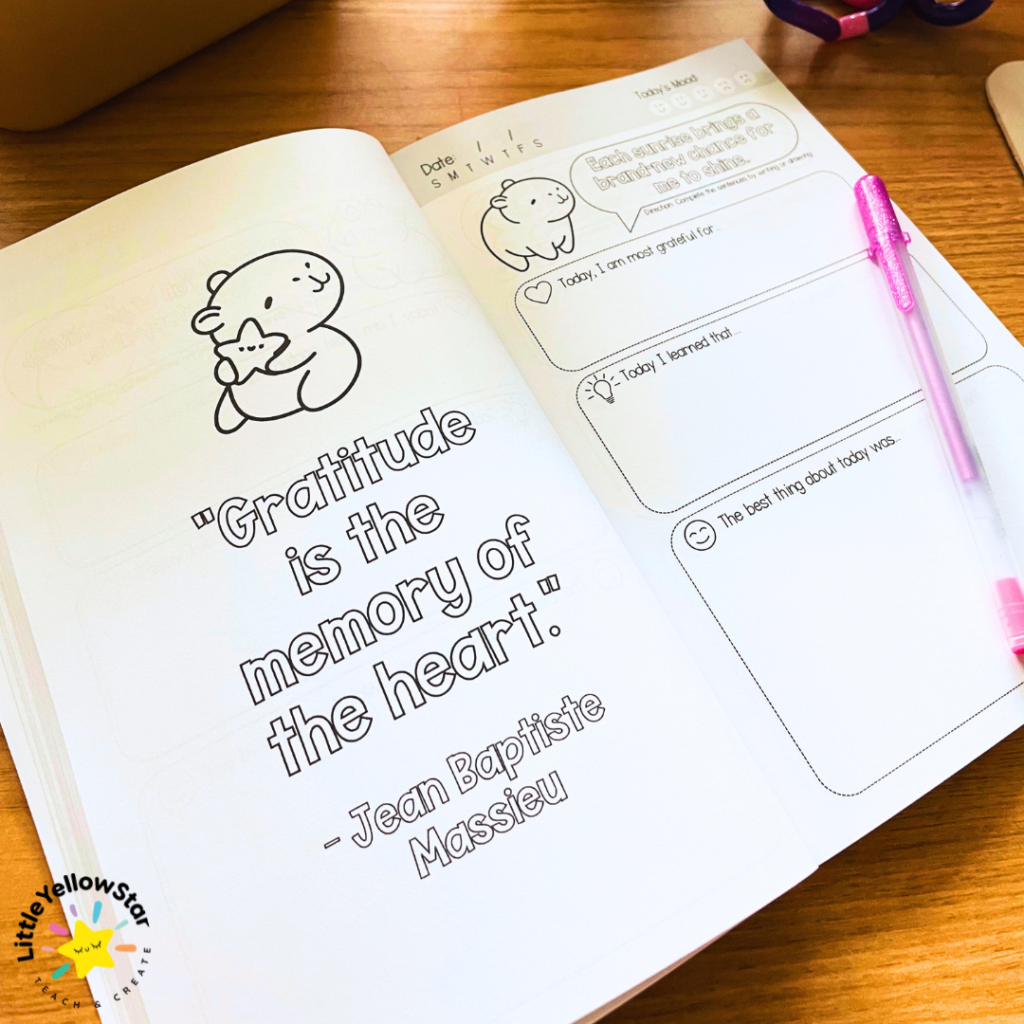
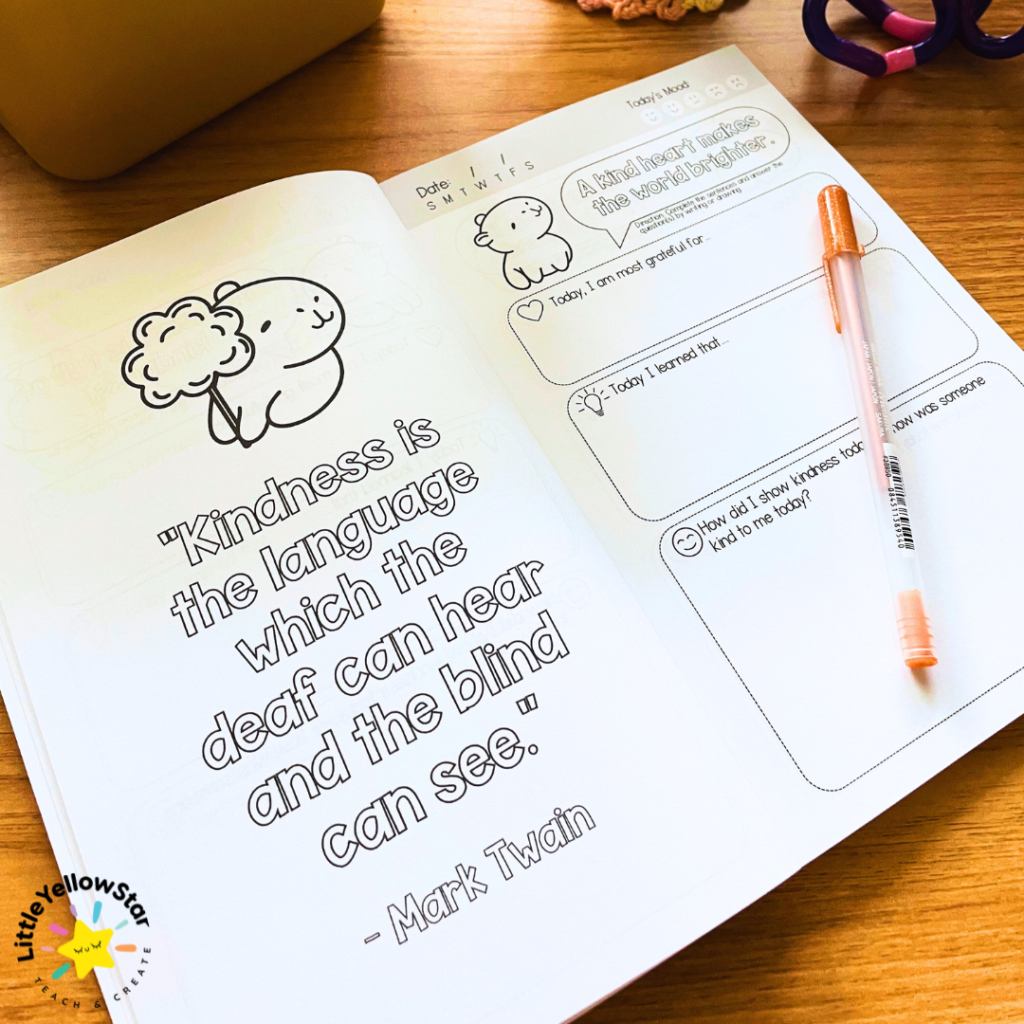
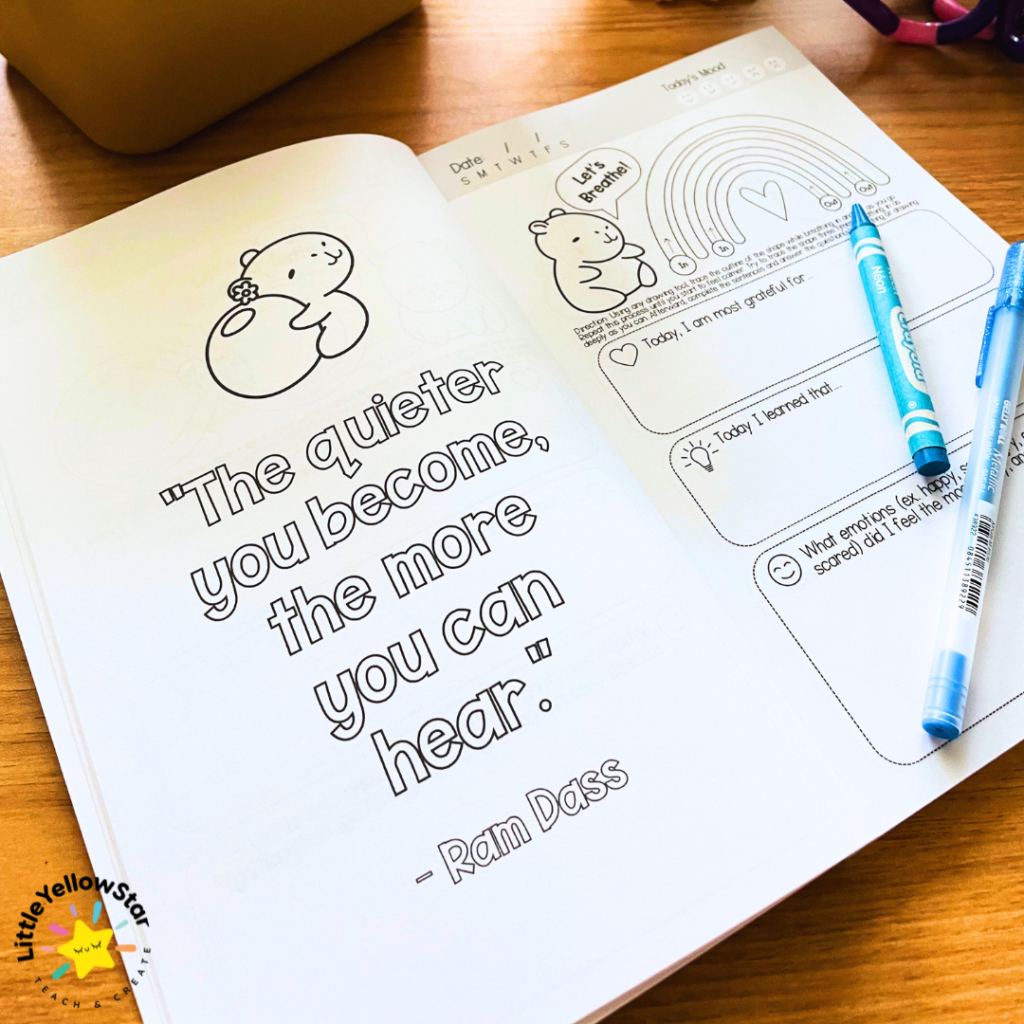
Check Out Capybara-Theme Daily Reflection Journals For Kids!
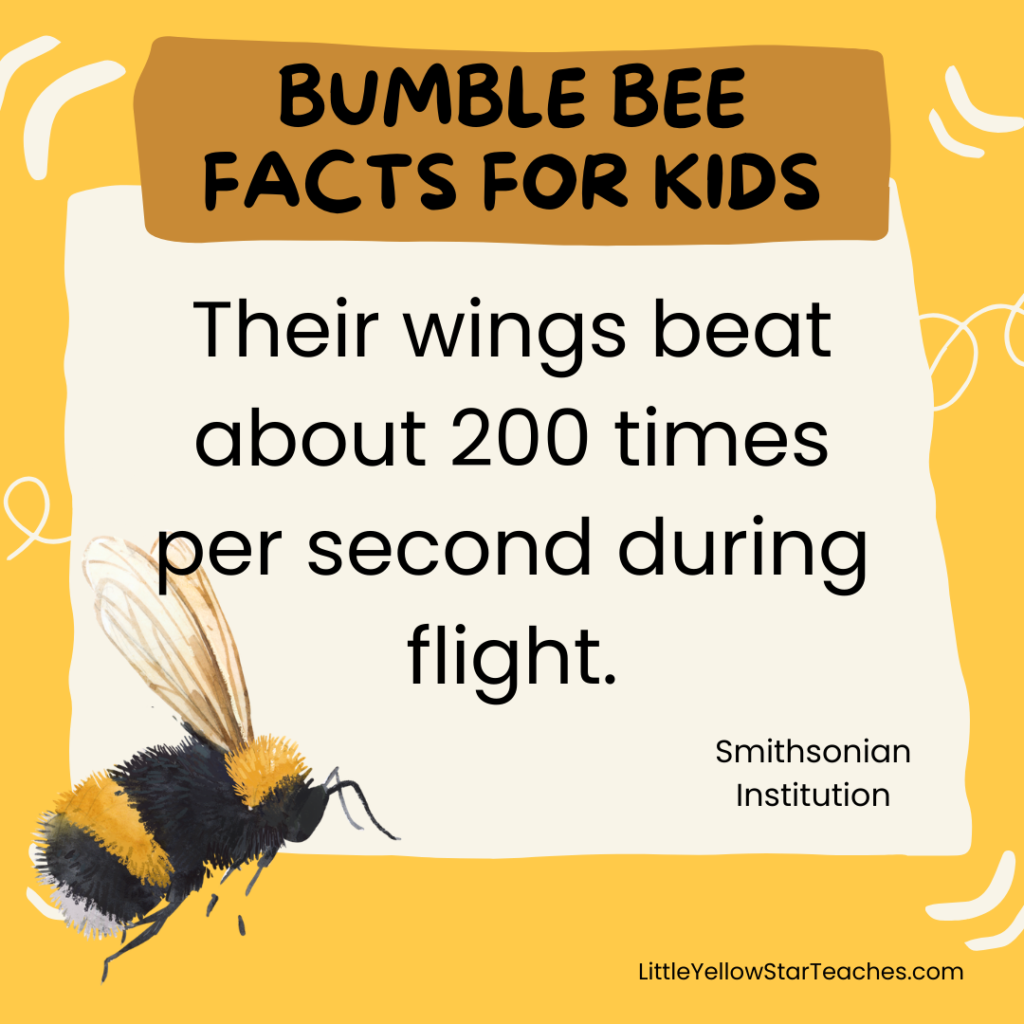
7. Their wings beat about 200 times per second during flight.
Bumble bees flap their wings extremely fast—about 200 times every second! This rapid movement allows them to hover and maneuver easily between flowers.
Source: Smithsonian Institution
8. Bumble bees usually sting only when threatened.
Bumble bees are generally peaceful insects and prefer to avoid danger. They will usually sting only if they feel threatened or need to protect their nest.
Source: Britannica
9. Bumble bees use their long tongues to drink nectar from flowers.
Bumble bees have long tongues that help them reach nectar deep inside flowers. Nectar gives them the energy they need to fly and collect pollen.
Source: National Geographic Kids
10. Bumble bees often nest underground in abandoned rodent burrows.
Many bumble bees build their nests underground, often inside old burrows that were once used by rodents. These spaces provide protection from weather and predators.
Source: U.S. Forest Service
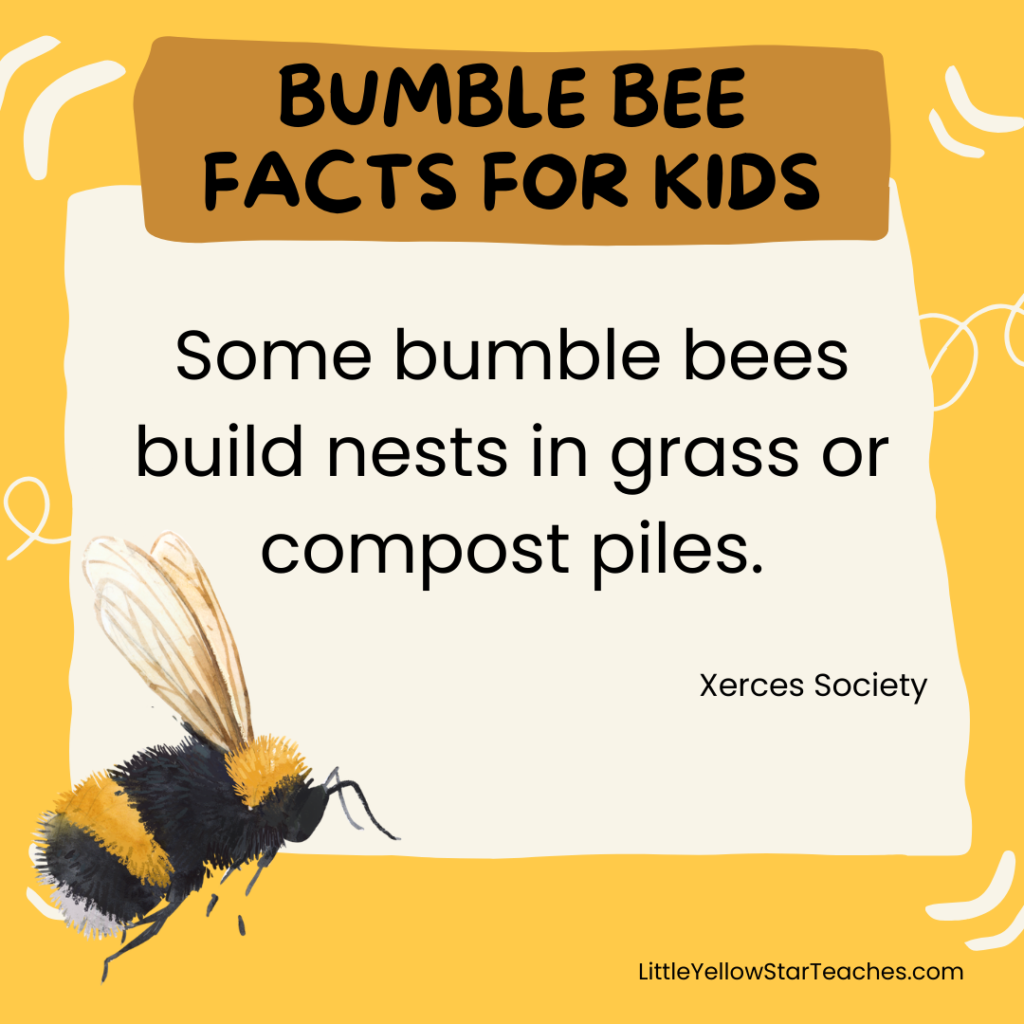
11. Some bumble bees build nests in grass or compost piles.
Not all bumble bees nest underground—some make their homes in thick grass, leaf piles, or compost heaps. These hidden spots help keep the colony safe.
Source: Xerces Society
Additional Resources
Bumble Bee Related Vocabulary Words
Learn these important bumble bee words:
- Pollinator – An animal that helps move pollen between flowers
- Nectar – Sweet liquid in flowers that bees collect for food
- Pollen – Tiny grains that plants use to reproduce
- Colony – A group of bees living and working together
- Queen bee – The main bee that lays eggs in the colony
- Buzz pollination – A special way bumble bees shake flowers to release pollen
Bumble Bee Activity Ideas For Kids
Bring bumble bee facts for kids to life with these fun activities:
- Bumble Bee Craft – Make a fuzzy bee using pom-poms, paper, or recycled materials
- Pollination Game – Pretend to be a bee carrying pollen from flower to flower
- Plant a Pollinator Garden – Grow flowers that attract bees and butterflies
- Bee Observation Walk – Look for bumble bees visiting flowers outside
- Honey Taste Test – Try different kinds of honey and compare flavors
- Draw a Bumble Bee Habitat – Illustrate where bumble bees live and collect food
Bumble Bee Related Stories and Myths
Bumble bees appear in many stories and traditions:
- The Busy Bumble Bee – Stories that teach the importance of teamwork and hard work
- The Bee and the Flower – Tales explaining how bees help plants grow
- Honeybee and Bumble Bee Stories – Stories about bees working together in nature
- Garden Fairy Tales – Magical stories where bees help flowers bloom
- Nature Legends – Some cultures believe bees bring messages from nature
- Pollinator Heroes – Modern stories that teach kids how important bees are for our planet
What’s Your Favorite Bumble Bee Fact?
Bumble bees may be small, but they do a very big job helping plants grow and gardens thrive. Now that you know these bumble bee facts for kids, you can help protect pollinators by planting flowers, observing bees in nature, and sharing what you’ve learned. Keep exploring the natural world—there are always more amazing facts for kids waiting to be discovered!
Bye for now,
Prima from LittleYellowStar
* * *
Other Blog Posts That You Might Enjoy:
- 15 Minutes Daily Social And Emotional Learning Activities For The Classroom (SEL Made Easy)
- 11 Classroom Essential First Year Teacher Must Haves That Won’t Break The Bank
- Meaningful And Fun Back To School Activity: Create A Classroom Wreath!