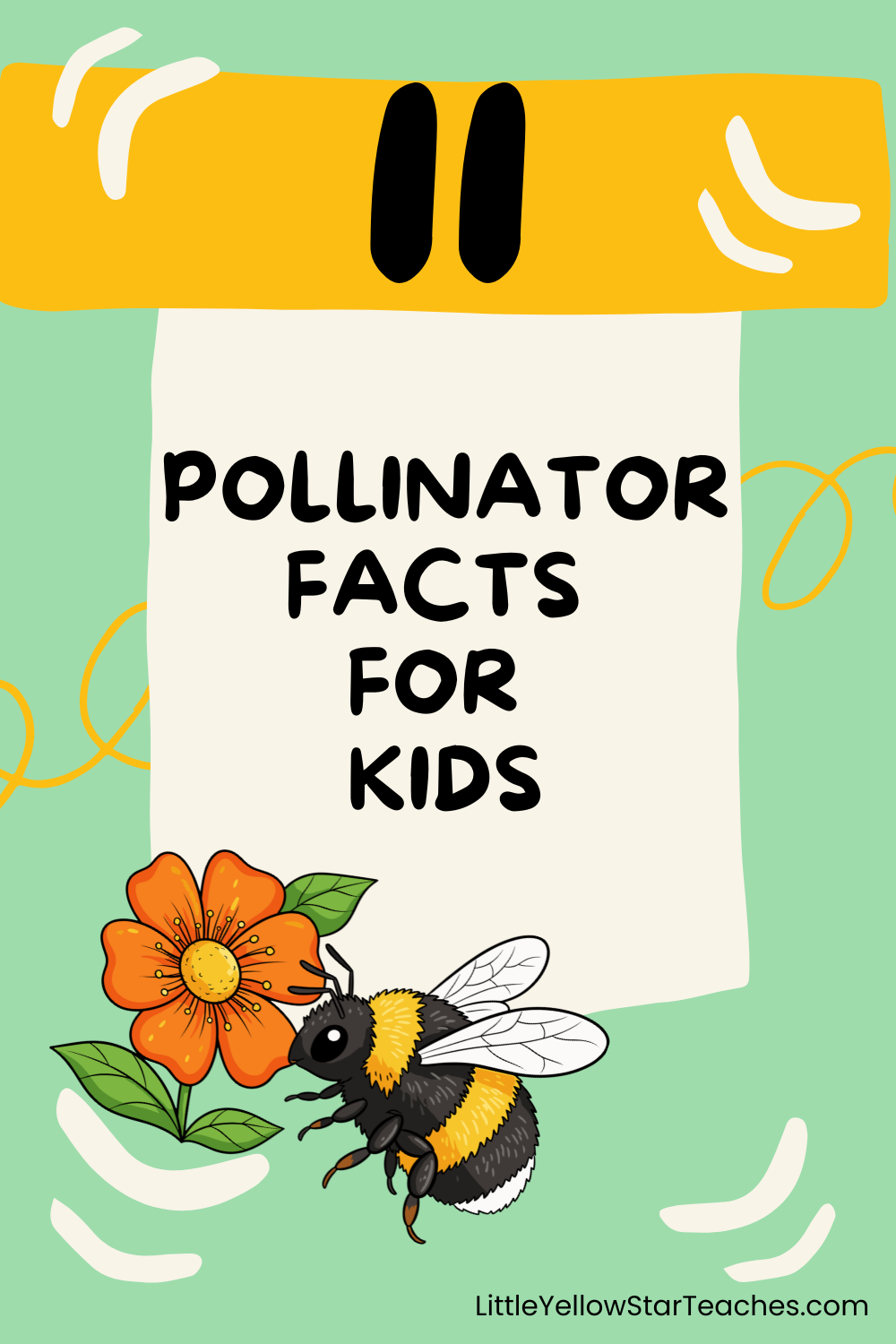
Have you ever wondered how flowers grow into fruits, vegetables, and seeds? These pollinator facts for kids will introduce you to the amazing animals that help plants reproduce. From buzzing bees to fluttering butterflies, pollinators play a huge role in helping plants grow all around the world. Let’s explore fun vocabulary, activities, and stories that make learning about pollinators exciting!
***Disclosure: This post contains an Amazon affiliate link that at no additional cost to you, I may earn a small commission when you purchase through the link from my blog. Thank you for your support!
Table of Contents
- What is a Pollinator?
- Teaching Resources
- 11 Pollinator Facts For Kids
- Additional Resources
- Pollinator Related Vocabulary Words
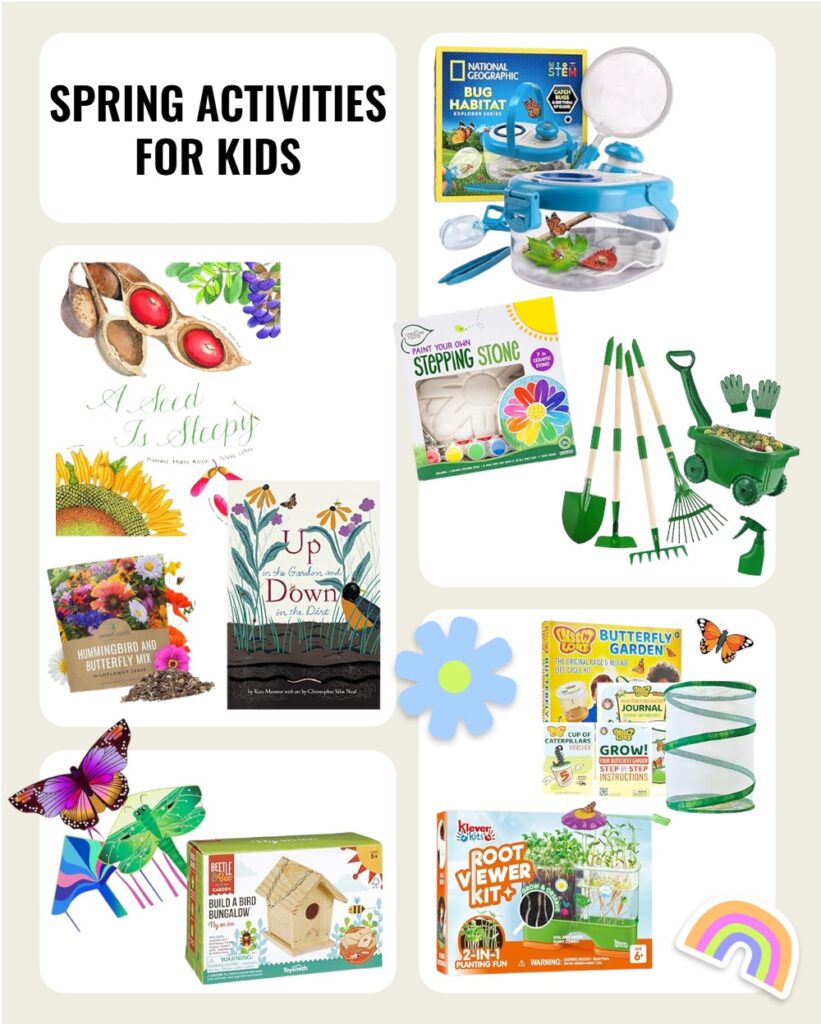
- Pollinator Activity Ideas For Kids
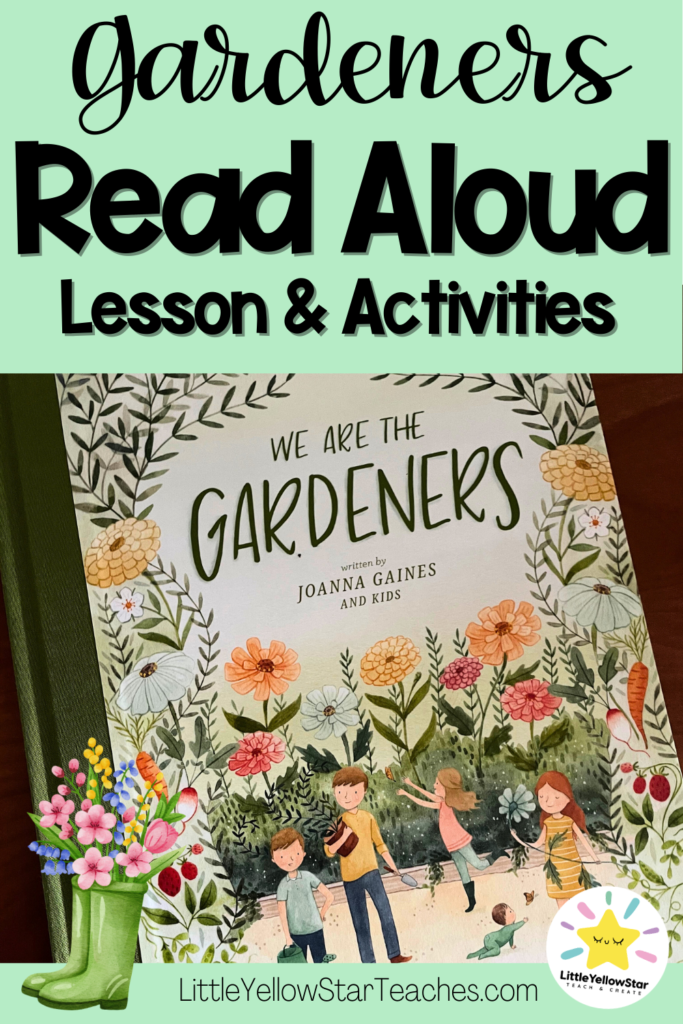
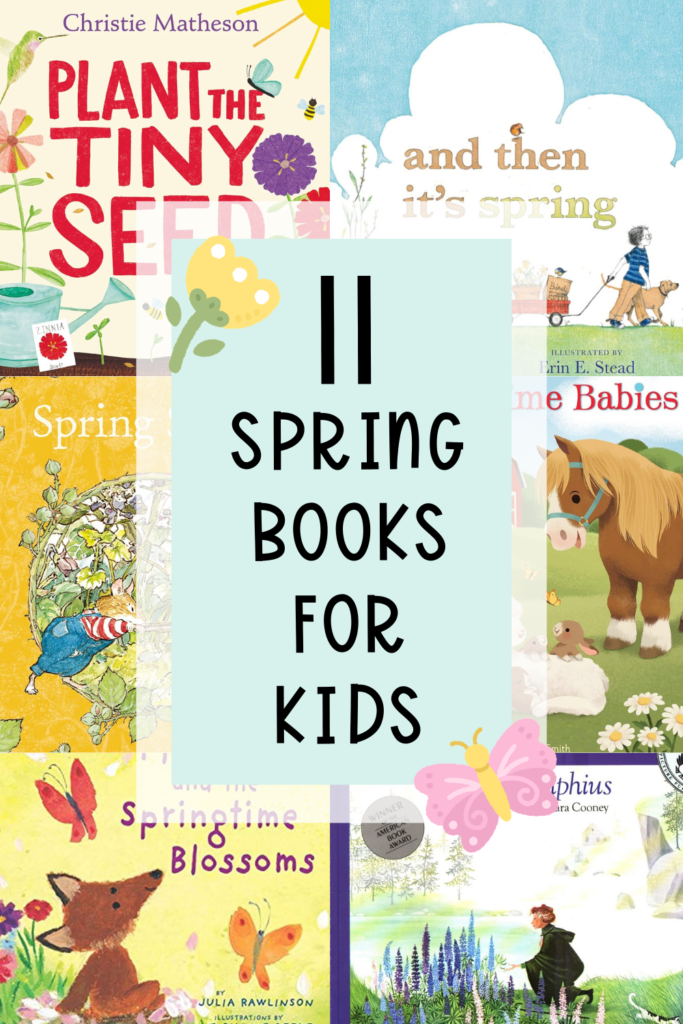
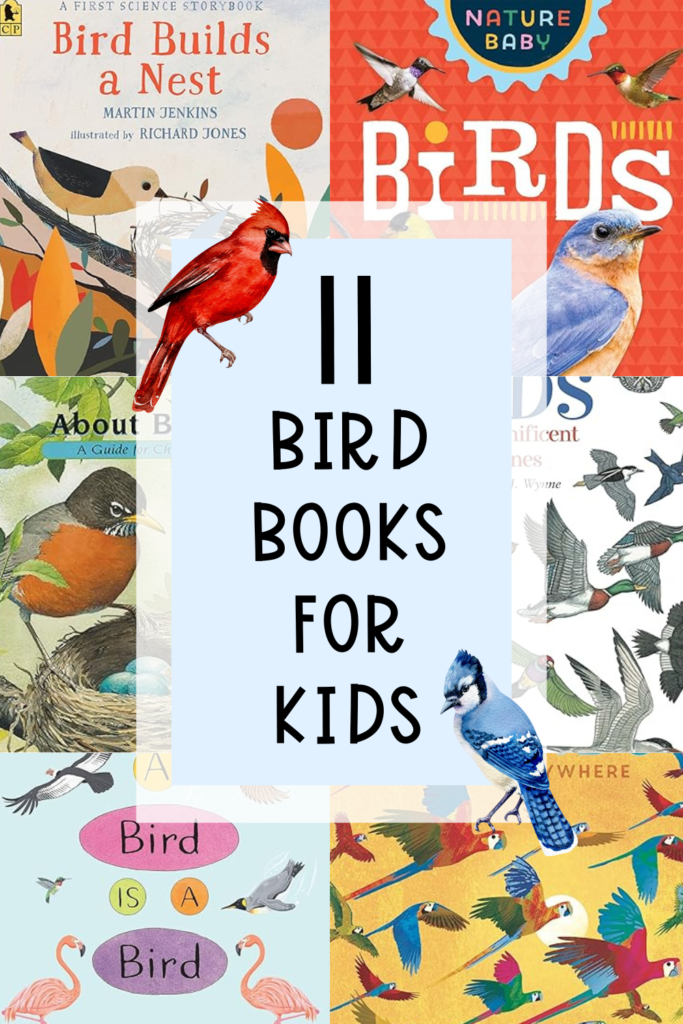
- Pollinator Related Stories and Myths
Check out these blog posts:
What is a Pollinator?
Pollinators are animals that help plants grow by moving pollen from one flower to another. This process is called pollination, and it allows plants to make seeds and fruit. Many animals can be pollinators, including bees, butterflies, moths, hummingbirds, bats, beetles, and even some flies. When these animals visit flowers to drink nectar or collect pollen, they accidentally carry pollen from flower to flower, helping plants grow and reproduce.
Pollinators are very important because many of the foods we eat—like apples, strawberries, almonds, and pumpkins—depend on pollination.
Teaching Resources


11 Pollinator Facts for Kids
1. Pollinators are animals that help plants make seeds by moving pollen from one flower to another.
Pollinators help plants reproduce by carrying pollen between flowers. When pollen moves from one flower to another, it allows plants to create seeds and grow new plants.
Source: National Geographic
2. Bees are some of the most important pollinators in the world.
Bees play a huge role in pollination because they visit many flowers while collecting nectar and pollen for food. As they move from flower to flower, they spread pollen and help plants grow fruits and seeds.
Source: U.S. Department of Agriculture
3. Butterflies help pollinate flowers while they drink nectar.
Butterflies visit flowers to drink sweet nectar using their long straw-like mouthparts. While feeding, pollen sticks to their bodies and gets carried to other flowers.
Source: National Geographic Kids

4. Some beetles are pollinators and help pollinate ancient plants like magnolias.
Beetles were among the earliest pollinators on Earth. Today they still pollinate certain plants, including magnolia flowers, which existed long before bees evolved.
Source: U.S. Forest Service
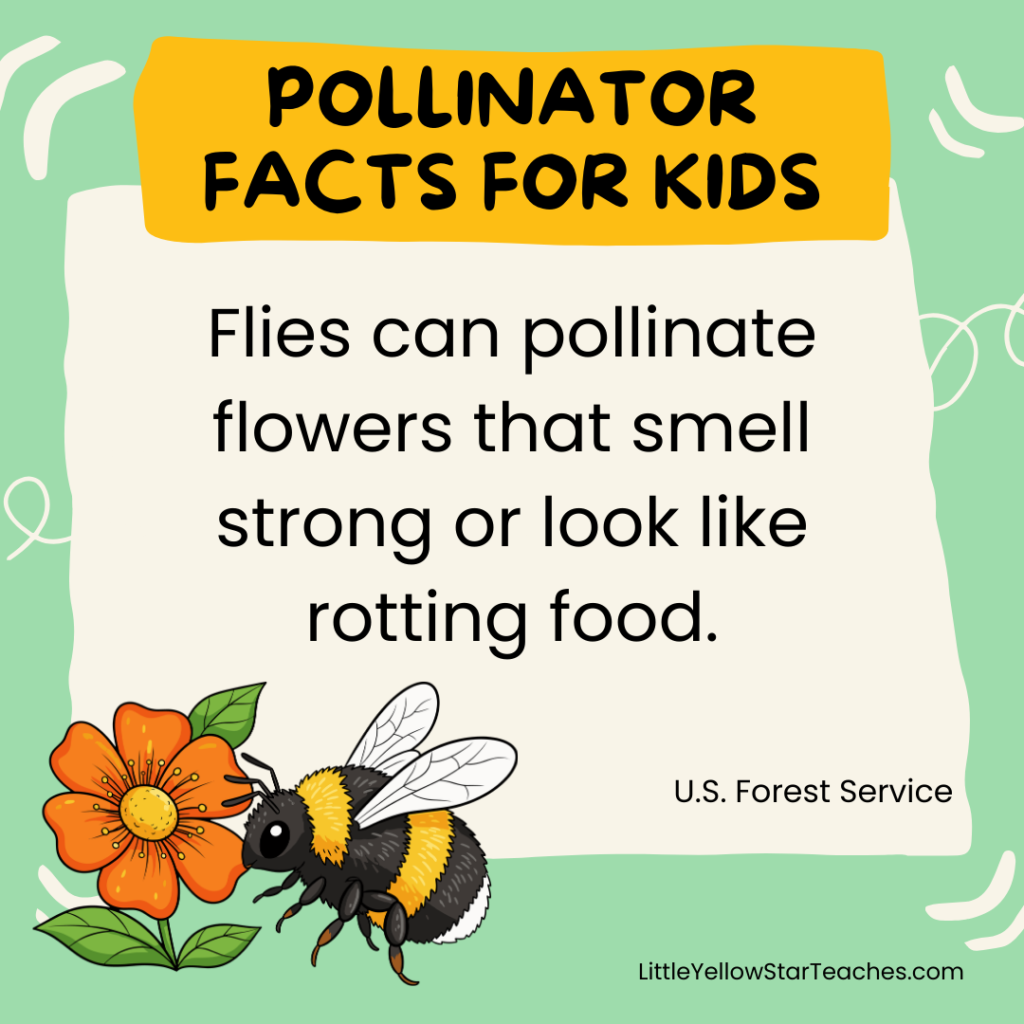
5. Flies can pollinate flowers that smell strong or look like rotting food.
Some plants attract flies by producing strong smells that resemble rotting food. When flies land on these flowers, they accidentally carry pollen from one plant to another.
Source: U.S. Forest Service
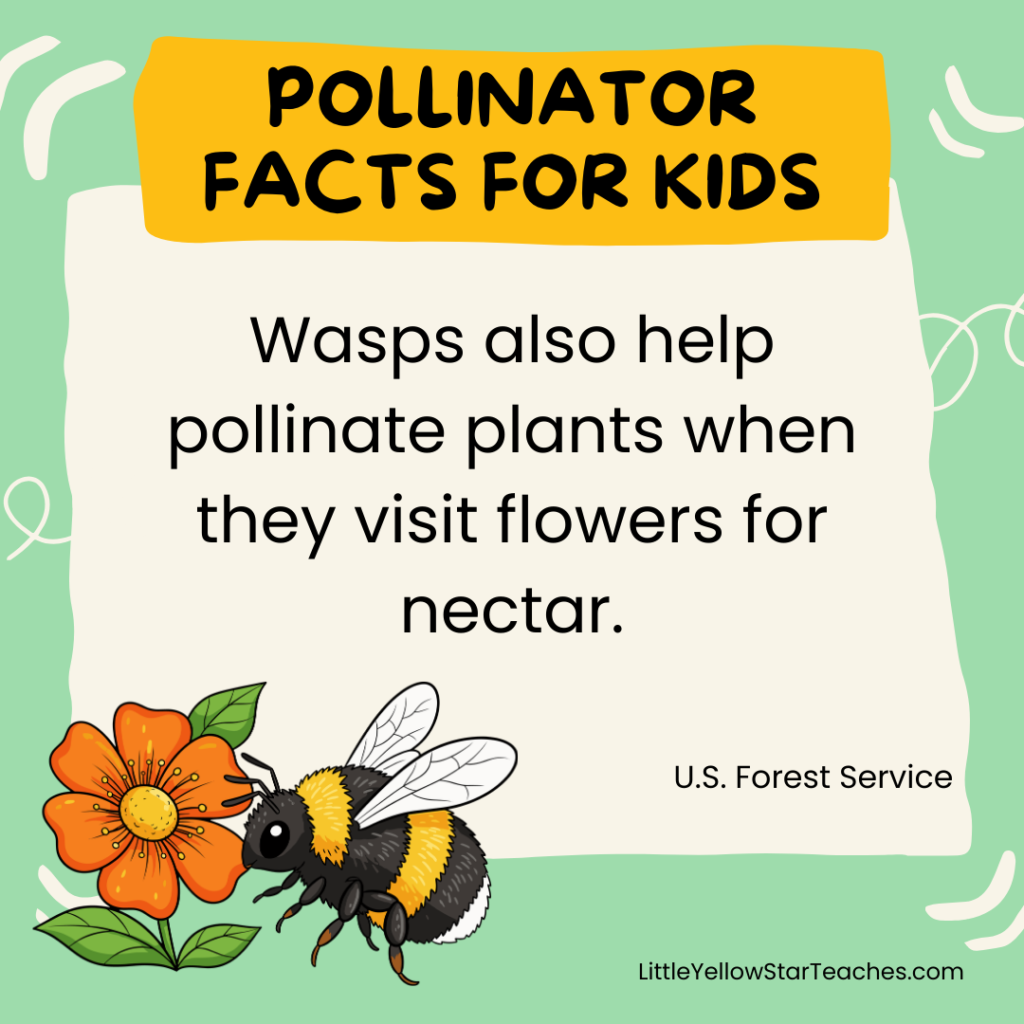
6. Wasps also help pollinate plants when they visit flowers for nectar.
Wasps may not be as famous as bees, but they can still act as pollinators. When they visit flowers to drink nectar, pollen sticks to their bodies and gets transferred to other plants.
Source: U.S. Forest Service
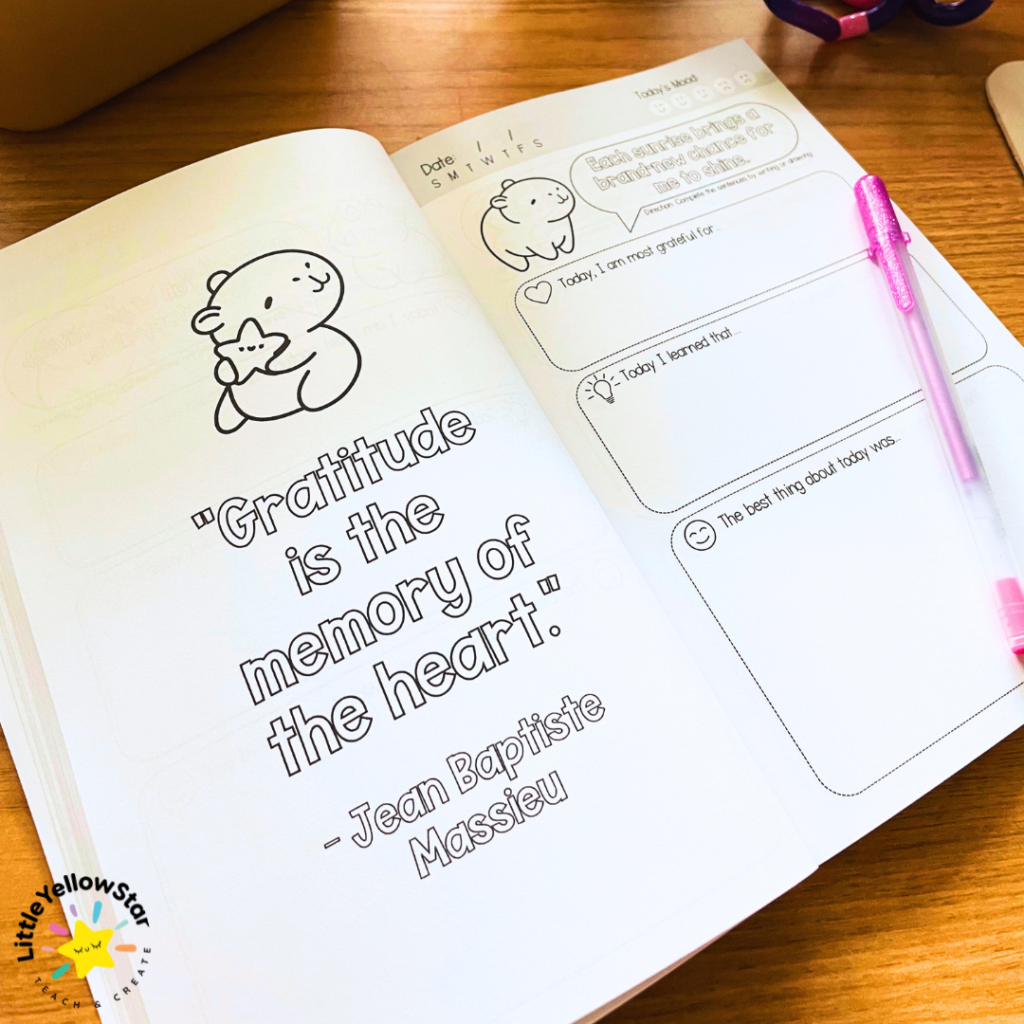
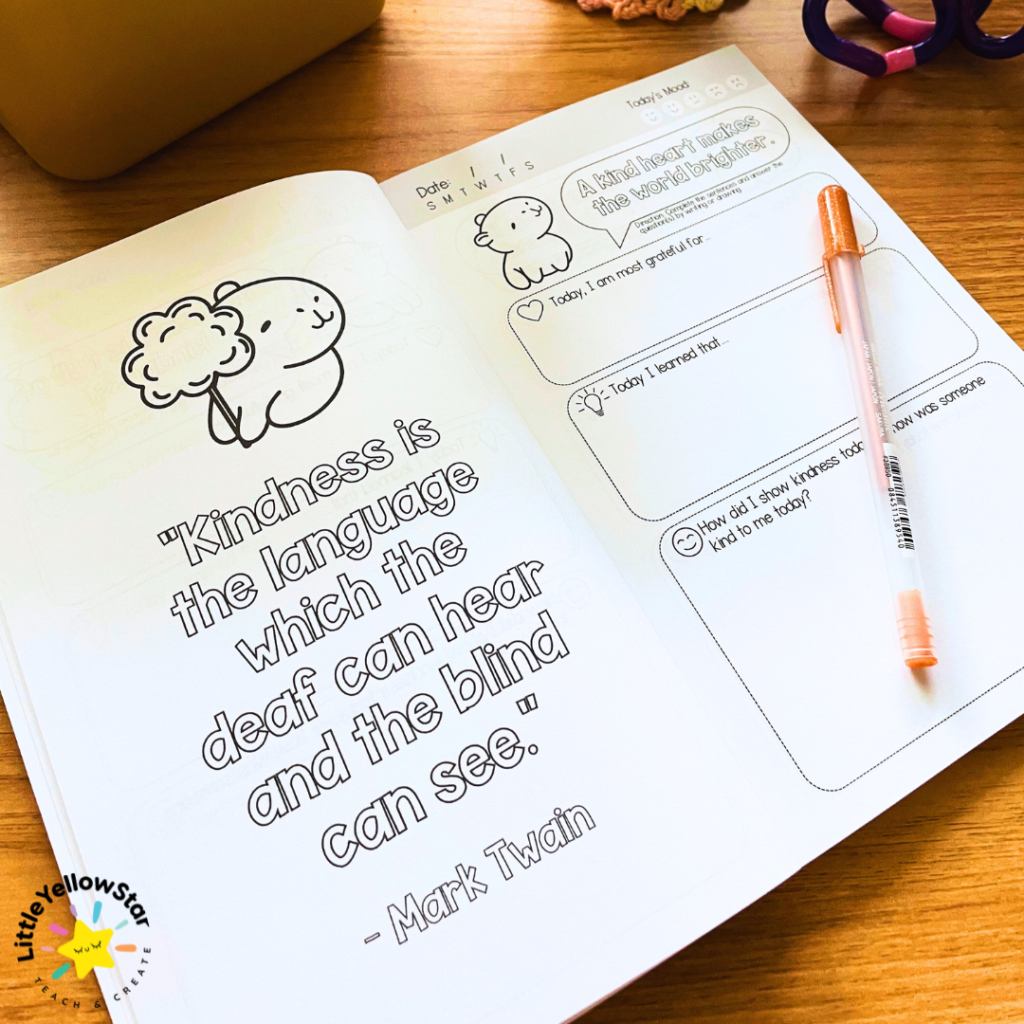
Check Out Capybara-Theme Daily Reflection Journals For Kids!
7. Pollinators help plants produce fruits like apples, berries, and pumpkins.
Many fruits and vegetables we eat depend on pollinators to grow. Apples, berries, pumpkins, and many other crops need pollinators to move pollen between flowers.
Source: USDA
8. About 75% of flowering plants depend on pollinators.
Scientists estimate that about three-quarters of all flowering plants rely on pollinators to reproduce. Without pollinators, many plants would struggle to survive.
Source: Pollinator Partnership
9. Some flowers open only at night to attract pollinators like bats and moths.
Not all pollination happens during the day. Some plants open their flowers at night to attract pollinators such as bats and moths that are active after sunset.
Source: U.S. Forest Service
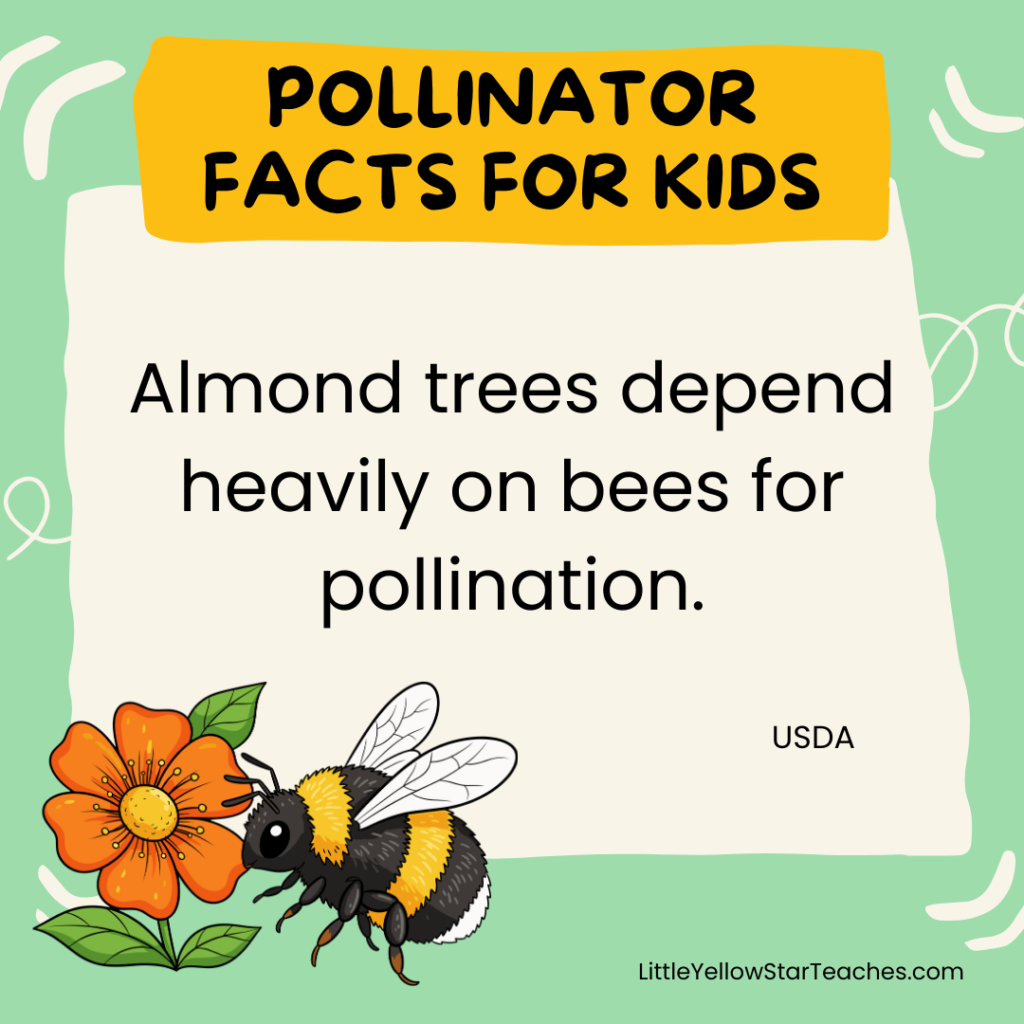
10. Almond trees depend heavily on bees for pollination.
Almond trees rely strongly on bees to pollinate their blossoms. In fact, many farmers bring millions of bees to orchards each year to help produce almonds.
Source: USDA
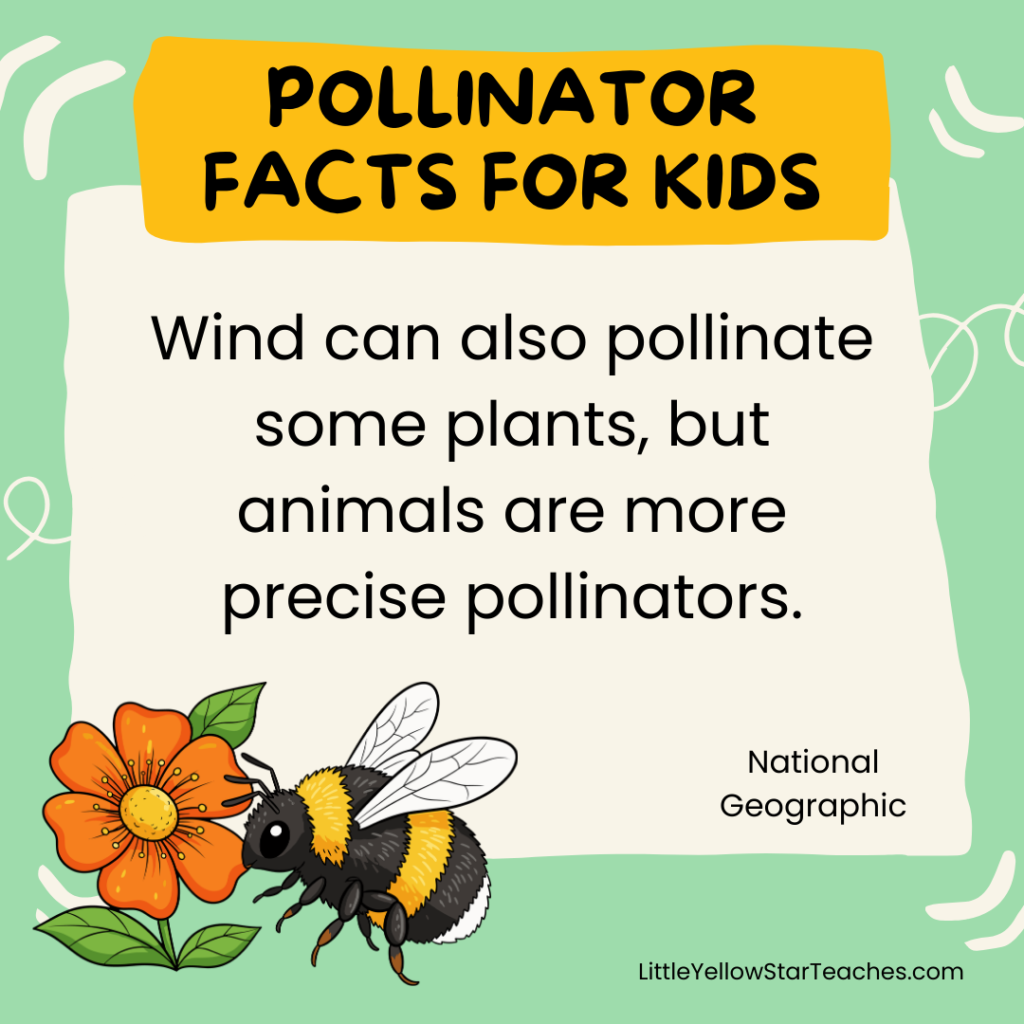
11. Wind can also pollinate some plants, but animals are more precise pollinators.
Some plants use wind to spread pollen, but animals are often better at pollination. Pollinators visit specific flowers, making it more likely that the pollen reaches the right plant.
Source: National Geographic
Additional Resources
Pollinator Related Vocabulary Words
Learn these important pollinator words:
- Pollination – The process of moving pollen from one flower to another
- Pollen – Tiny grains that plants use to reproduce
- Nectar – Sweet liquid in flowers that attracts pollinators
- Habitat – The natural place where animals live
- Flower – The part of a plant that produces pollen and nectar
- Ecosystem – A community of plants, animals, and their environment working together
Pollinator Activity Ideas For Kids
Bring pollinator facts for kids to life with these fun hands-on activities:
- Plant a Pollinator Garden – Grow flowers that attract bees and butterflies
- Butterfly Life Cycle Craft – Create each stage of a butterfly using paper or clay
- Pollination Game – Pretend to be a bee moving pollen between flowers
- Flower Observation Walk – Look for pollinators visiting flowers outside
- Build a Bee Hotel – Create a small home for helpful bees
- Draw Your Favorite Pollinator – Illustrate bees, hummingbirds, butterflies, or bats
Pollinator Related Stories and Myths
Pollinators have inspired many stories and traditions around the world:
- The Busy Bee Stories – Tales that teach the importance of hard work and teamwork
- Butterfly Transformation Stories – Stories about change and growth inspired by butterflies
- Hummingbird Legends – Native American stories that celebrate hummingbirds as bringers of beauty
- The Flower Helpers – Stories explaining how pollinators help plants grow
- Garden Fairy Tales – Magical tales about tiny creatures protecting flowers
- Nature Stories – Books and legends showing the important role pollinators play in the ecosystem
What’s Your Favorite Pollinator Fact?
Pollinators may be small, but they do a very big job! Thanks to these amazing animals, flowers bloom and many of the foods we eat can grow. Now that you know these pollinator facts for kids, you can help protect pollinators by planting flowers, observing nature, and sharing what you’ve learned. Keep exploring the natural world—there are always more exciting facts for kids to discover!
Bye for now,
Prima from LittleYellowStar
* * *
Other Blog Posts That You Might Enjoy:
- 15 Minutes Daily Social And Emotional Learning Activities For The Classroom (SEL Made Easy)
- 11 Classroom Essential First Year Teacher Must Haves That Won’t Break The Bank
- Meaningful And Fun Back To School Activity: Create A Classroom Wreath!