11 Spring Facts for Kids
Are you excited for warmer weather, blooming flowers, and longer days? These spring facts for kids will help you discover why spring is one of the most exciting seasons of the year! From baby animals and colorful flowers to rainy days and buzzing insects, spring is full of amazing changes in nature. Let’s explore fun vocabulary, hands-on activities, and stories about this wonderful season!
***Disclosure: This post contains an Amazon affiliate link that at no additional cost to you, I may earn a small commission when you purchase through the link from my blog. Thank you for your support!
Table of Contents
- What is Spring?
- Teaching Resources
- 11 Spring Facts For Kids
- Additional Resources
Check out these blog posts:
What is Spring?
Spring is one of the four seasons of the year, coming after winter and before summer. During spring, the weather starts to get warmer, plants begin to grow again, and many animals wake up or return after winter. Flowers bloom, trees grow new leaves, and baby animals are born. Days also get longer because the Earth tilts closer to the sun in the Northern Hemisphere. Spring is often known as the season of growth and new beginnings.
Teaching Resources


11 Spring Facts for Kids
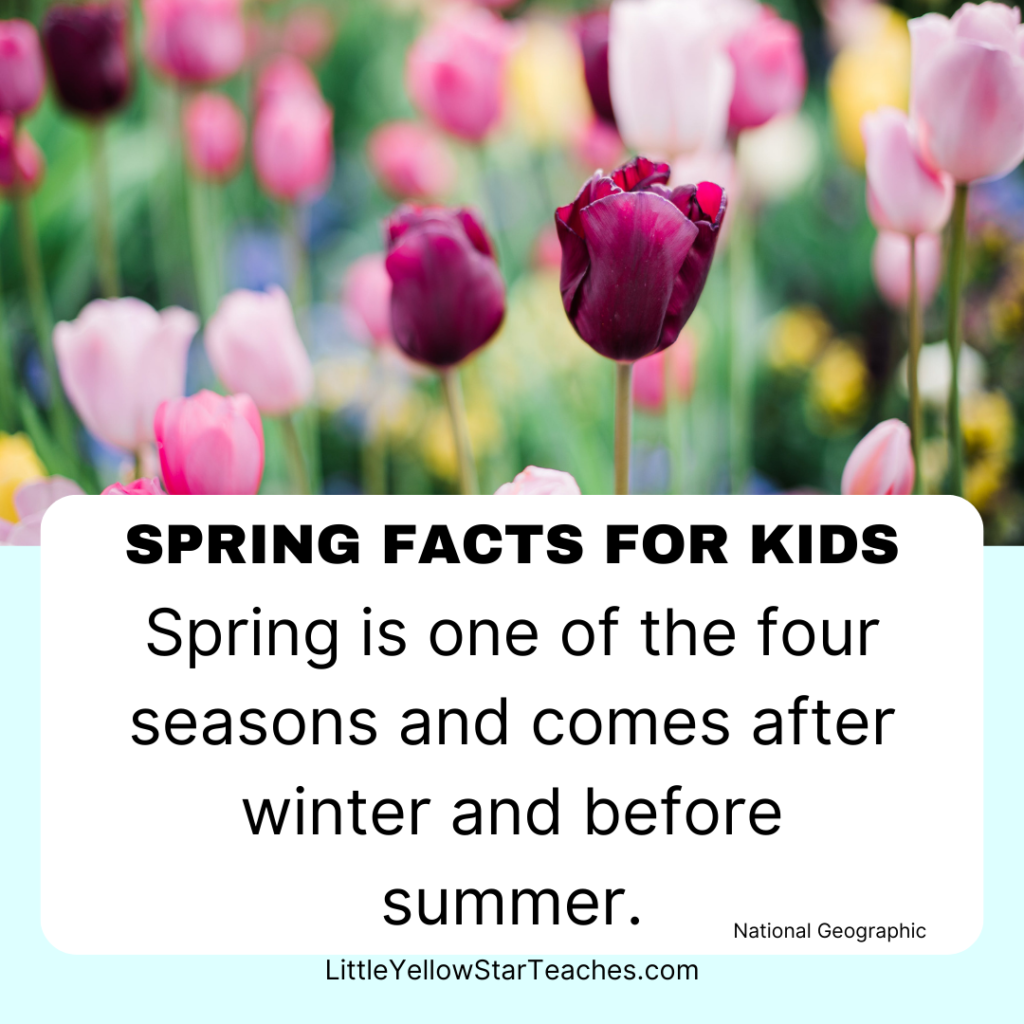
1. Spring is one of the four seasons and comes after winter and before summer.
Spring is the season when the weather begins to warm up and plants start growing again after winter. It is often known as a time of renewal when flowers bloom and animals become more active.
Source: National Geographic
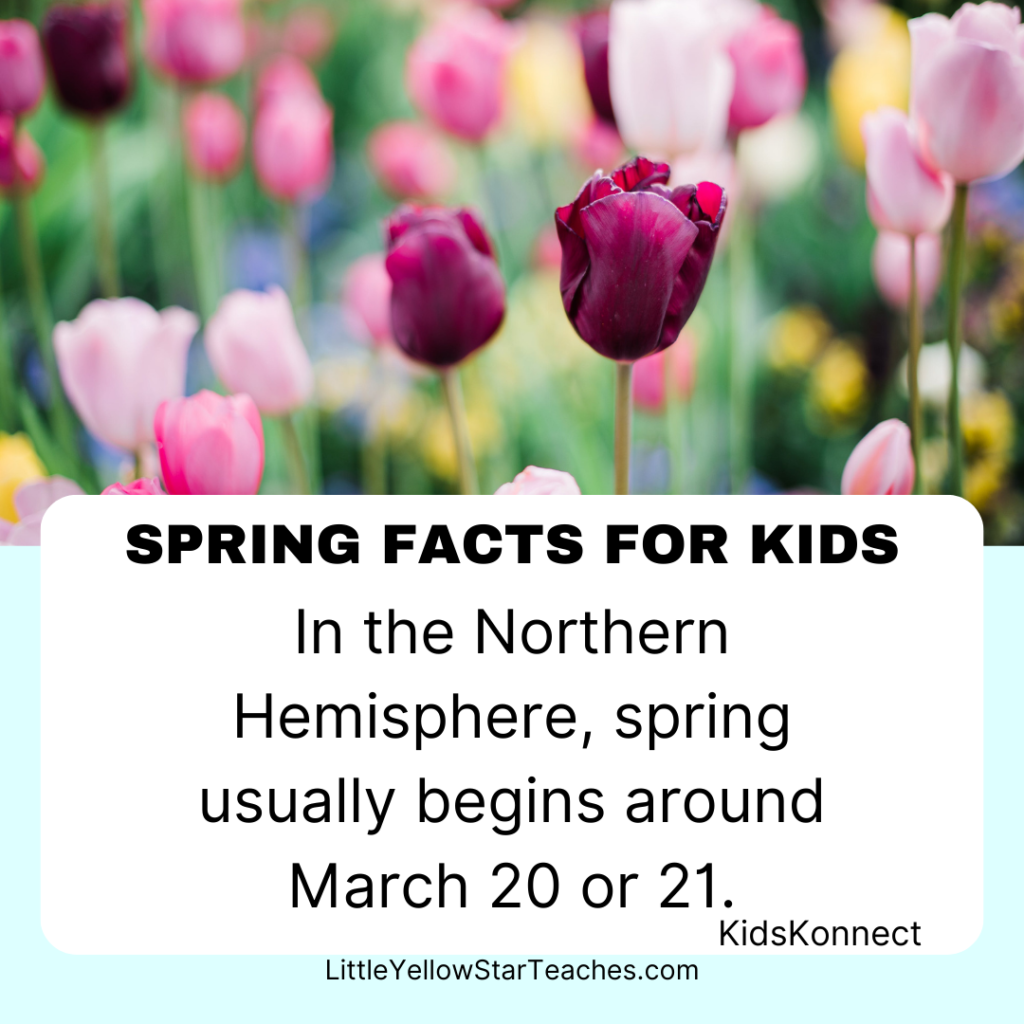
2. In the Northern Hemisphere, spring usually begins around March 20 or 21.
Spring does not start on the same date every year, but it usually begins around March 20 or 21 in the Northern Hemisphere. This marks the transition from the cold winter months to warmer days.
Source: KidsKonnect
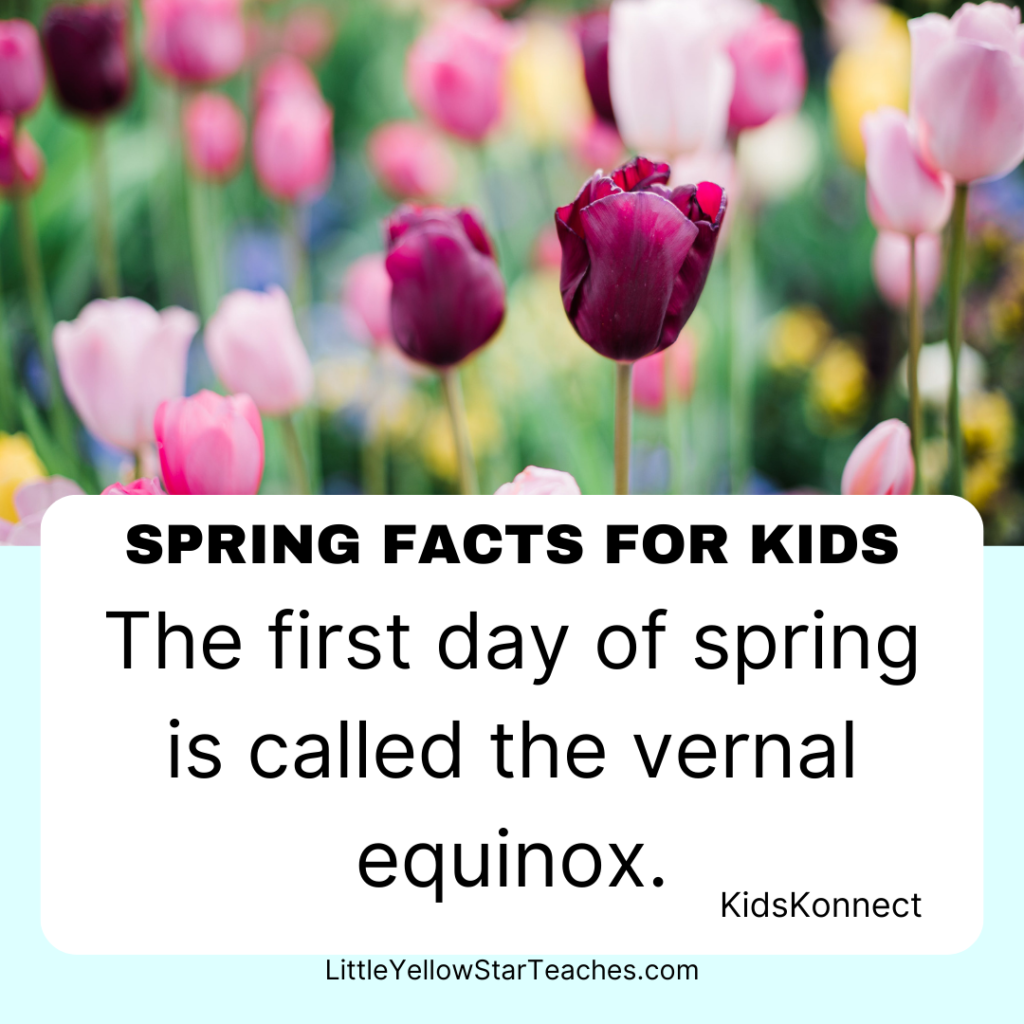
3. The first day of spring is called the vernal equinox.
The beginning of spring is known as the vernal equinox, an important event in Earth’s yearly journey around the Sun. It marks the official start of the spring season in many parts of the world.
Source: KidsKonnect

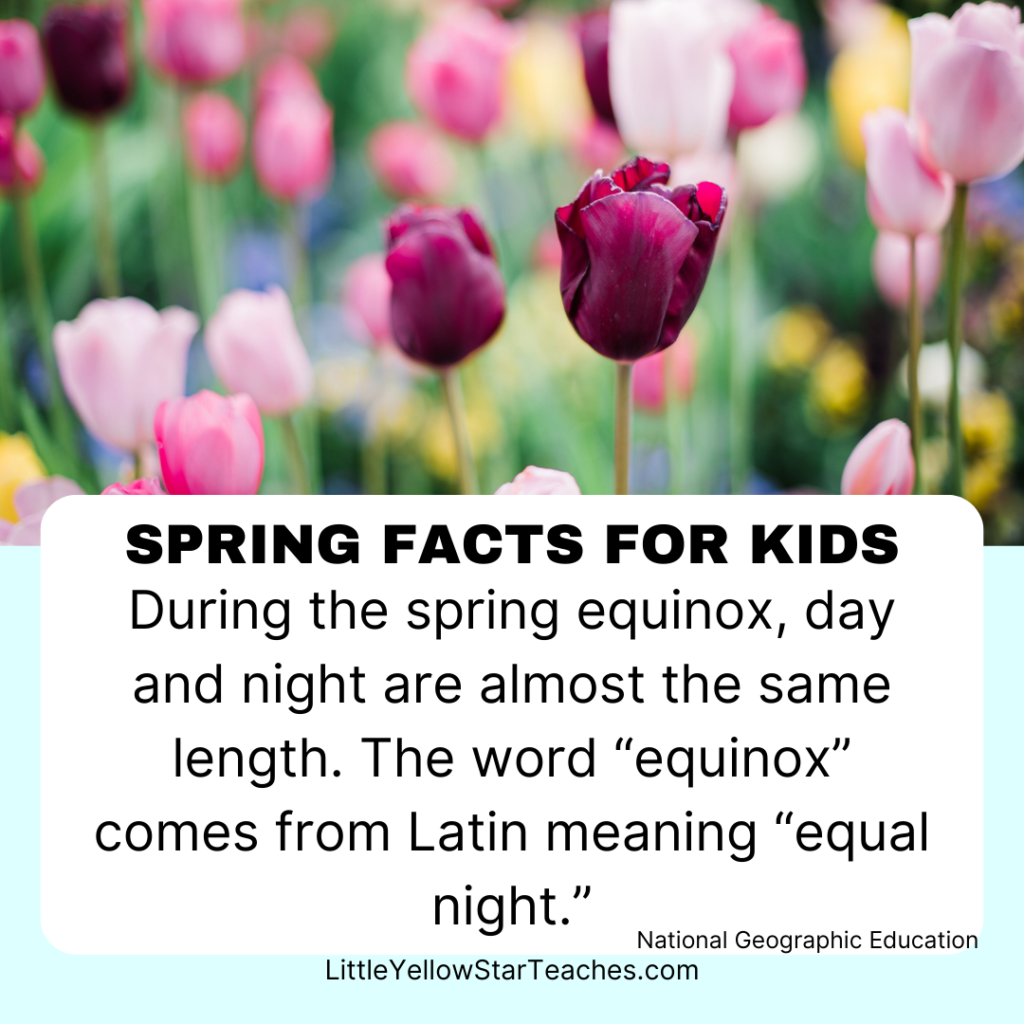
4. During the spring equinox, day and night are almost the same length.
On the day of the spring equinox, daylight and nighttime are nearly equal. The word “equinox” comes from Latin and means “equal night.”
Source: National Geographic Education
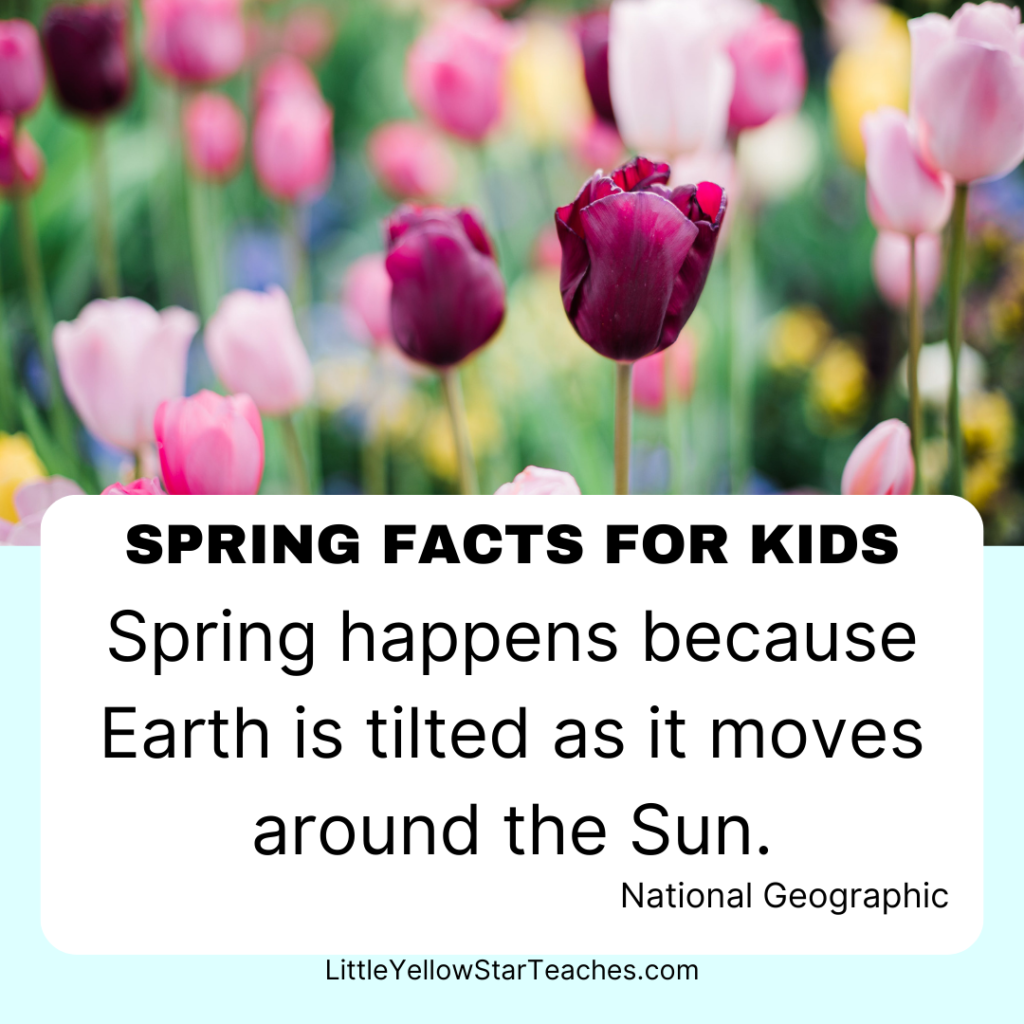
5. Spring happens because Earth is tilted as it moves around the Sun.
Earth is slightly tilted as it travels around the Sun. During spring, the Northern Hemisphere begins tilting toward the Sun, bringing longer days and warmer temperatures.
Source: National Geographic
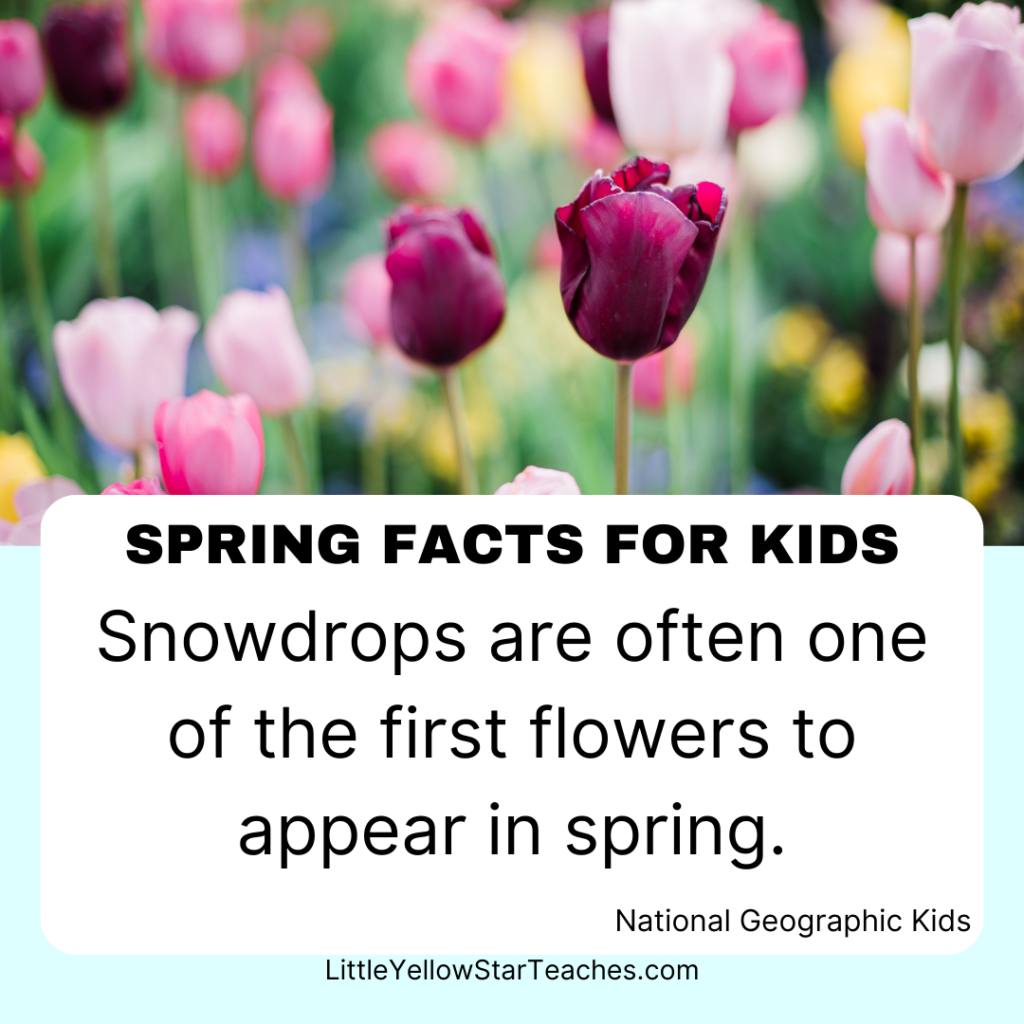
6. Snowdrops are often one of the first flowers to appear in spring.
Snowdrops are tiny white flowers that often bloom while snow is still on the ground. Because they appear so early, they are one of the first signs that spring is arriving.
Source: National Geographic Kids
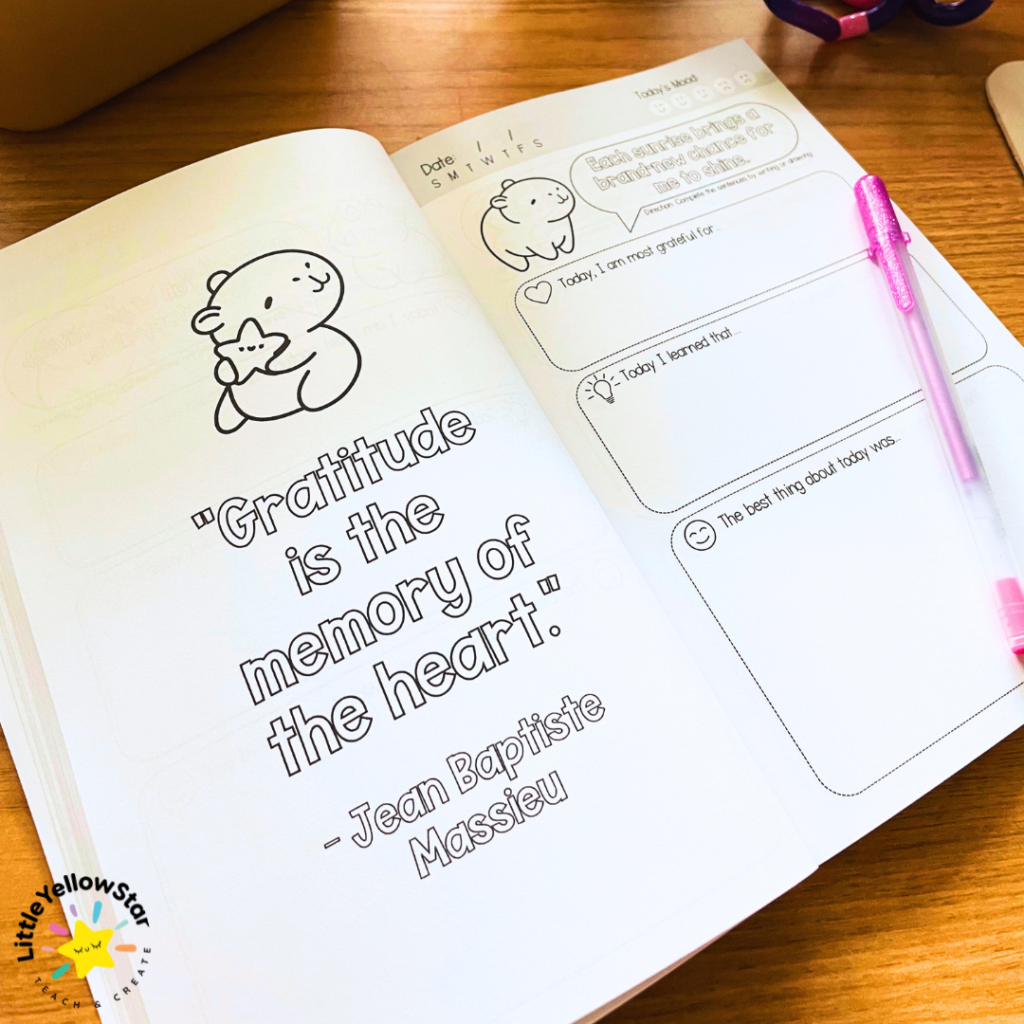
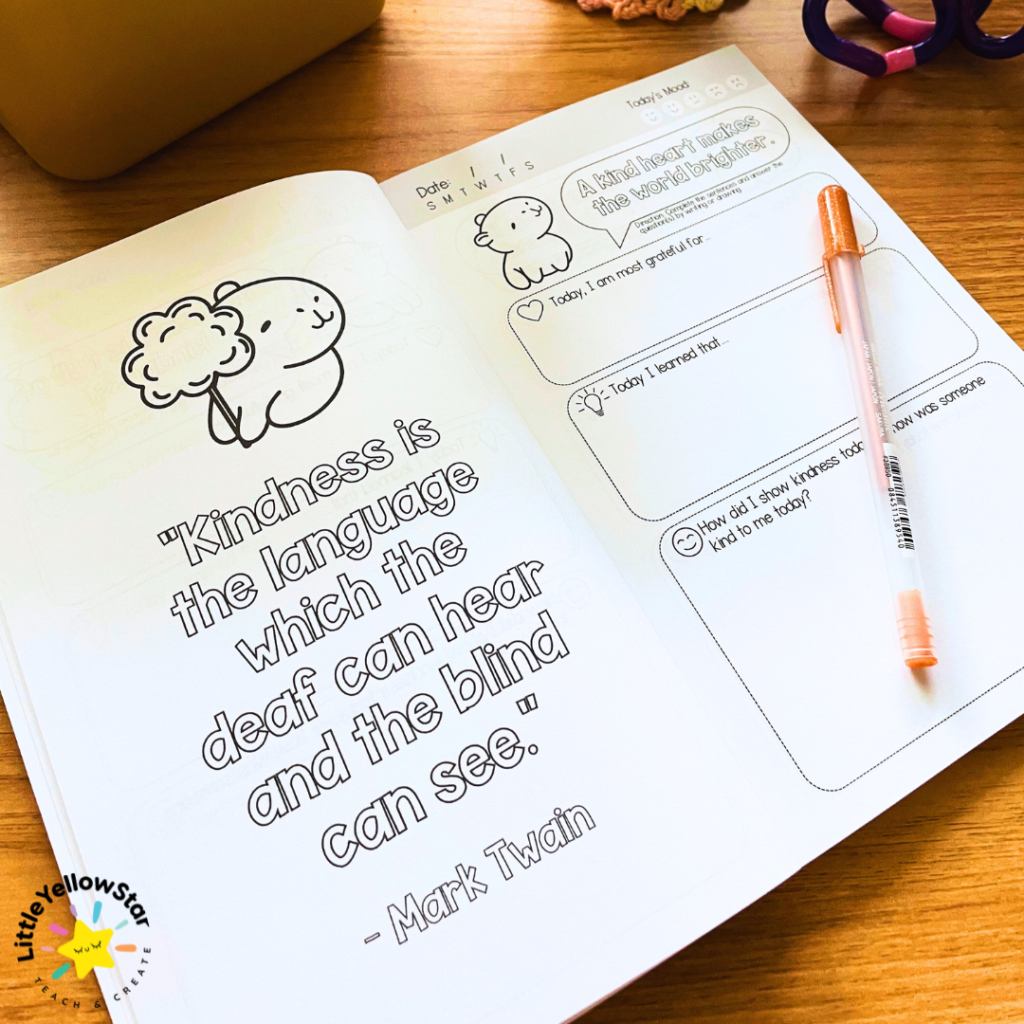
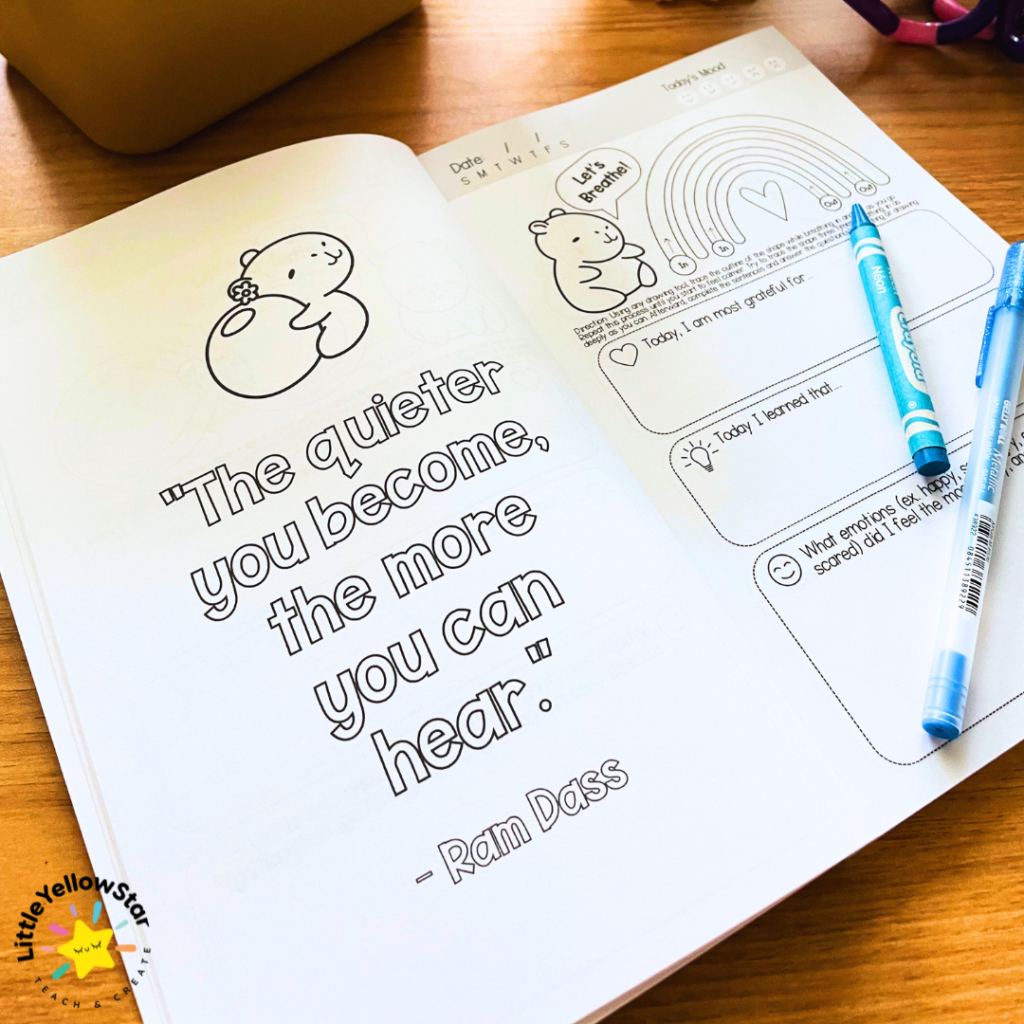
Check Out Capybara-Theme Daily Reflection Journals For Kids!
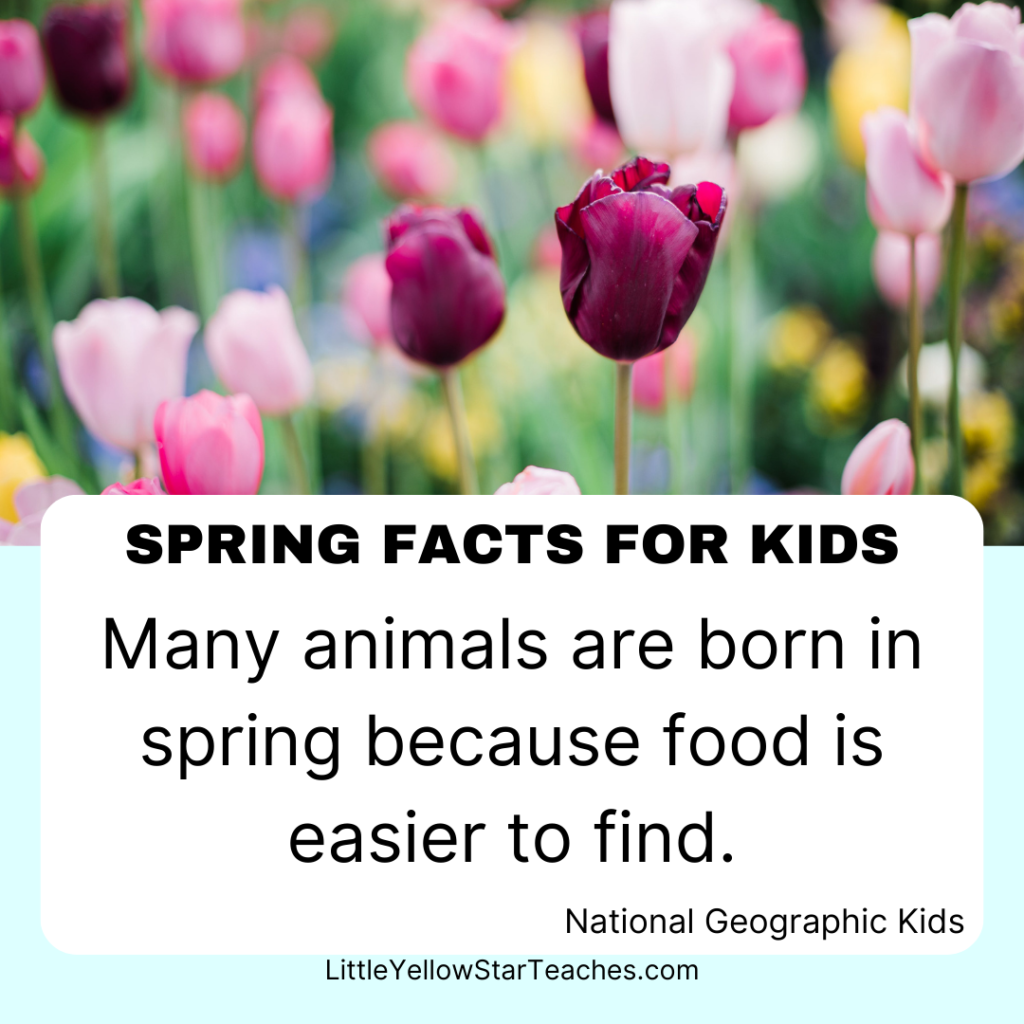
7. Many animals are born in spring because food is easier to find.
Spring is a great time for baby animals to be born. Plants grow again and insects return, making it easier for animal parents to find food for their young.
Source: National Geographic Kids
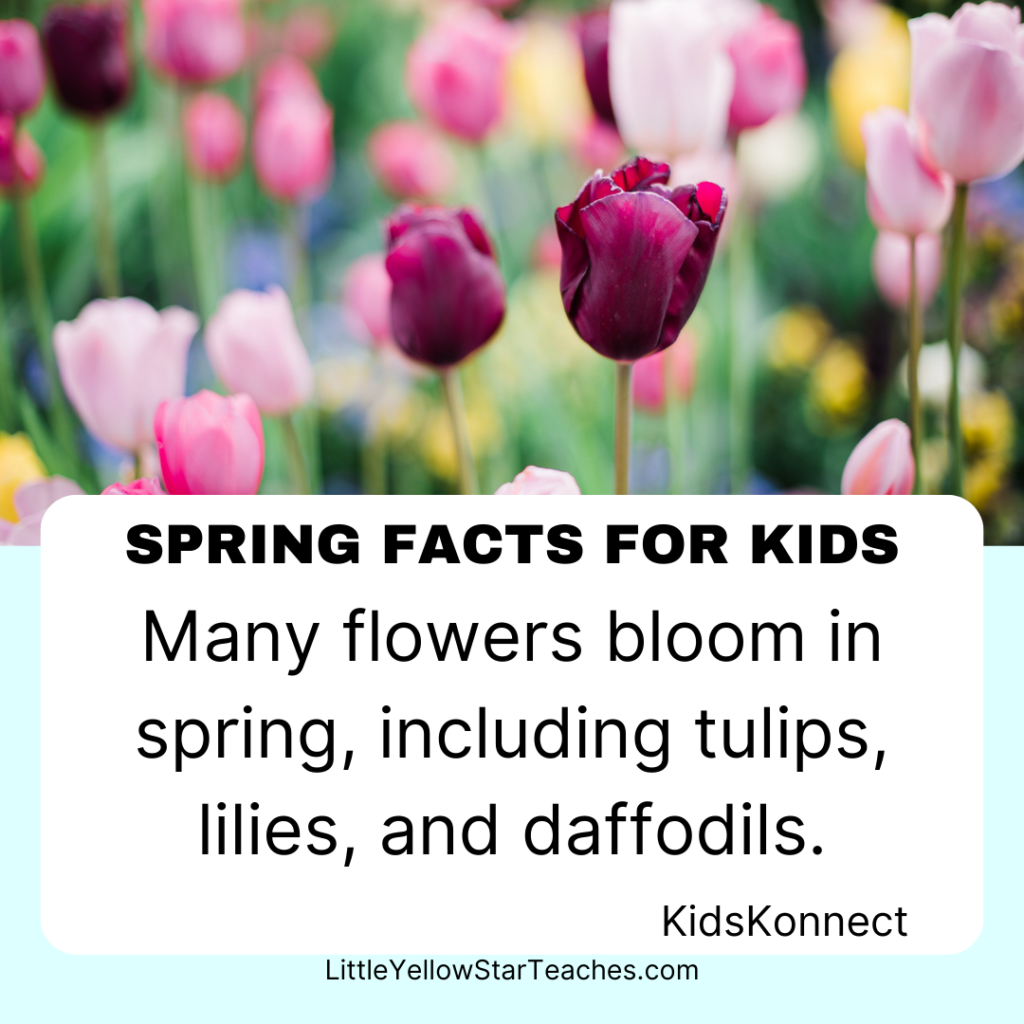
8. Many flowers bloom in spring, including tulips, lilies, and daffodils.
Spring brings colorful flowers that brighten gardens and fields. Popular spring blooms include tulips, lilies, and daffodils, which grow when temperatures warm up and sunlight increases.
Source: KidsKonnect
9. Some animals wake up from winter hibernation during spring.
Certain animals, like bears and groundhogs, spend the winter in a deep sleep called hibernation. When spring arrives and the weather warms, they wake up and begin searching for food again.
Source: National Geographic
10. Many migratory birds return north during spring.
Birds that fly south for winter, such as geese and swallows, return north when spring arrives. They migrate back to build nests and raise their chicks.
Source: National Geographic Kids
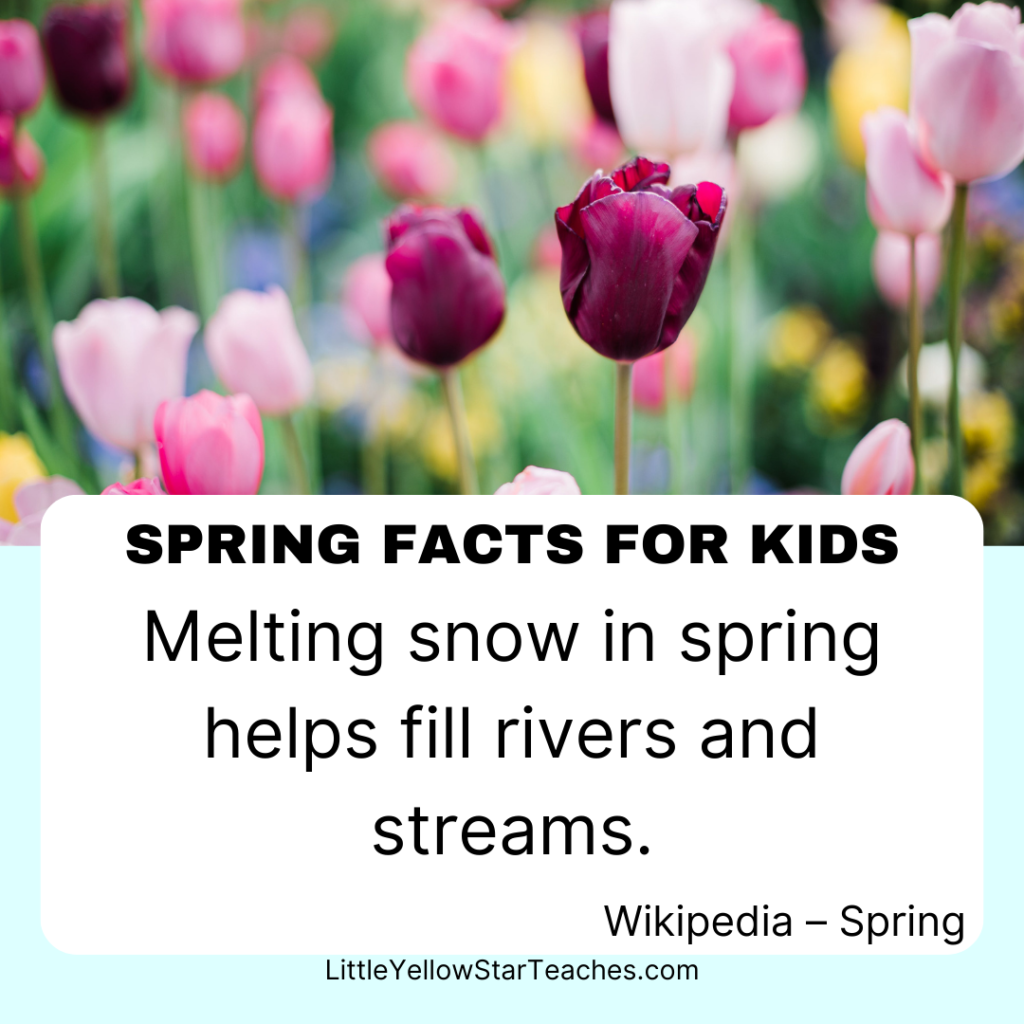
11. Melting snow in spring helps fill rivers and streams.
As temperatures rise, snow and ice begin to melt. This water flows into rivers and streams, helping refill lakes and providing water for plants and animals.
Source: Wikipedia – Spring
Additional Resources
Spring Related Vocabulary Words
Learn these important spring words to become a seasonal expert:
- Bloom – When a flower opens and shows its petals
- Migration – When animals travel to new places during the seasons
- Pollination – When bees and other animals help plants grow seeds
- Bud – A small growth on a plant that will become a leaf or flower
- Rain shower – A short period of rain that happens often in spring
- Equinox – The time when day and night are about the same length, marking the start of spring
Spring Activity Ideas For Kids
Bring spring facts for kids to life with these creative activities:
- Plant Seeds – Grow flowers, herbs, or vegetables and watch them sprout
- Spring Nature Walk – Look for buds, birds, and insects returning after winter
- Butterfly Craft – Make colorful butterflies using paper or paint
- Rain Gauge Experiment – Measure how much rain falls during spring showers
- Spring Flower Art – Paint or draw your favorite spring flowers
- Garden Observation Journal – Write or draw what you notice changing outside each week
Spring Related Stories and Myths
Spring has inspired stories and legends around the world! Here are some fun ones:
- Persephone and the Seasons – A Greek myth explaining why spring returns each year
- The Easter Bunny – A springtime story about a magical bunny delivering eggs
- Cherry Blossom Legends – Stories from Japan about the beauty of blooming trees
- Rain and Rainbow Tales – Folktales explaining why rain brings colorful rainbows
- Spring Fairy Stories – Magical tales of fairies helping flowers bloom
- Animal Awakening Stories – Stories about animals waking up from winter sleep
What’s Your Favorite Spring Fact?
Spring is a season full of color, growth, and exciting changes in nature. Now that you know these spring facts for kids, you can explore the outdoors, try fun activities, and watch the world wake up after winter. Keep observing nature and asking questions—there are always more amazing facts for kids waiting to be discovered!
Bye for now,
Prima from LittleYellowStar
* * *
Other Blog Posts That You Might Enjoy:
- 15 Minutes Daily Social And Emotional Learning Activities For The Classroom (SEL Made Easy)
- 11 Classroom Essential First Year Teacher Must Haves That Won’t Break The Bank
- Meaningful And Fun Back To School Activity: Create A Classroom Wreath!