11 Moth Facts for Kids
Have you ever seen a soft, fluttering insect flying around a light at night? These moth facts for kids will introduce you to one of nature’s most interesting insects. Moths may look similar to butterflies, but they have their own special features and habits. In this guide, you’ll learn what moths are, discover important vocabulary, try fun activities, and explore stories about these fascinating night flyers.
***Disclosure: This post contains an Amazon affiliate link that at no additional cost to you, I may earn a small commission when you purchase through the link from my blog. Thank you for your support!
Table of Contents
- What is a Moth?
- Teaching Resources
- 11 Moth Facts For Kids
- Additional Resources
- Moth Related Vocabulary Words
- Moth Activity Ideas For Kids
- Moth Related Stories and Myths
Check out these blog posts:
What is a Moth?
A moth is a type of insect that belongs to the group called Lepidoptera, which also includes butterflies. Most moths are active at night, which makes them nocturnal insects. Moths have wings covered in tiny scales that create beautiful patterns and colors. Like butterflies, moths go through metamorphosis, starting as eggs, becoming caterpillars, then forming a cocoon or chrysalis before emerging as adult moths.
Teaching Resources


11 Moth Facts for Kids
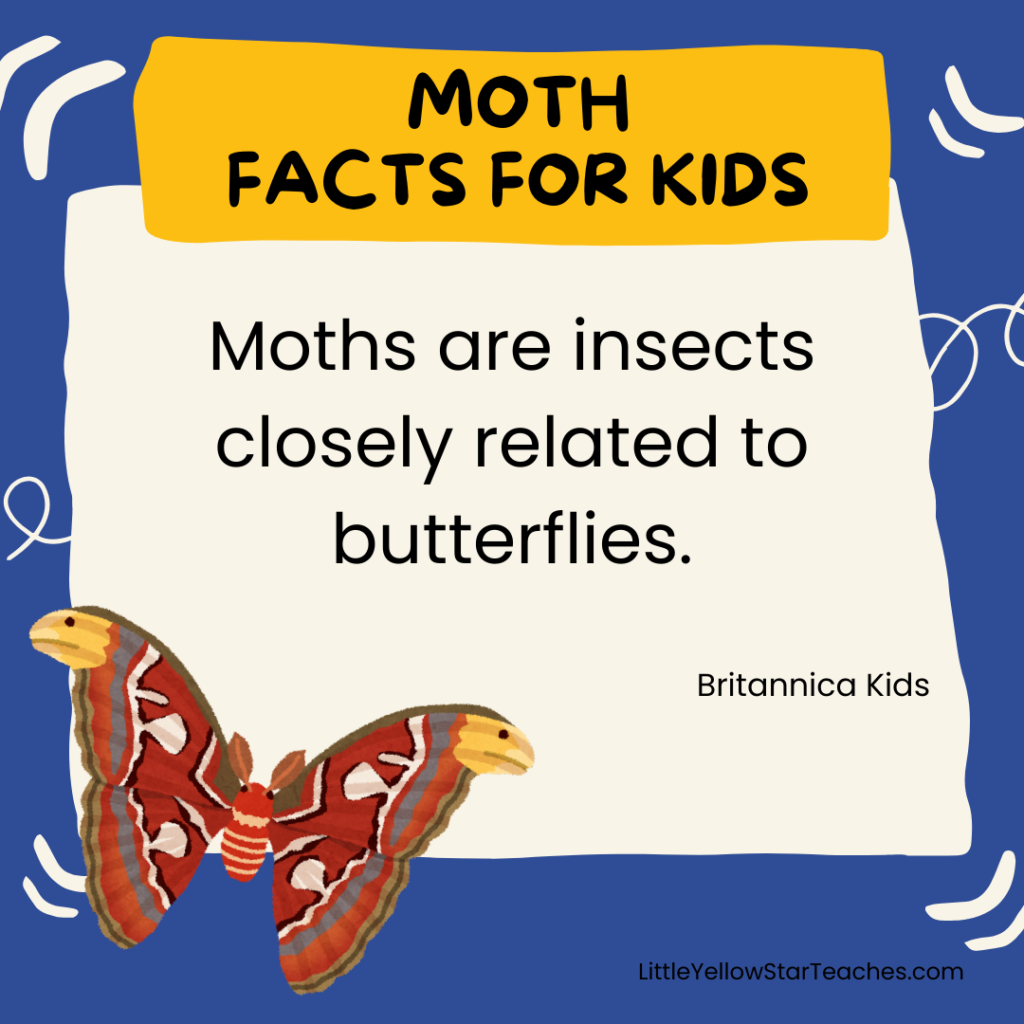
1. Moths are insects closely related to butterflies.
Moths and butterflies belong to the same insect group called Lepidoptera. They both have wings covered in tiny scales and go through the same stages of life as they grow.
Source: Britannica Kids
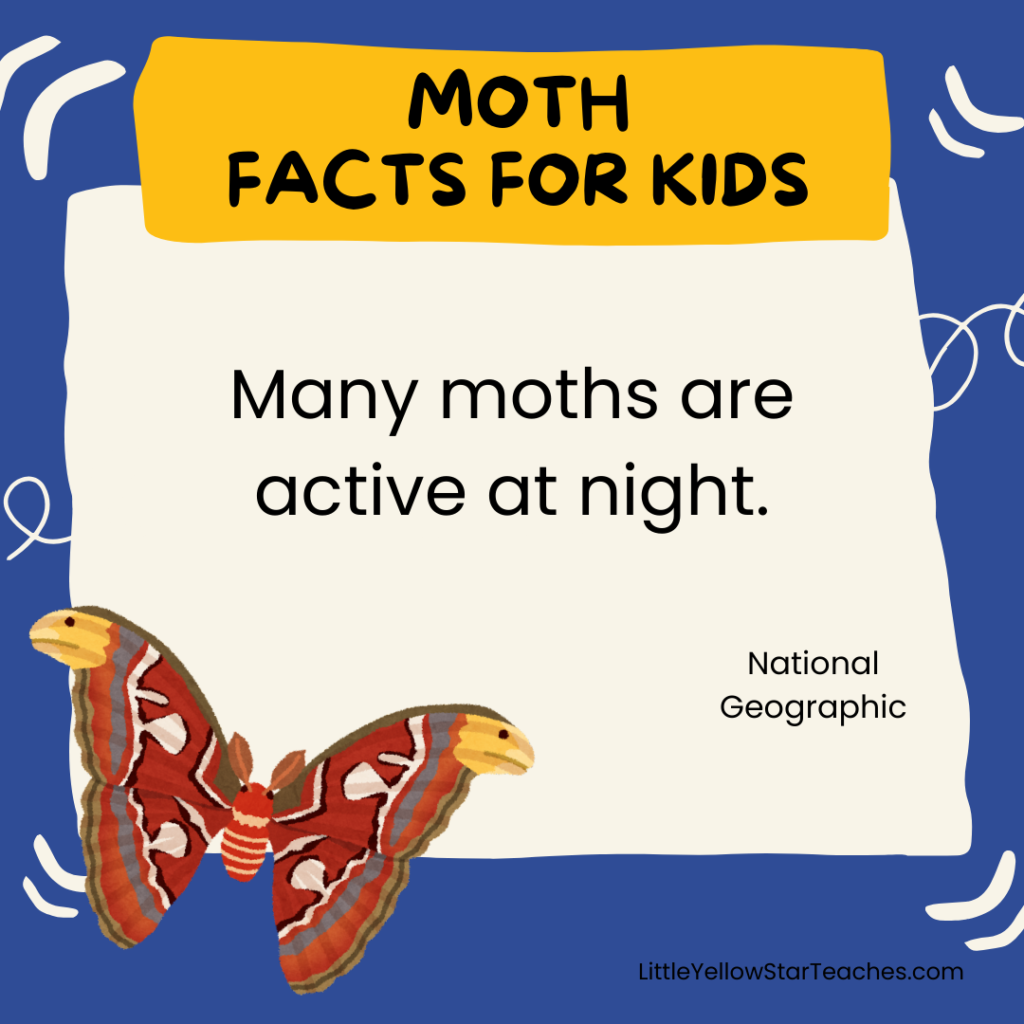
2. Many moths are active at night.
Most moths are nocturnal, meaning they are active at night instead of during the day. They often fly around after sunset searching for nectar and mates.
Source: National Geographic
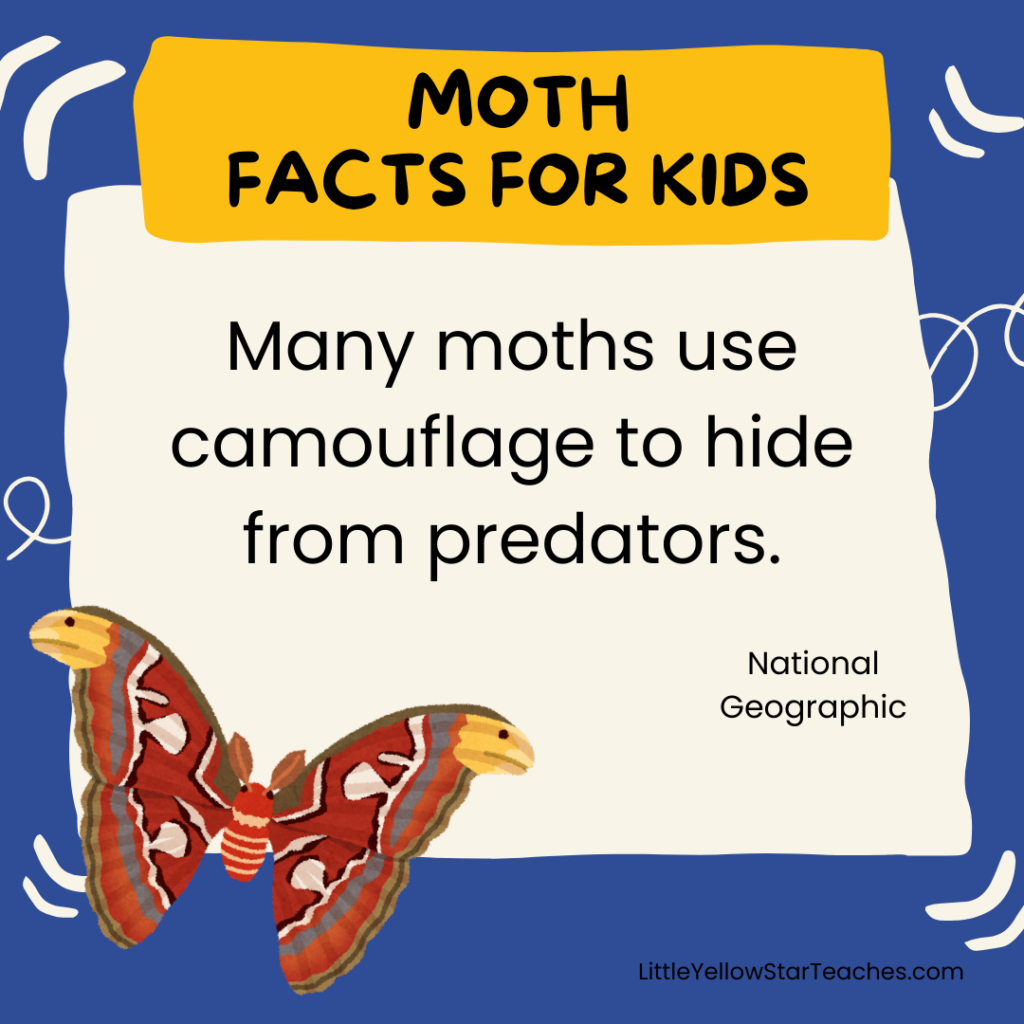
3. Many moths use camouflage to hide from predators.
Moths often have colors and patterns that help them blend into their surroundings. This camouflage helps protect them from animals that might try to eat them.
Source: National Geographic

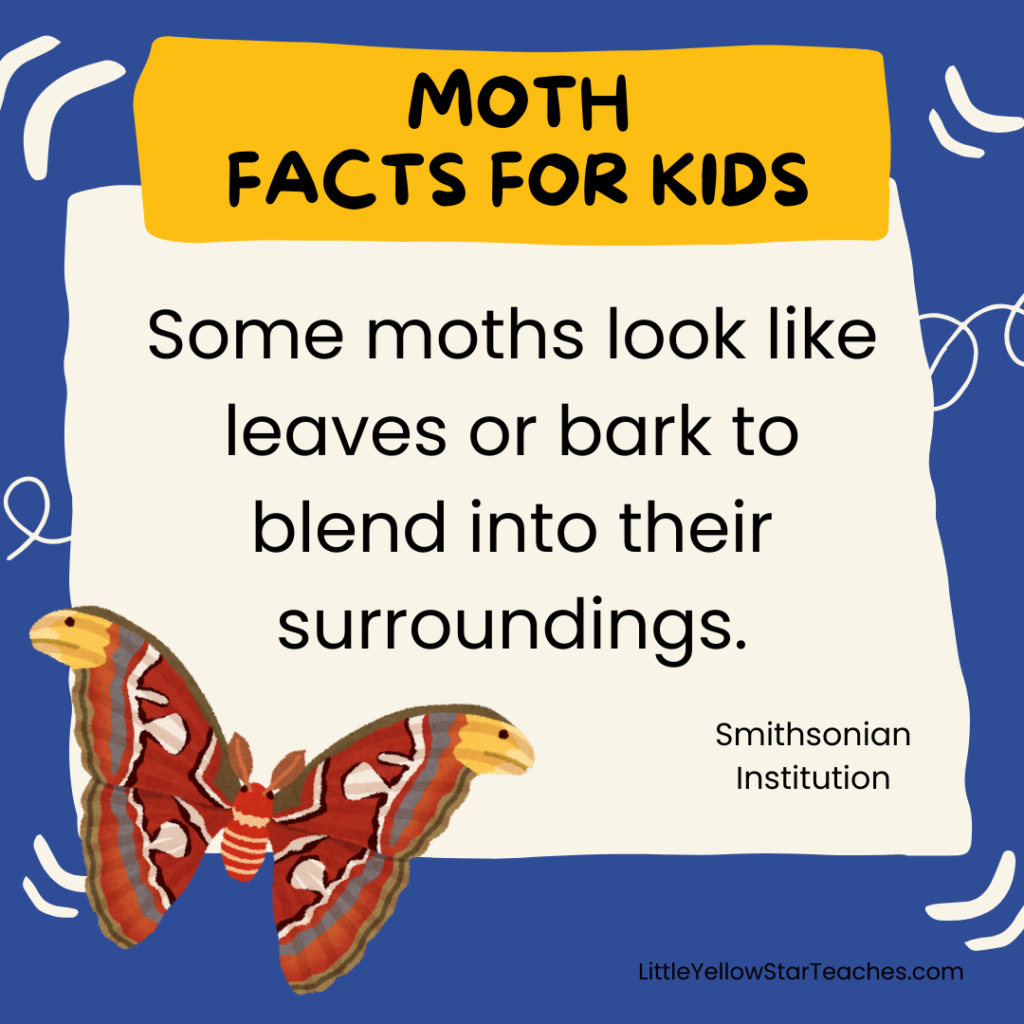
4. Some moths look like leaves or bark to blend into their surroundings.
Certain moth species have wings that resemble leaves, tree bark, or even twigs. When they rest on trees or plants, they can be very hard for predators to spot.
Source: Smithsonian Institution
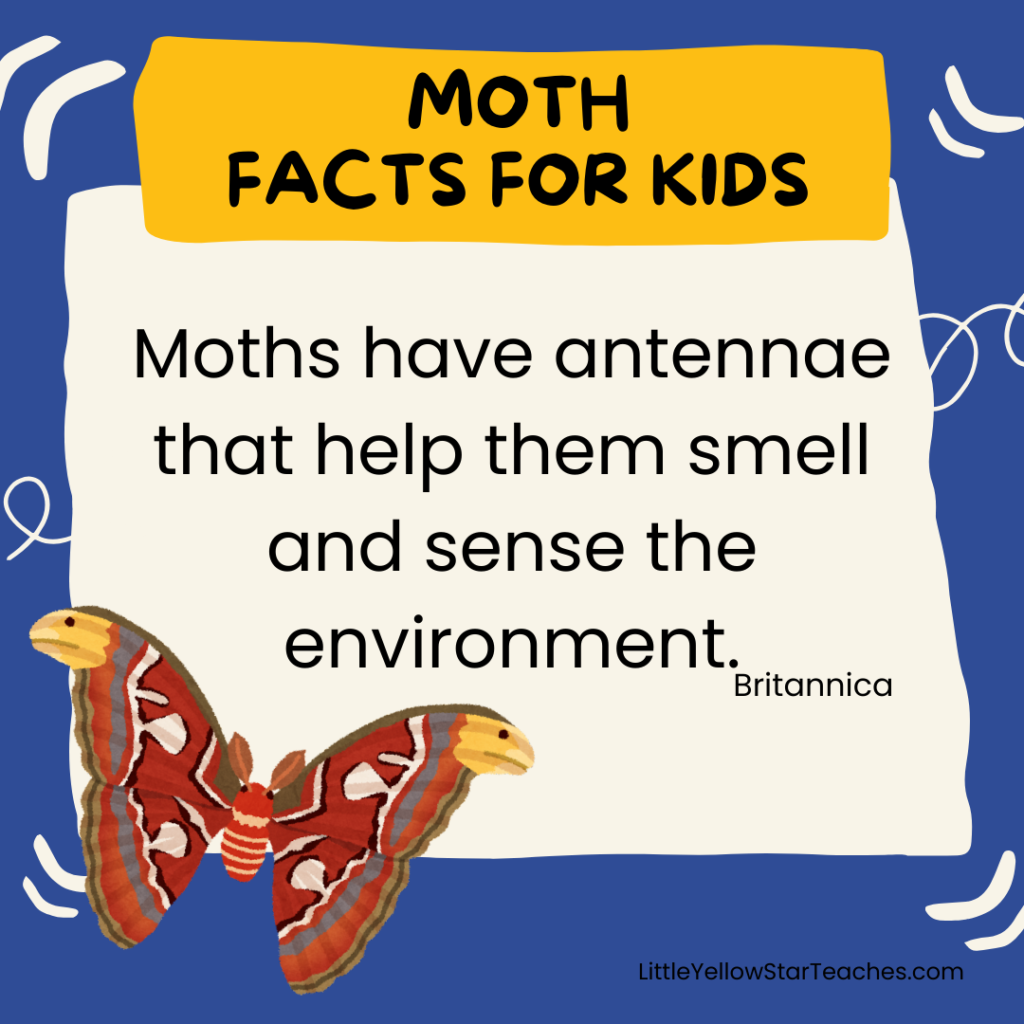
5. Moths have antennae that help them smell and sense the environment.
Moths use their antennae to detect scents and signals in the air. These antennae help them find food, locate mates, and sense danger nearby.
Source: Britannica
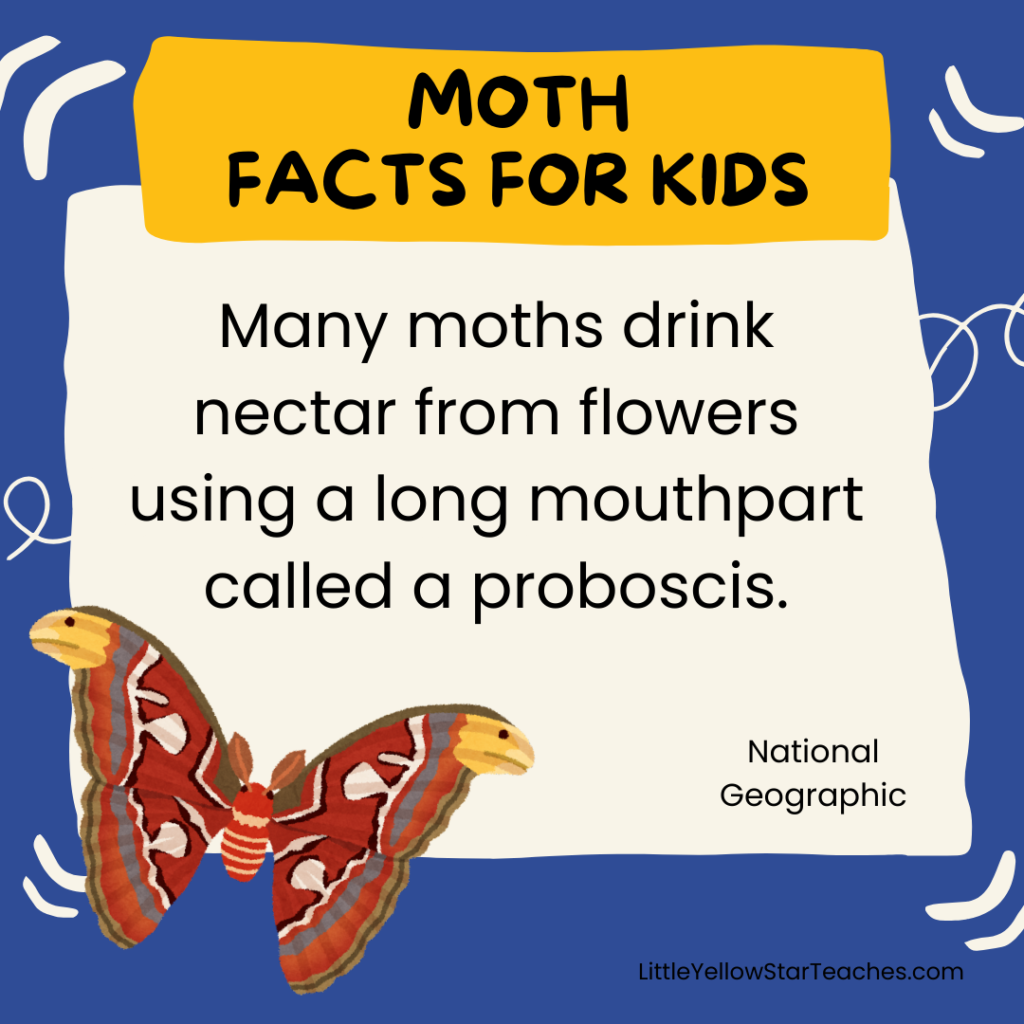
6. Many moths drink nectar from flowers using a long mouthpart called a proboscis.
Moths feed on nectar by using a long tube-like mouthpart called a proboscis. This straw-like structure lets them reach deep inside flowers to drink nectar.
Source: National Geographic
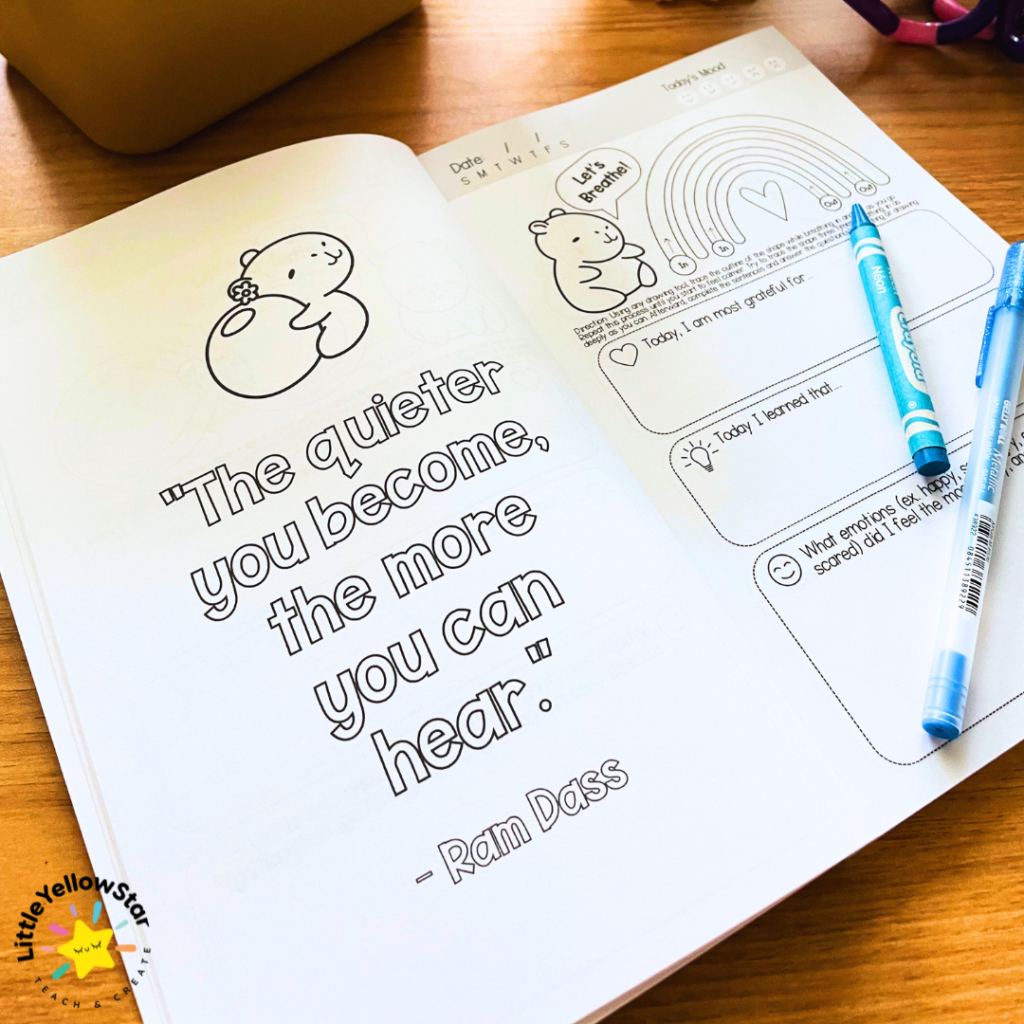
Check Out Capybara-Theme Daily Reflection Journals For Kids!
7. Some flowers bloom at night specifically to attract moths.
Certain plants open their flowers at night so moths can pollinate them. These flowers often produce strong scents that help moths find them in the dark.
Source: U.S. Forest Service
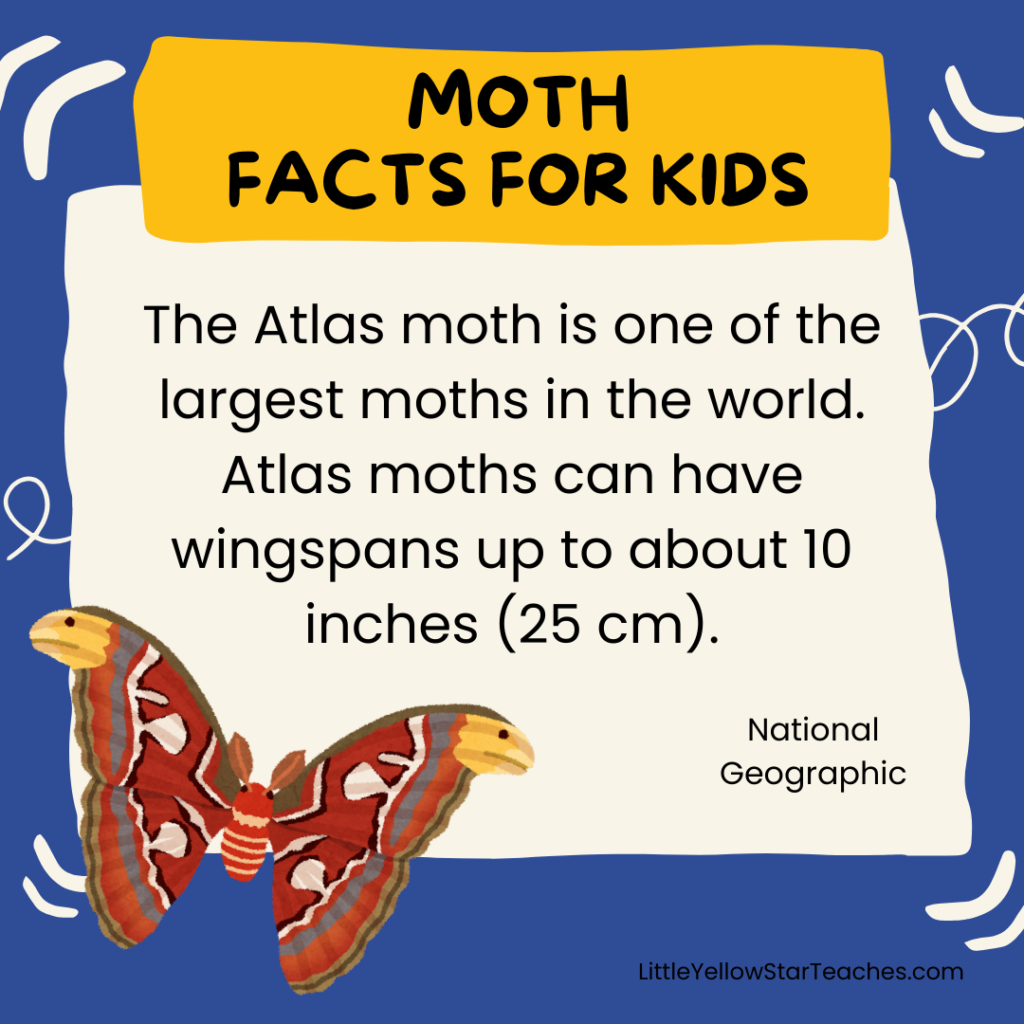
8. The Atlas moth is one of the largest moths in the world.
The Atlas moth is one of the biggest moth species on Earth. Its wingspan can reach about 10 inches (25 centimeters) across!
Source: National Geographic
9. Moths are an important food source for birds, bats, and frogs.
Many animals depend on moths as food. Birds, bats, frogs, and other creatures eat moths, making them an important part of many ecosystems.
Source: National Geographic
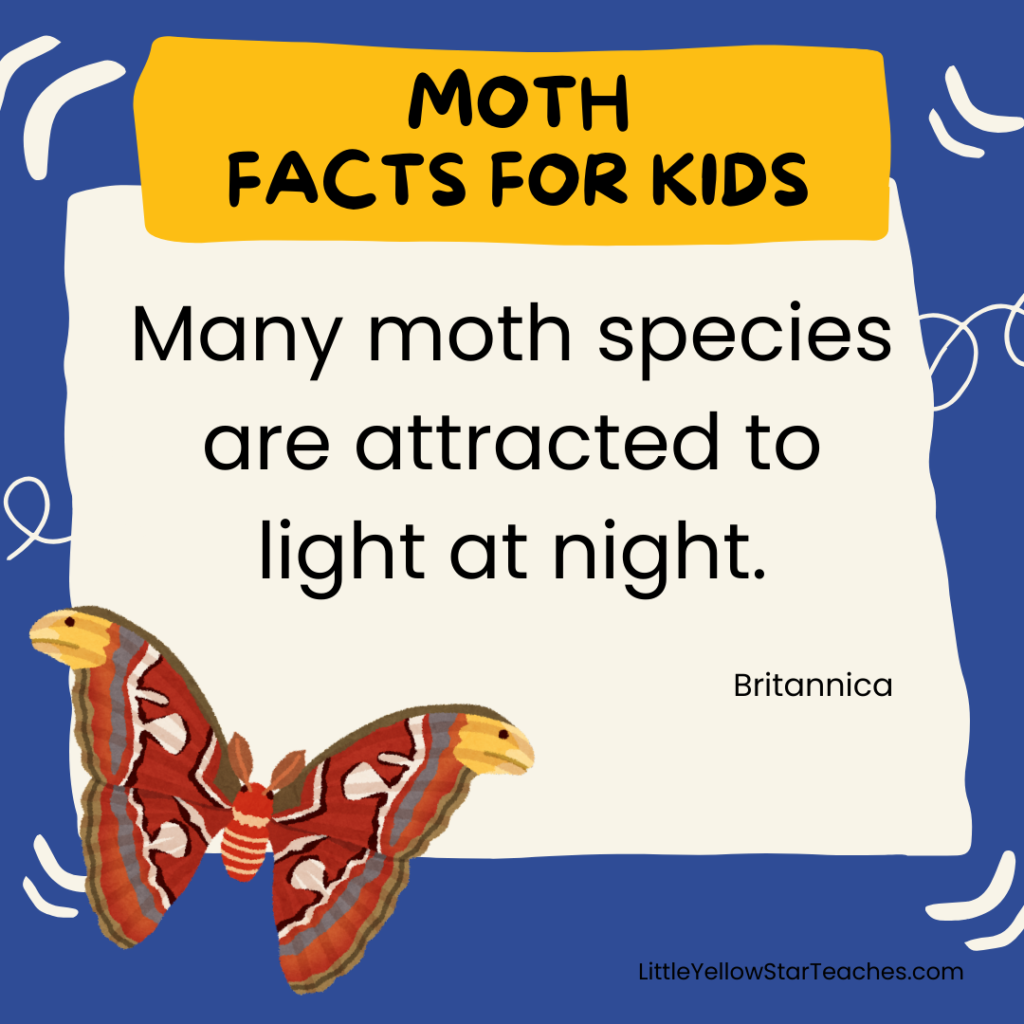
10. Many moth species are attracted to light at night.
You may have seen moths flying around porch lights at night. Scientists think moths may use the moon for navigation, which can make artificial lights confusing for them.
Source: Britannica
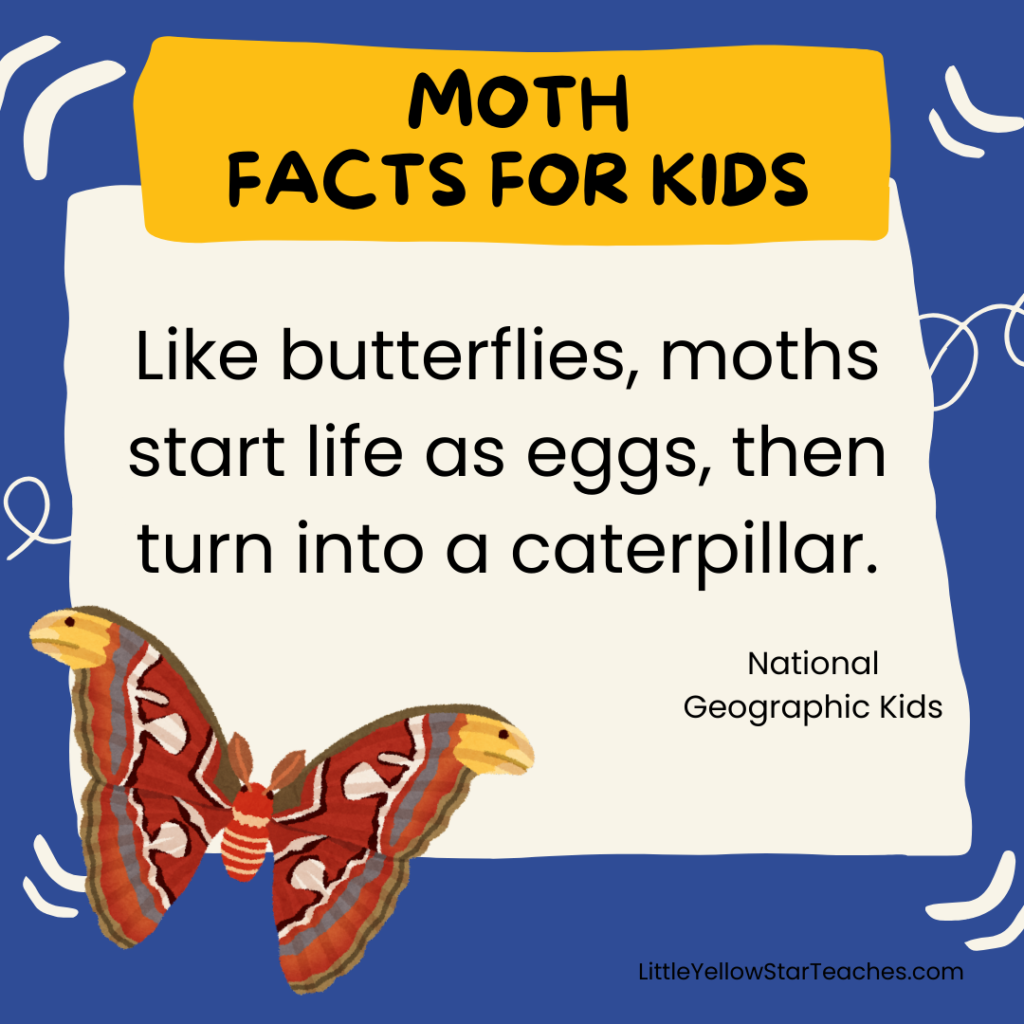
11. Like butterflies, moths start life as eggs, then turn into a caterpillar.
Moths begin life as eggs that hatch into caterpillars. After growing, the caterpillar forms a cocoon or chrysalis and eventually emerges as an adult moth.
Source: National Geographic Kids
Additional Resources
Moth Related Vocabulary Words
Learn these important moth words:
- Nocturnal – Active during the night
- Caterpillar – The larva stage of a moth
- Cocoon – The protective case where some moth caterpillars transform
- Metamorphosis – The process of changing from caterpillar to adult moth
- Camouflage – Colors or patterns that help moths blend into their surroundings
- Lepidoptera – The scientific group that includes moths and butterflies
Moth Activity Ideas For Kids
Bring moth facts for kids to life with these fun activities:
- Moth Craft – Create a colorful moth using paper, paint, or recycled materials
- Nighttime Observation Walk – Look for moths around outdoor lights at night
- Moth Life Cycle Project – Draw or build the stages of a moth’s life
- Symmetry Art – Design moth wings using symmetrical patterns
- Light Attraction Experiment – Observe which insects are attracted to light
- Nature Journal – Sketch moths or other insects you find outside
Moth Related Stories and Myths
Moths appear in many stories and cultural traditions:
- The Moth and the Flame – A famous story about curiosity and attraction to light
- Luna Moth Legends – Stories about the beautiful green luna moth as a symbol of transformation
- Night Garden Tales – Stories where moths pollinate flowers under the moonlight
- Nature Transformation Stories – Tales inspired by the amazing life cycle of moths
- Moonlight Fairy Stories – Magical stories where moths guide fairies through the night
- Insect Adventure Stories – Books featuring moths exploring forests and gardens
What’s Your Favorite Moth Fact?
Moths are fascinating insects that play an important role in nature, especially as nighttime pollinators. Now that you know these moth facts for kids, you can watch for moths at night, try fun activities, and learn more about the incredible world of insects. Keep exploring nature—there are always more exciting facts for kids waiting to be discovered!
Bye for now,
Prima from LittleYellowStar
* * *
Other Blog Posts That You Might Enjoy:
- 15 Minutes Daily Social And Emotional Learning Activities For The Classroom (SEL Made Easy)
- 11 Classroom Essential First Year Teacher Must Haves That Won’t Break The Bank
- Meaningful And Fun Back To School Activity: Create A Classroom Wreath!