Spring Read Aloud Lesson & Activities: Seasons & Change
***Disclosure: This post contains an Amazon affiliate link that at no additional cost to you, I may earn a small commission when you purchase through the link from my blog. Thank you for your support!
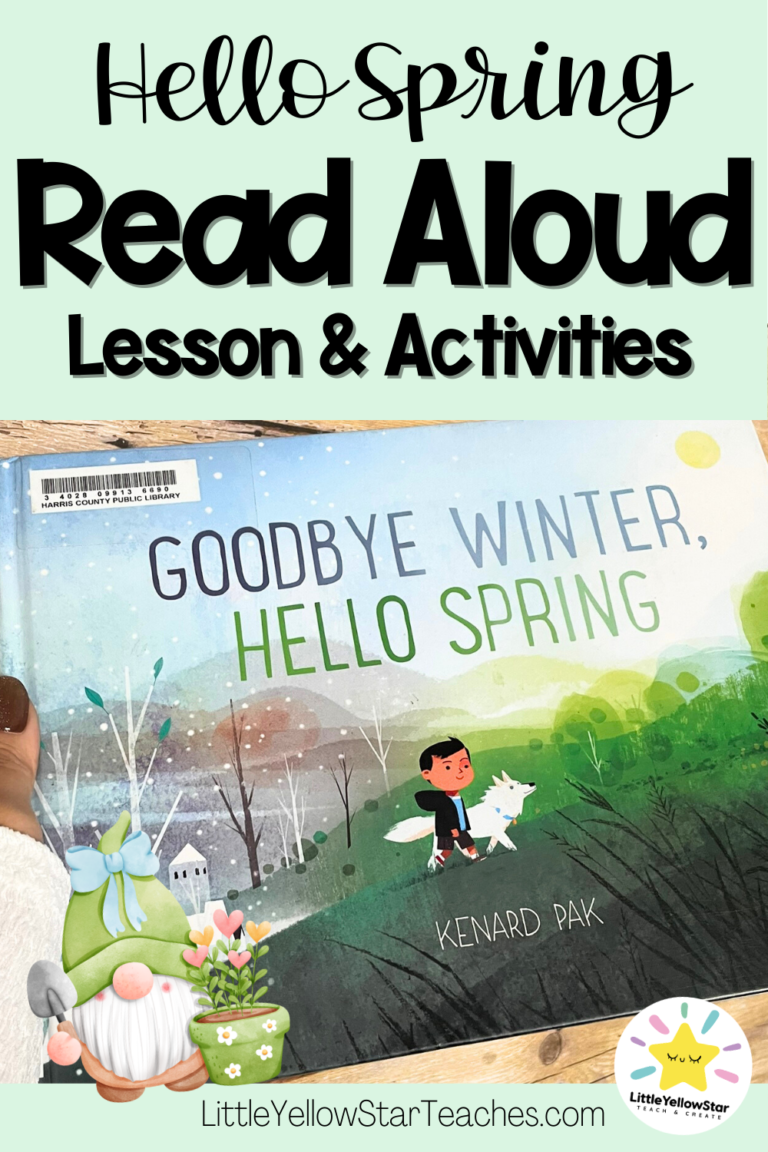
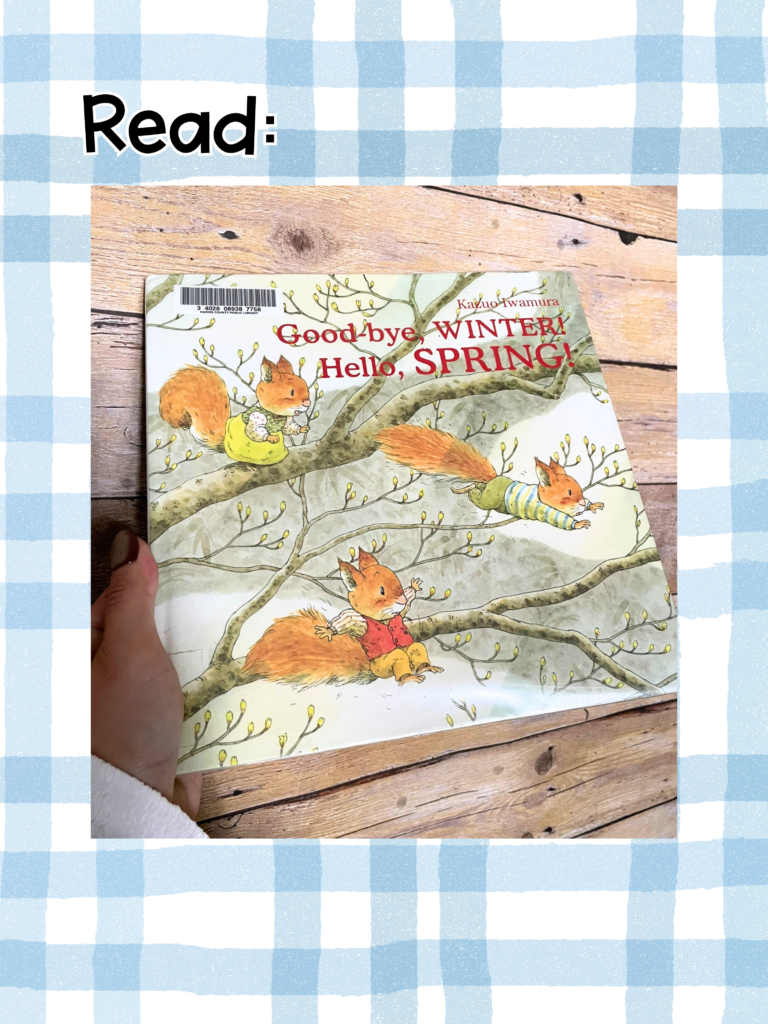
There’s something quietly magical about the moment winter loosens its grip and tiny signs of spring begin to peek through. If you’re looking for a gentle, observation-rich read-aloud that helps students notice change, patterns, and seasonal beauty, this story is a lovely choice. Today I’m sharing how to use Good-bye, Winter! Hello, Spring! by Kazuo Iwamura** to explore seasonal transitions, nature observation, and descriptive writing through a simple flip book craft.
“Good-bye, Winter! Hello, Spring!” Overview
Good-bye, Winter! Hello, Spring! follows a group of curious animal friends as they wander through a forest noticing small changes that signal the arrival of spring. Melting snow, budding plants, and returning colors slowly transform the landscape.
With soft illustrations and minimal text, this book encourages students to slow down, observe carefully, and appreciate how nature changes little by little.
Read-Aloud Lesson Plan: Noticing Seasons & Change
Students will identify signs of winter and spring and describe how plants, animals, and environments change with the seasons.
Pre-Reading
Show the cover and invite predictions.
Questions to Ask:
- What season do you think the story starts in?
- What clues do you see?
- What do you know about winter and spring?
During Reading
Pause often to notice details in the illustrations.
Questions to Ask:
- What signs show winter is ending?
- What new things appear as spring begins?
- How do the animals explore the changing world?
- What colors do you notice more in spring?
Encourage students to use descriptive words like cold, warm, bright, soft, green, and colorful.
Post Reading
Reflect on similarities and differences.
Questions to Ask:
- How is spring different from winter?
- What is your favorite sign of spring?
- Why do seasons change?
- How do plants and animals prepare for spring?
Grab these free resources to make your teaching life easier!

🌷 Spring Writing Prompts Center Set – Seasonal Writing Activity for Kids
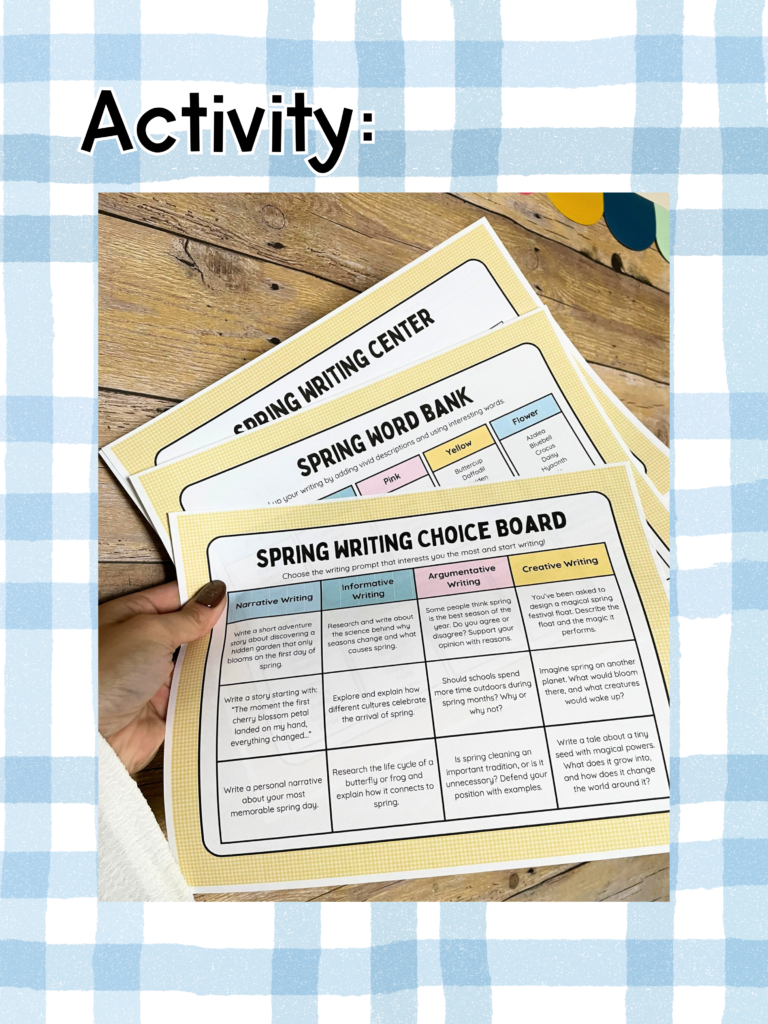
In this activity, students will rotate through a Spring Writing Center filled with engaging prompts that spark imagination, storytelling, and descriptive writing. With the support of a spring word mat, clear writing center instructions, and themed writing paper, students will independently practice writing skills while celebrating the magic of the season.
This center is perfect for literacy rotations, morning work, early finishers, or small group instruction.
Materials Needed:
- Spring Writing Prompts Cards (print & laminate for durability)
- Spring Word Mat (seasonal vocabulary support)
- Writing Center Instruction Card
- Spring-Themed Writing Paper (primary & lined options)
- Pencils, crayons, markers
- (optional) Clipboards
- (optional) Spring decor for the writing area
Instructions:
- Writing Center Setup:
- Create a cozy spring-themed writing space. Add paper flowers, greenery, or soft pastel decorations to make the area inviting. Place the prompt cards in a basket or ring, and keep the word mat easily accessible on the table.
- Print and laminate the Spring Writing Prompt Cards and Word Mats for durability.
- Place prompt cards in a small bin, envelope, or on a ring for easy access.
- Display the Writing Center Instruction Card at the center.
- Provide a stack of writing paper options so students can choose the format that matches their writing level.
- Stock the center with pencils and coloring supplies.
- (Optional) Add simple spring visuals (flowers, butterflies, pastel colors) to make the center inviting.
- Introduce the Center:
- Explain that writing centers help us practice becoming stronger writers. Today, they’ll use their imaginations to write about spring adventures, animals, weather, gardens, and more.
- Model how to:
- Select a prompt
- Use the word mat for support
- Expand a simple sentence into a detailed paragraph
- For example:
- Instead of writing “I saw a flower,” model expanding it to:
- “I saw a bright pink flower growing in the warm sunshine after the rain.”
- Explain that writing centers help us practice becoming stronger writers. Today, they’ll use their imaginations to write about spring adventures, animals, weather, gardens, and more.
🌼 Differentiation:
- Support:
- Provide sentence starters or mini word banks.
- Allow drawing before writing.
- Offer verbal rehearsal before students begin writing.
- On-Level:
- Encourage use of descriptive words and complete sentences.
- Require a minimum number of sentences.
- Challenge:
- Ask students to include dialogue.
- Add a problem and solution to their story.
- Require editing for stronger word choices.
- Multilingual Learners:
- Use picture-supported word mats.
- Pair with a partner for brainstorming.
- Allow oral storytelling before writing.
Remember, you can pin this blog post for future reference.
Cross-Subject Integration:
- 🌱 Science: Track daily weather and look for real-life signs of spring outside.
- 🎨 Art: Paint winter and spring trees using different colors and textures.
- 💬 SEL: Talk about how change can feel hard at first but can bring new, good things.

Final Thoughts
Good-bye, Winter! Hello, Spring! gently reminds students that change doesn’t always happen all at once. Sometimes it arrives quietly, one tiny sign at a time.
I’d love to see your Season Flip Books! Tag me on Instagram @LittleYellowStarTeaches so I can celebrate your seasonal scientists.
Here’s to noticing little wonders and welcoming new beginnings. ❄️🌸
Prima at LittleYellowStar
* * *

Other Blog Posts That You Might Enjoy:
- 15 Minutes Daily Social And Emotional Learning Activities For The Classroom (SEL Made Easy)
- How To Offer Growth Mindset Praise Effectively
- 3 Activities To Introduce Growth Mindset