11 Mindfulness Books for Kids
Gentle Stories That Teach Calm, Focus, and Emotional Awareness
In today’s busy world, mindfulness gives children the tools to pause, breathe, and notice the world around them—and inside them. Books about mindfulness help kids explore how to manage emotions, focus their attention, and feel grounded in the present moment.
In this post, I’m sharing my favorite mindfulness books for kids, organized by age group. I’ve also included soothing activities and conversation starters to help children build awareness, kindness, and calm in their daily lives. Let me know which mindful moment becomes your favorite!
***Disclosure: This post contains an Amazon affiliate link that at no additional cost to you, I may earn a small commission when you purchase through the link from my blog. Thank you for your support!
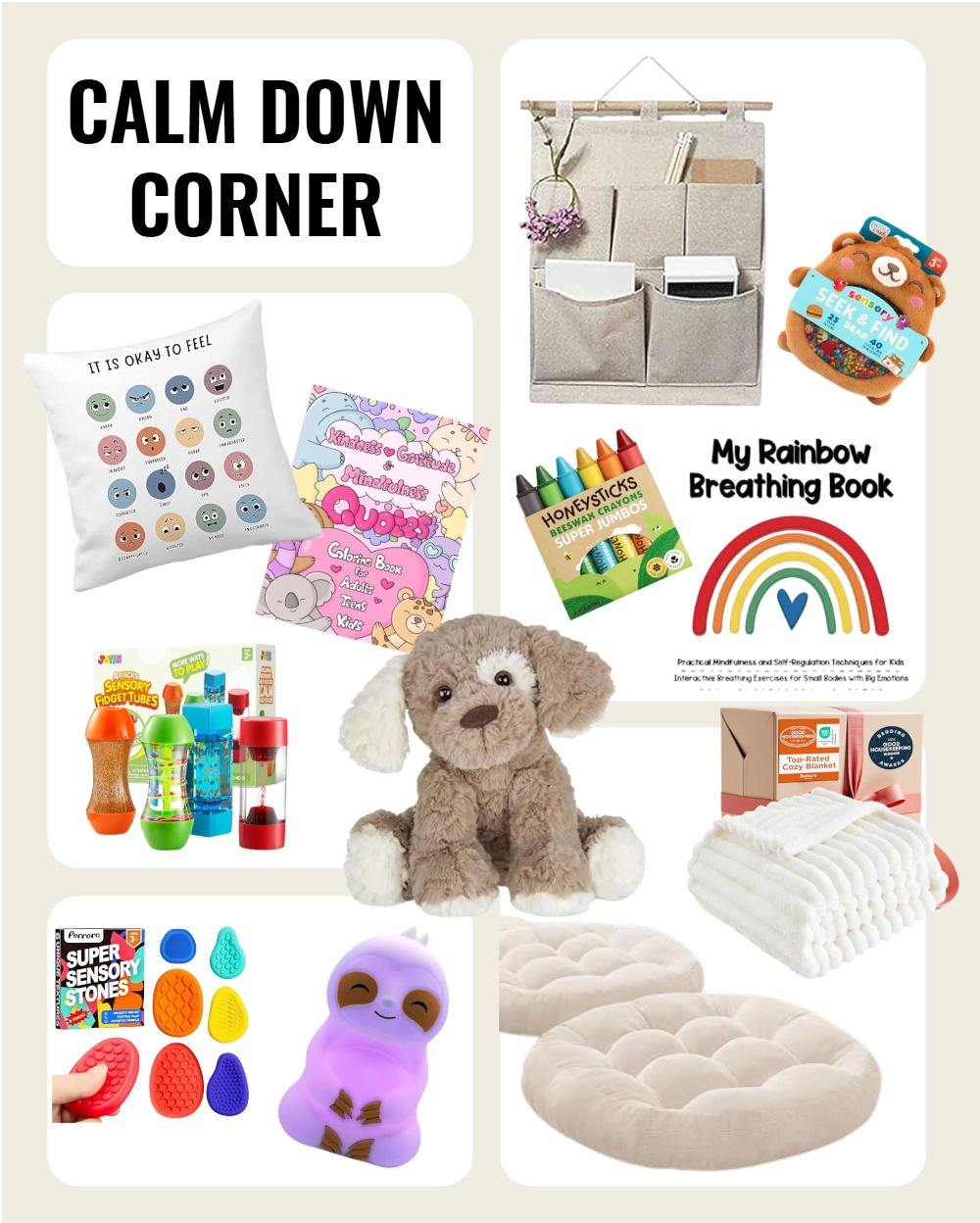
Table of Content
- Why Read Books About Mindfulness?
- The Role of Books in Teaching Kids about Mindfulness
- 11 Mindfulness Books For Children
- What Mindfulness Book(s) Are You Going To Read Later?
Why Read Books About Mindfulness?
Mindfulness books help children learn how to recognize emotions, calm their minds, and build inner strength.
Through simple language, peaceful imagery, and relatable characters, these stories show children how to notice their breath, tune into their senses, and respond to big feelings with care.
Reading about mindfulness supports emotional regulation and self-awareness—skills that benefit children for life.
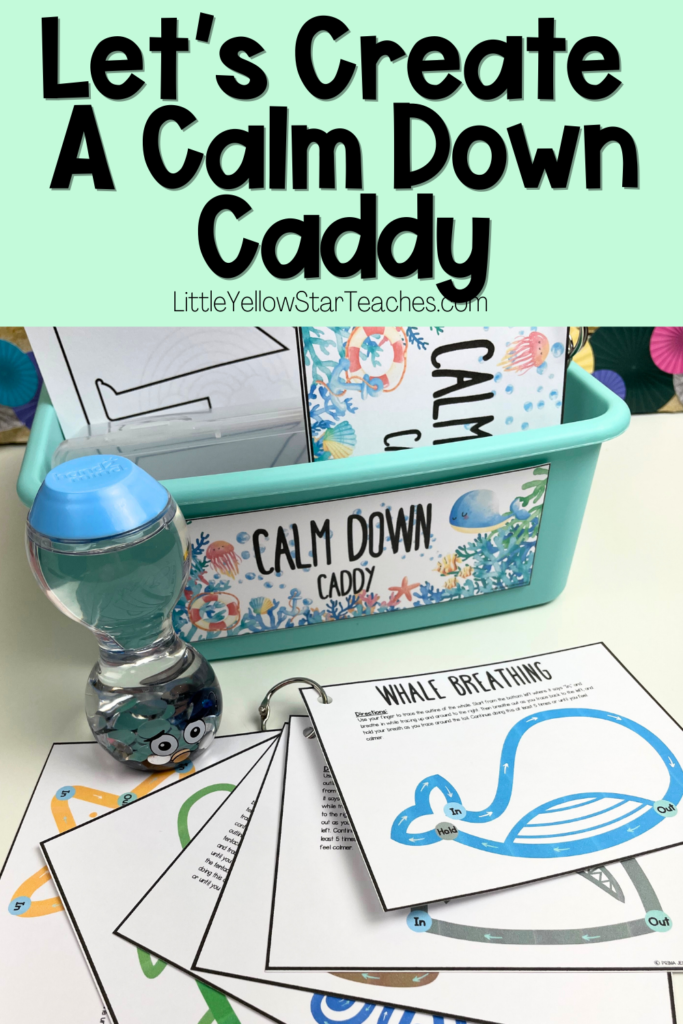
The Role of Books in Teaching Kids about Mindfulness
Books about mindfulness nurture focus, kindness, and compassion.
Characters in these books often take deep breaths when they’re overwhelmed, observe nature closely, or sit quietly to feel more balanced. These gentle stories model how to slow down, listen to yourself, and connect with others from a calm place.
Whether used at home or in the classroom, mindfulness books build a foundation for lifelong well-being.
How to Use Books about Mindfulness with Children
Here are some peaceful and practical ways to make mindfulness part of your reading routine:
- 🌱 Ask Open-Ended Questions: After reading, ask: What helped the character feel calm again? or How can you use your breath when you feel upset? In a group, Turn and Talk helps children share quiet strategies.
- 🧘 Engage in Mindfulness-Themed Activities: Try a mindful breathing exercise (like smelling a flower and blowing out a candle), draw a feelings thermometer, create a “calm corner,” or go on a listening walk to notice sounds.
- 📚 Refer Back to the Books: During transitions or emotional moments, recall a favorite character’s strategy. Say: Remember how the character took a slow breath and counted to five? Let’s try that together.
- 👨👩👧 Involve Other Caregivers: Suggest a bedtime mindfulness story and share a printable breathing technique or gratitude journal page. Encourage families to try a “mindful moment” together each day.!

11 Mindfulness Books For Children
Younger Children (Ages 3-6)
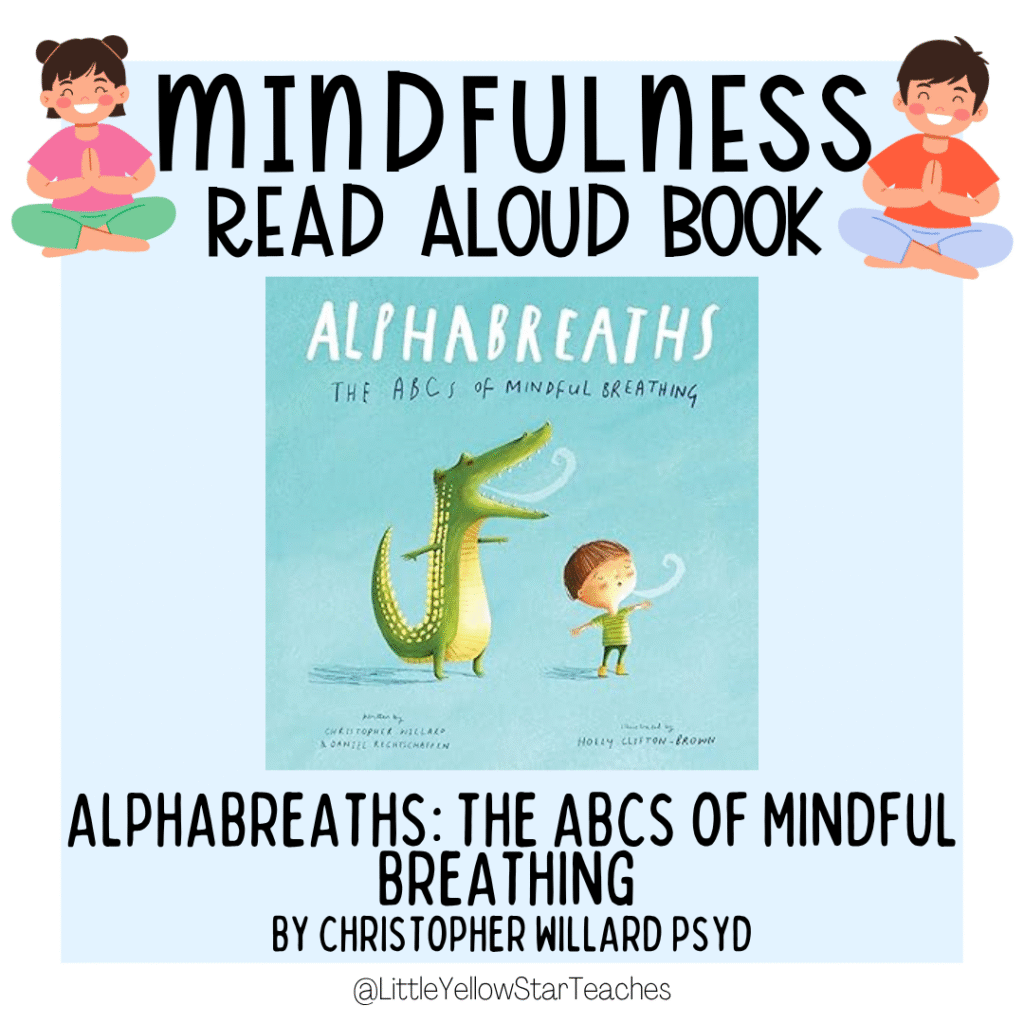
#1 Alphabreaths: The ABCs of Mindful Breathing by Christopher Willard PsyD
🔗 View on Amazon
From “A for Alligator Breath” to “Z for Zzzz Breath,” this alphabet adventure helps kids learn breathing techniques through fun characters.
Activity Suggestion: Pick one letter a day and practice that breath together.
Discussion Questions:
- Which breath was your favorite and why?
- How does breathing help when you feel upset?
- Can you think of your own animal breath?
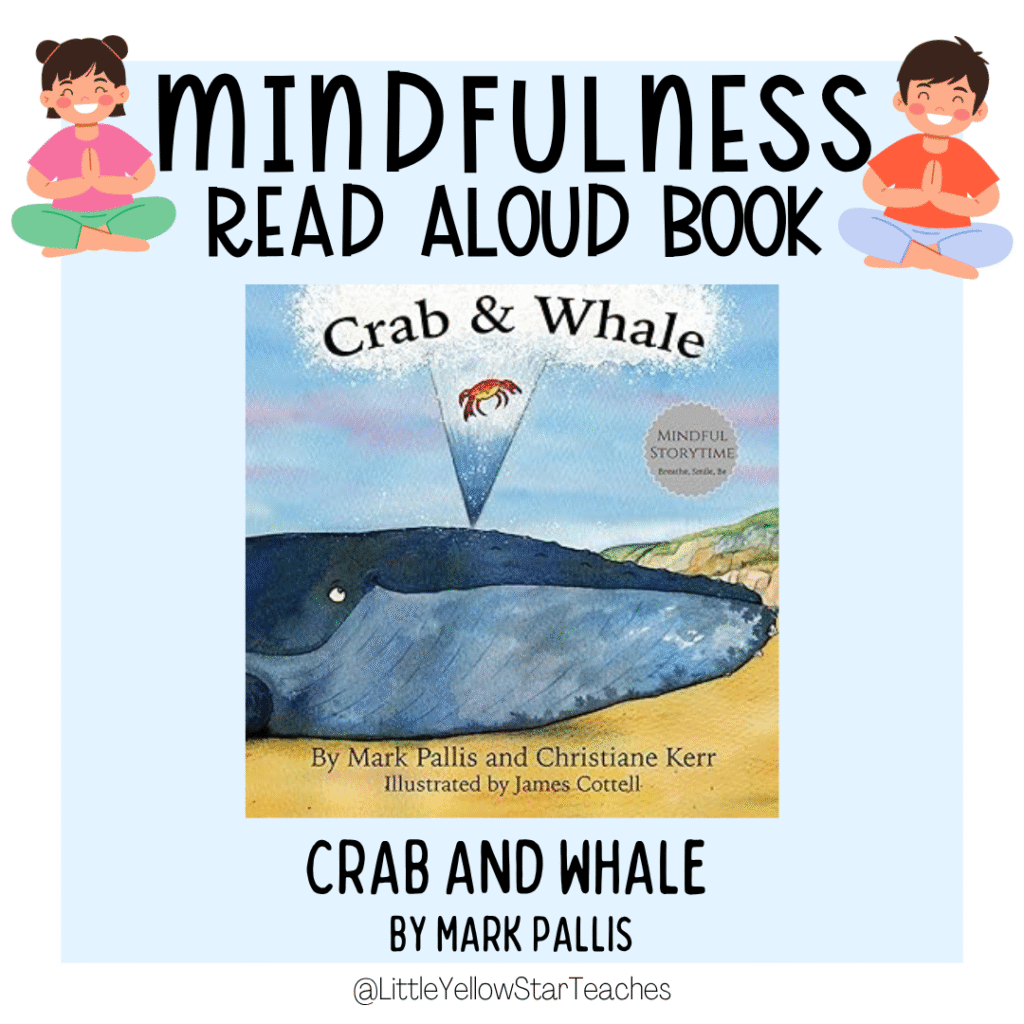
#2 Crab and Whale by Mark Pallis
🔗 View on Amazon
A story about friendship and mindfulness that introduces kids to deep breathing and kindness in a gentle ocean tale.
Activity Suggestion: Pretend to be a whale breathing deeply at the surface of the sea.
Discussion Questions:
- How did the crab help the whale?
- What does it mean to be mindful of someone else?
- How can we show calm and kindness?

#3 Meditation Is an Open Sky by Whitney Stewart
🔗 View on Amazon
Simple meditation exercises help kids relax, focus, and let go of worries like clouds in the sky.
Activity Suggestion: Do a “cloud float” meditation—lie down and imagine your thoughts drifting away.
Discussion Questions:
- How did your body feel after meditating?
- What kinds of thoughts can float away?
- When could you use this kind of meditation?

Lower Elementary Children (Ages 7-9)
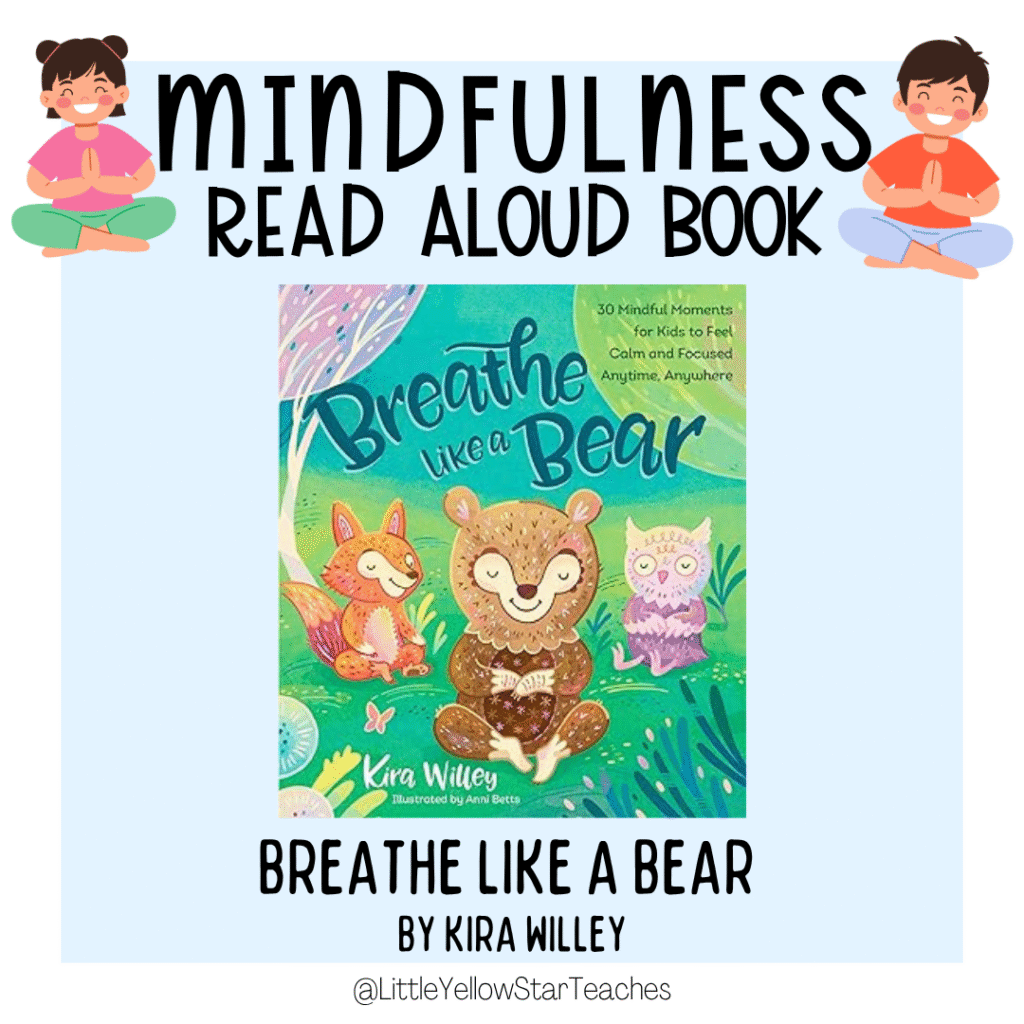
#4 Breathe Like a Bear by Kira Willey
🔗 View on Amazon
A treasure trove of breathing and mindfulness exercises divided into short, fun practices perfect for classroom or home.
Activity Suggestion: Choose one exercise before bedtime each night for a week.
Discussion Questions:
- What’s your favorite breathing exercise?
- When could you use one of these techniques during the day?
- How does your body feel after breathing deeply?

#5 Puppy Mind by Andrew Jordan Nance
🔗 View on Amazon
This story compares a child’s wandering thoughts to a playful puppy—teaching how to bring attention back gently.
Activity Suggestion: Make a “puppy mind” jar—shake glitter in water and watch it settle.
Discussion Questions:
- What does your mind do when you try to focus?
- How can we train our “puppy mind”?
- How do you feel after taking a mindful pause?
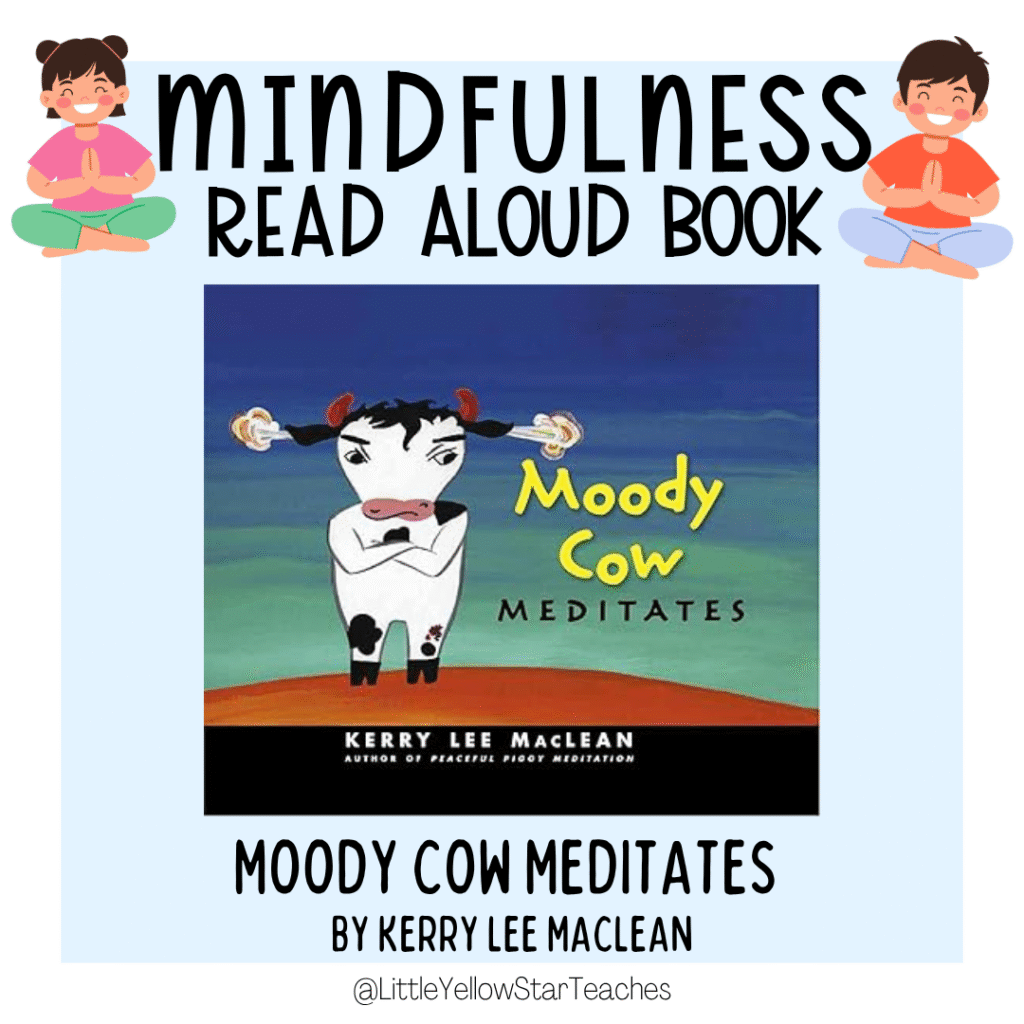
#6 Moody Cow Meditates by Kerry Lee MacLean
🔗 View on Amazon
A cow with a lot of big feelings learns to calm down with meditation after a frustrating day.
Activity Suggestion: Make a calming jar like Moody Cow’s to watch your feelings settle.
Discussion Questions:
- What made the cow feel upset?
- How did meditation help?
- What’s something that helps you feel calm?
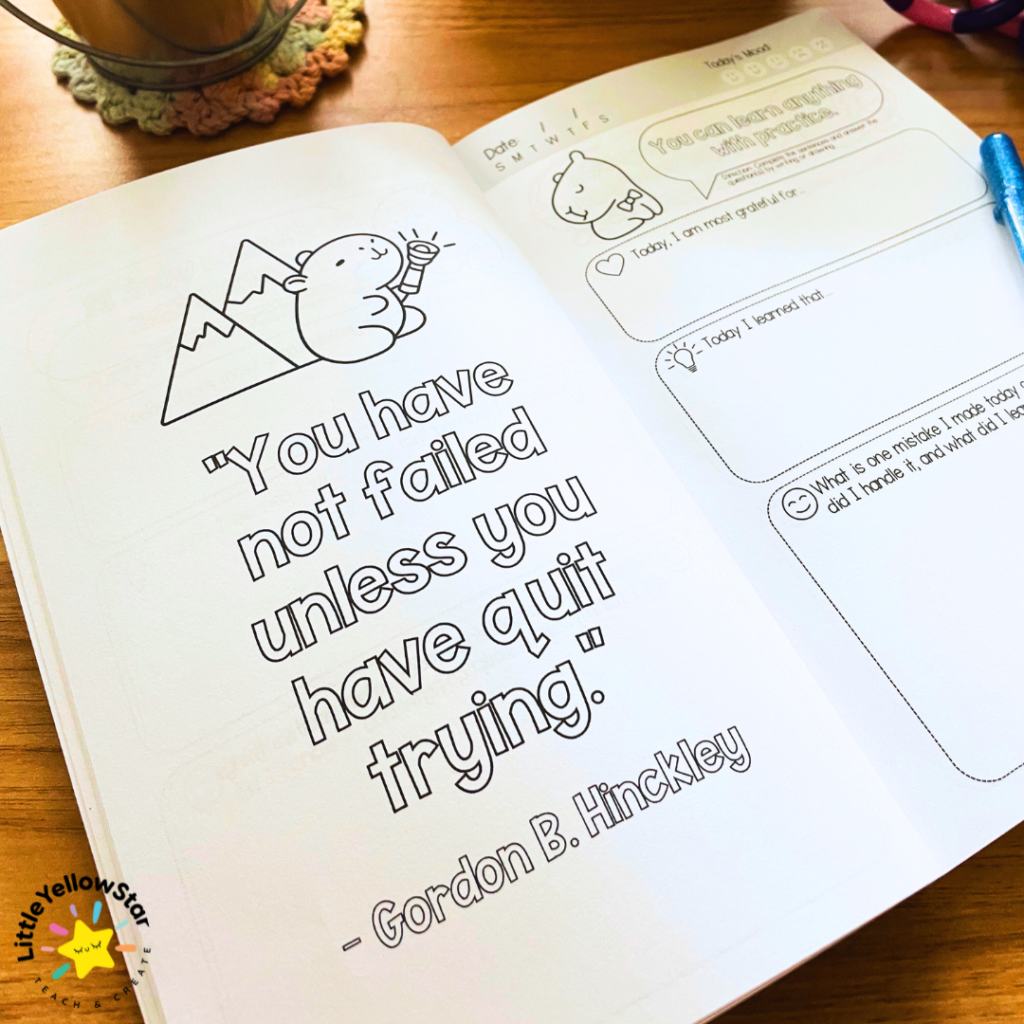
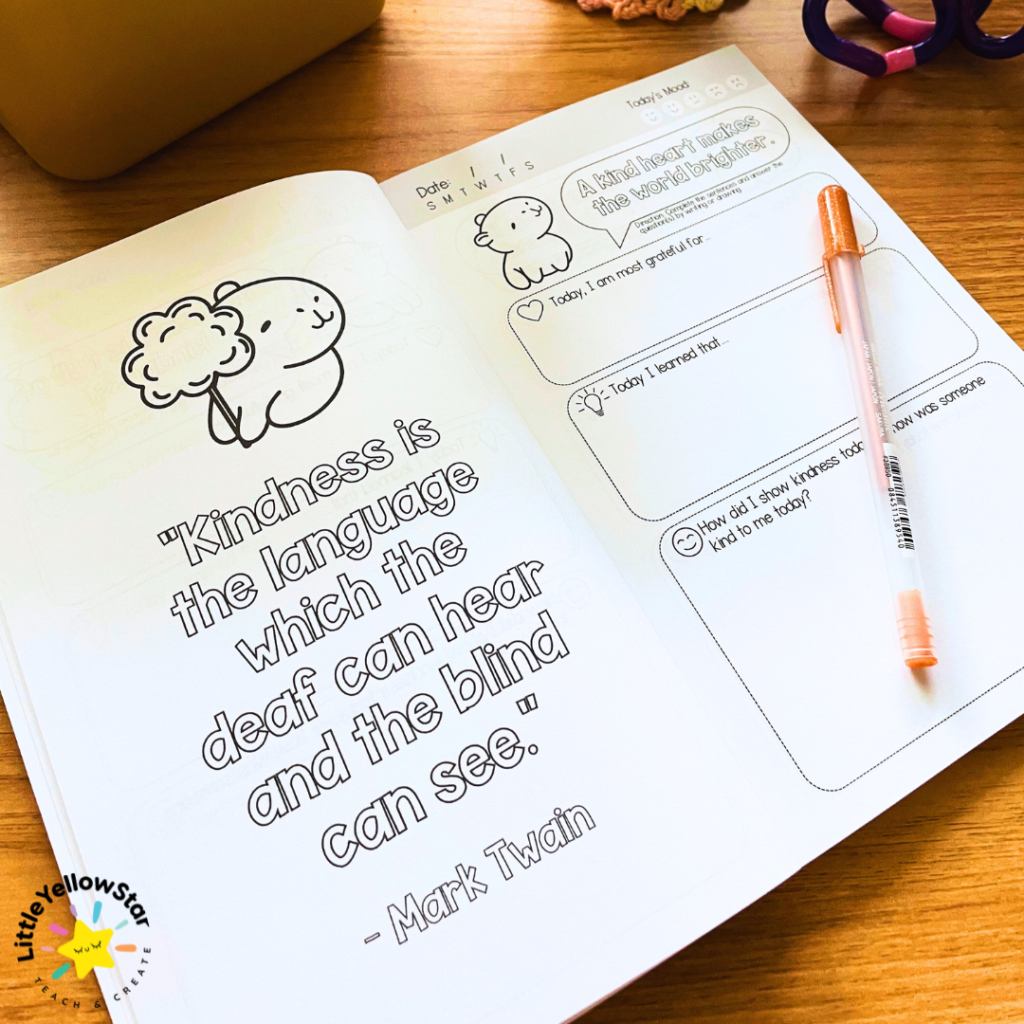
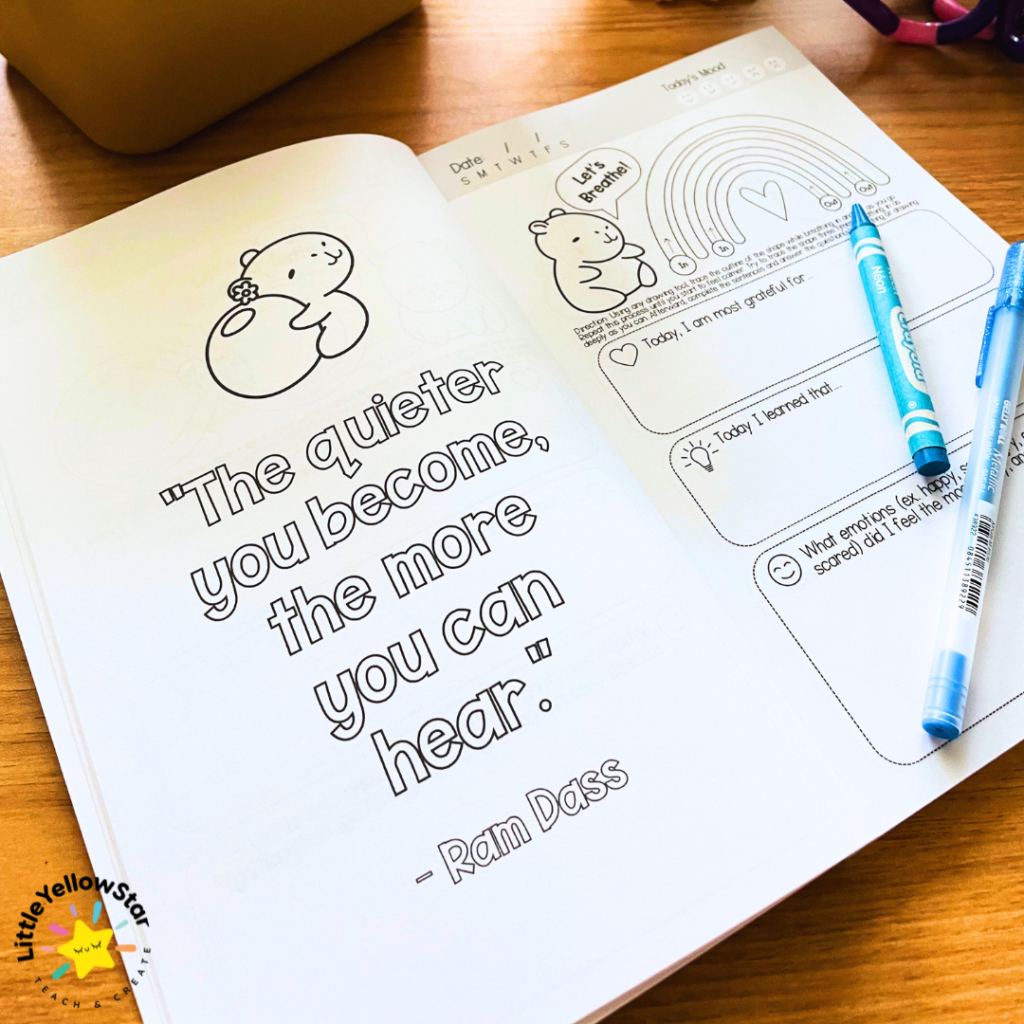
Check Out Capybara-Theme Daily Reflection Journals For Kids!
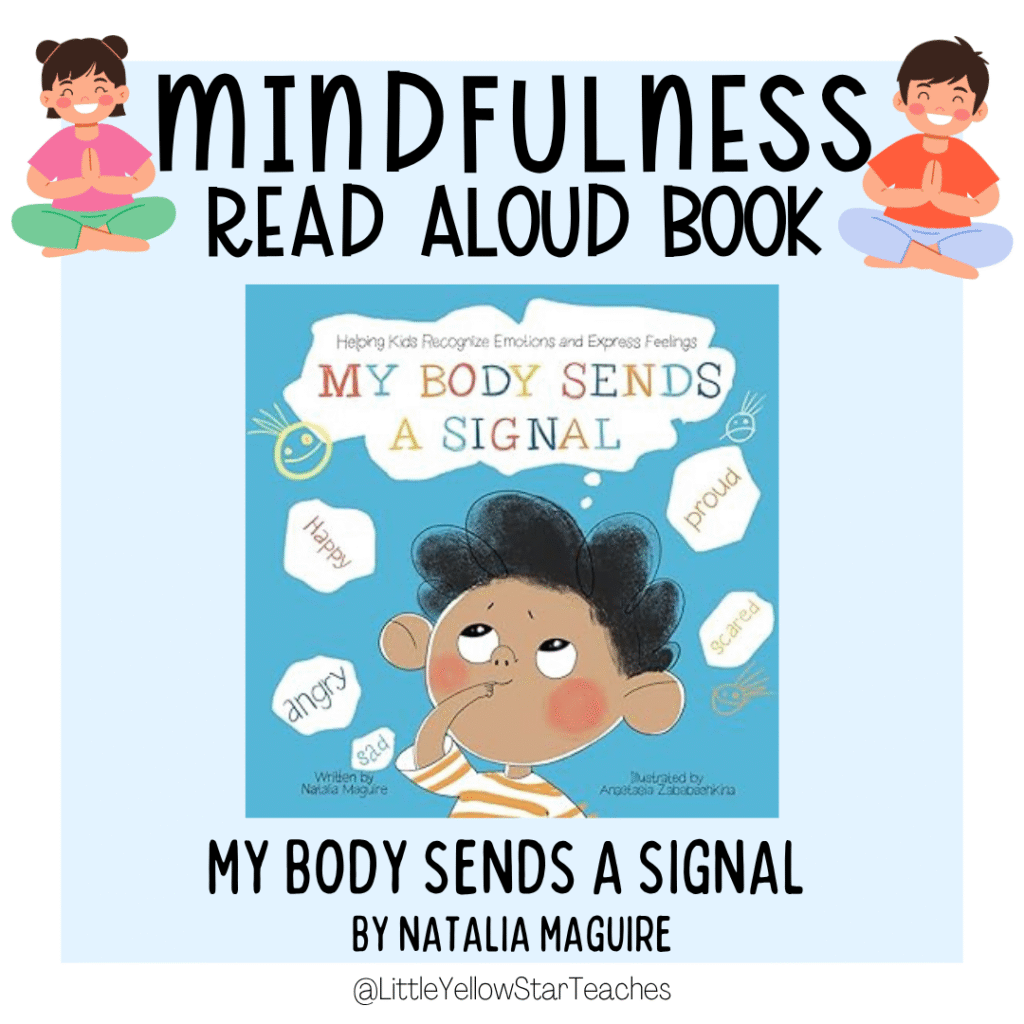
#7 My Body Sends a Signal by Natalia Maguire
🔗 View on Amazon
A child-friendly guide to noticing how our bodies communicate emotions, encouraging healthy coping and awareness.
Activity Suggestion: Draw a “feelings body map” showing where you feel different emotions.
Discussion Questions:
- What signals has your body sent today?
- How can you tell when you need a break?
- What helps your body feel better?
Upper Elementary Children (Ages 9-11)

#8 What Does It Mean to Be Present? by Rana DiOrio
🔗 View on Amazon
Explores the value of living in the moment, being aware, and appreciating what’s around you.
Activity Suggestion: Go on a “present moment walk”—notice five things with each sense.
Discussion Questions:
- What is something you noticed today you hadn’t before?
- What does being present mean to you?
- How does being present help you enjoy life more?
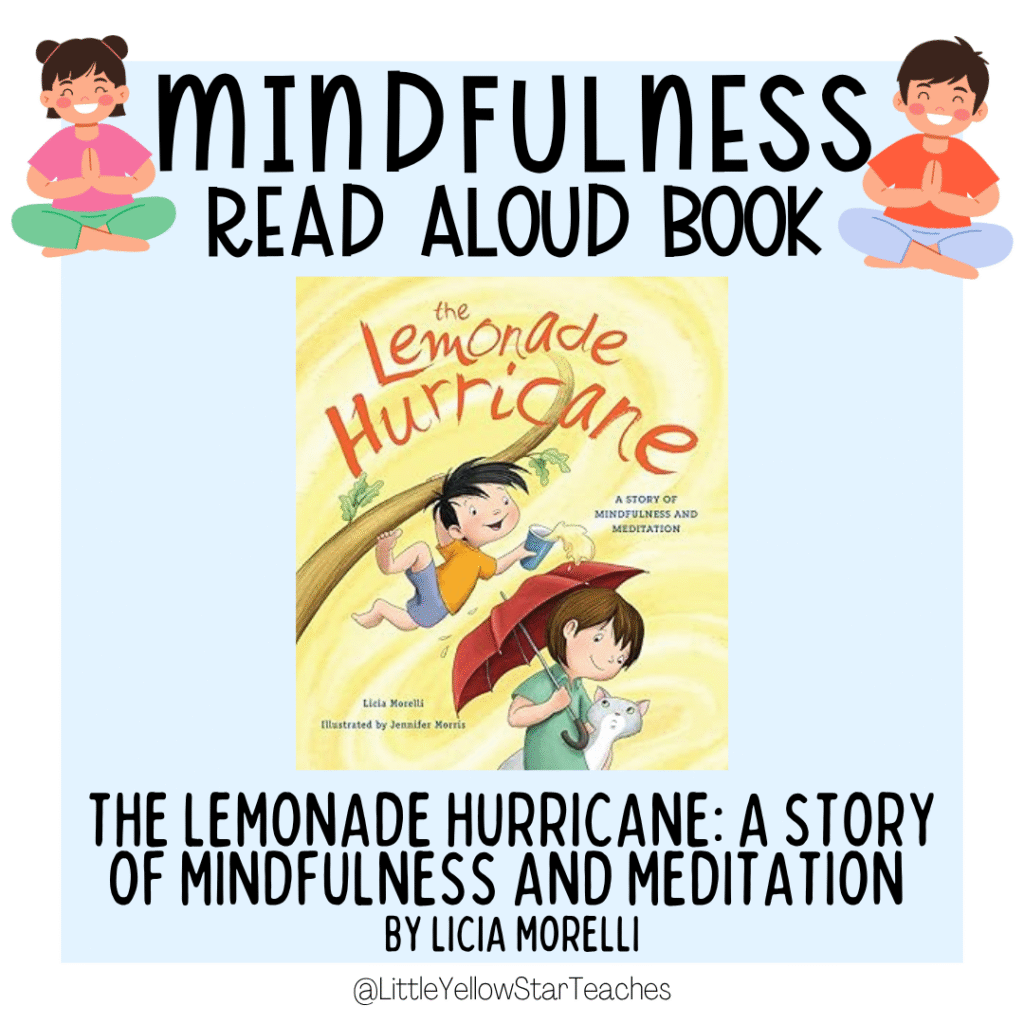
#9 The Lemonade Hurricane by Licia Morelli
🔗 View on Amazon
Henry is a whirlwind of energy until his sister teaches him to calm his storm with meditation.
Activity Suggestion: Create your own “calm-down corner” like Henry’s.
Discussion Questions:
- What makes you feel like a hurricane sometimes?
- How can we help our friends calm down?
- What’s something you do to feel peaceful?


#10 Wild Mindfulness by Laura Larson
🔗 View on Amazon
A forest adventure where kids learn to use all five senses mindfully in nature.
Activity Suggestion: Take a sensory nature walk and record what you see, hear, and smell.
Discussion Questions:
- What does it mean to use your senses mindfully?
- How did the animals show mindfulness?
- What would you add to a wild mindfulness adventure?
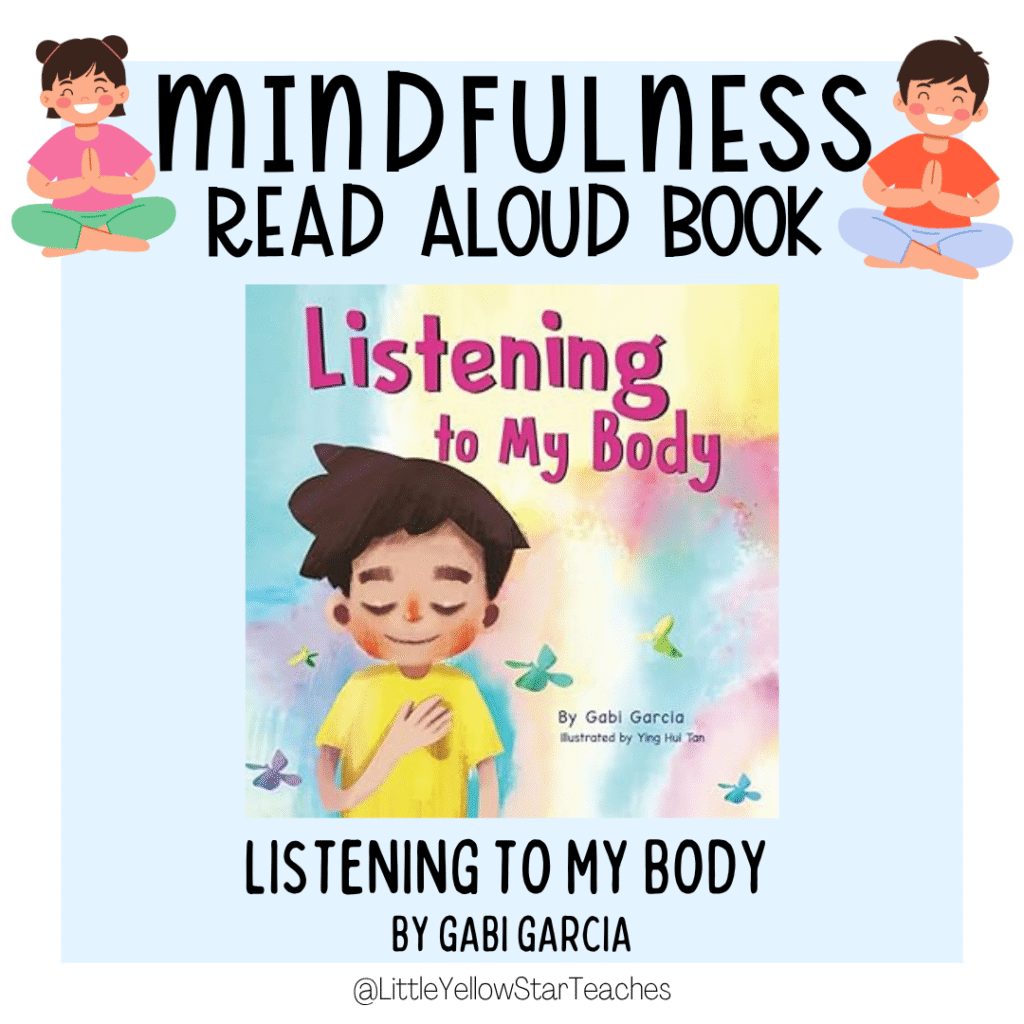
#11 Listening to My Body by Gabi Garcia
🔗 View on Amazon
Teaches emotional literacy by helping kids name and respond to what they feel inside.
Activity Suggestion: Make a feelings wheel with matching body sensations.
Discussion Questions:
- How does your body tell you when you’re excited or upset?
- Why is it important to listen to our bodies?
- What’s one feeling you noticed today?
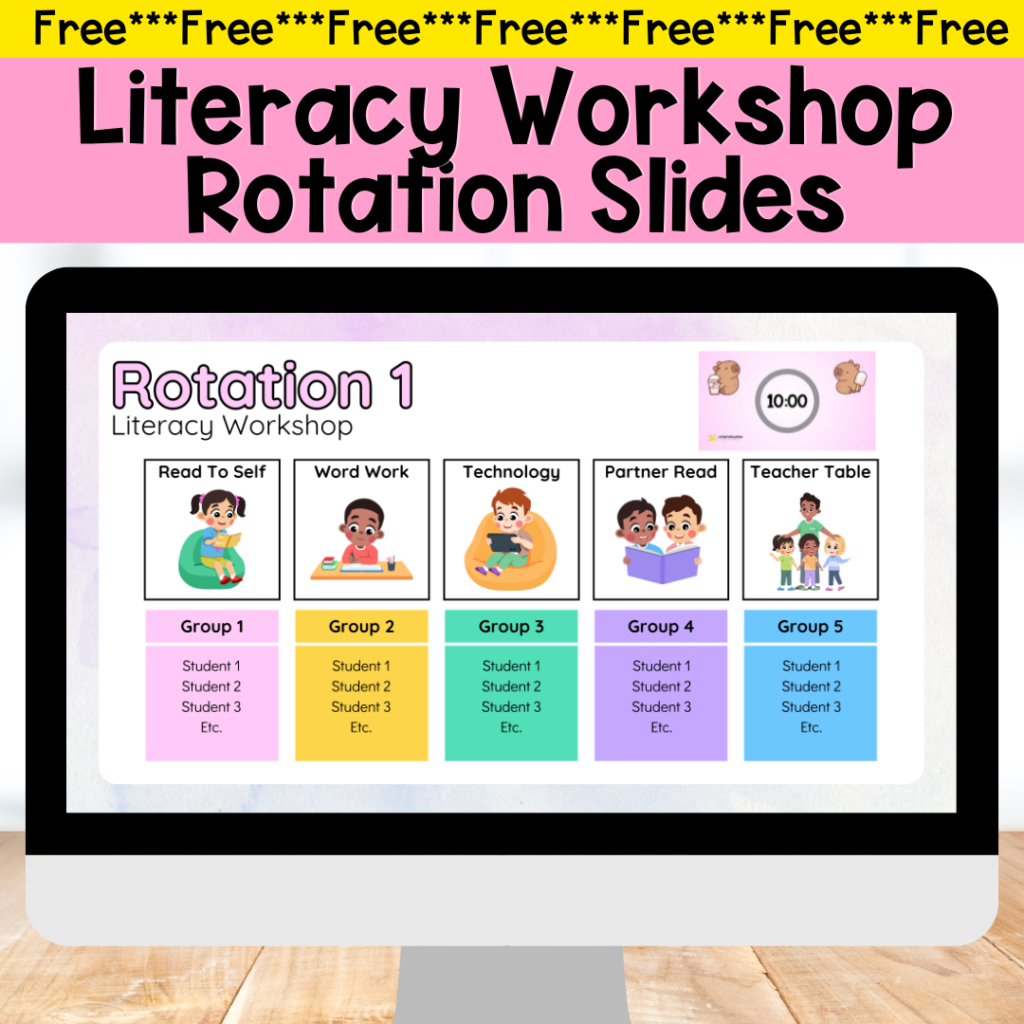
Grab these free resources to make your teaching life easier!

What Mindfulness Book(s) Are You Going To Read Later?
Mindfulness books for kids are like a soft exhale in story form—helping children feel safe, centered, and understood. Whether your reader is new to mindfulness or already practicing, these gentle stories offer valuable tools for a more peaceful day.
Which book will you breathe into next? Tag me on Instagram @LittleYellowStarTeaches and share your favorite mindful stories, calm crafts, or quiet-time tips.
Happy reading!
Prima at LittleYellowStar
* * *
Other Blog Posts That You Might Enjoy:
- 15 Minutes Daily Social And Emotional Learning Activities For The Classroom (SEL Made Easy)
- How To Offer Growth Mindset Praise Effectively
- 3 Activities To Introduce Growth Mindset