Spring Read Aloud Lesson & Activities: Noticing Signs of Spring
***Disclosure: This post contains an Amazon affiliate link that at no additional cost to you, I may earn a small commission when you purchase through the link from my blog. Thank you for your support!
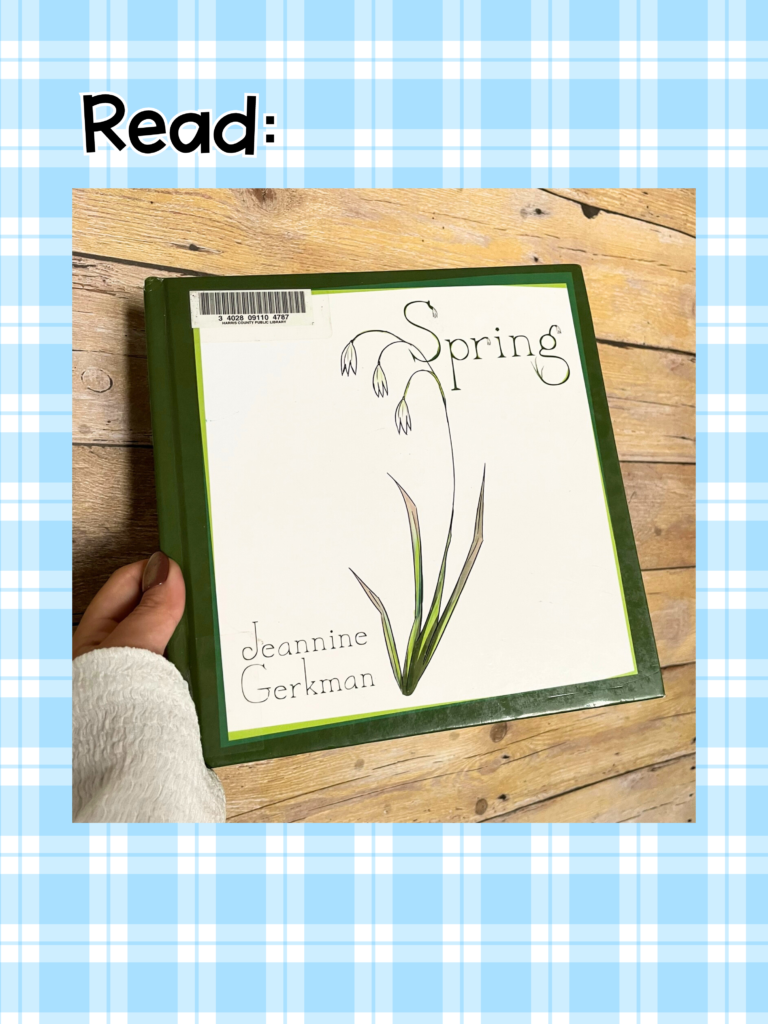
Spring has a gentle way of announcing itself. A bud here. A birdsong there. A splash of color where everything once looked gray. This lesson invites students to slow down, observe closely, and celebrate the tiny signs that signal a brand-new season. Today I’m sharing how to use Spring by Jeannine Gerkman** to explore seasonal changes, sensory details, and descriptive thinking through a fun observation-based craft.
“Spring” Overview
Spring introduces young readers to the sights, sounds, and feelings of the season through simple text and warm illustrations. The book highlights blooming plants, returning animals, and everyday springtime activities that help children recognize how the world changes after winter.
This gentle nonfiction-style read-aloud is perfect for building vocabulary, observation skills, and nature awareness.
Read-Aloud Lesson Plan: Signs of Spring
Objective: Students will identify signs of spring and describe how plants, animals, and people change with the season.
Pre-Reading
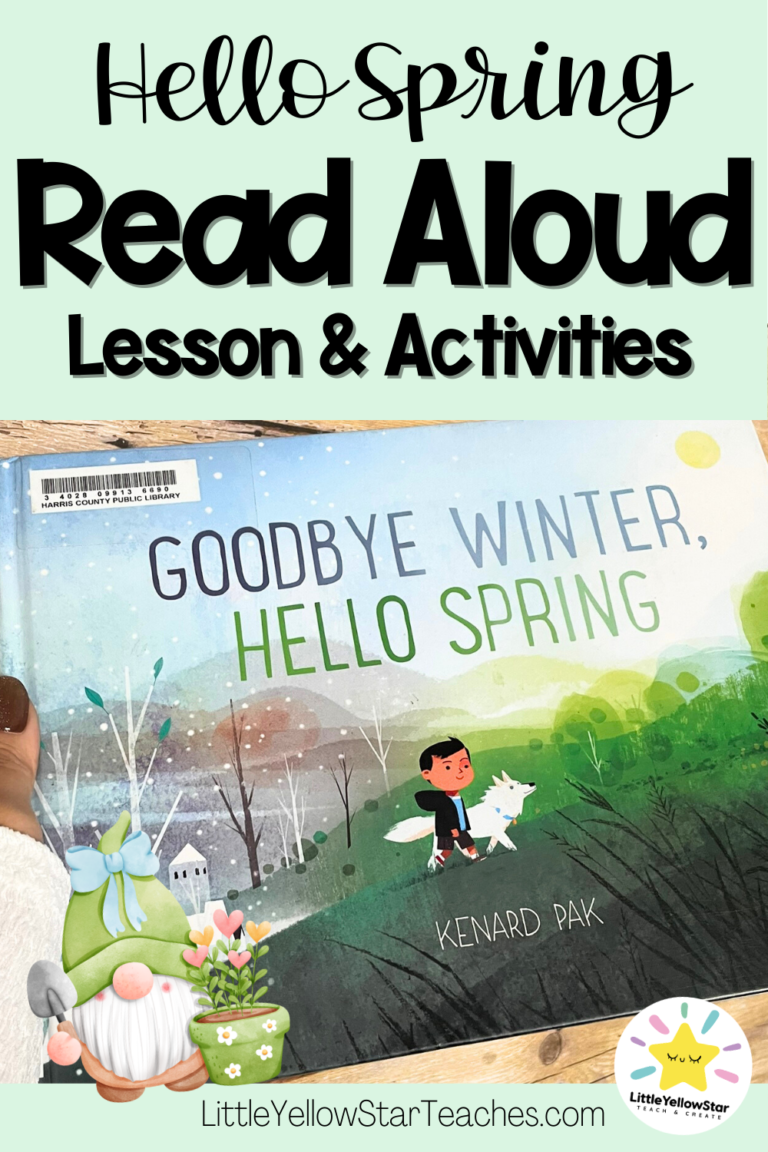
Show the cover and invite students to share what they notice.
Questions to Ask:
- What do you see on the cover?
- What season do you think this book is about?
- What do you already know about spring?
During Reading
Pause to notice details in illustrations.
Questions to Ask:
- What signs tell us that spring is here?
- What changes do you see in plants and animals?
- What colors do you notice in spring?
- What spring activities do people do?
Encourage students to use descriptive words.
Post Reading
Reflect on how spring compares to other seasons.
Questions to Ask:
- How is spring different from winter?
- What is your favorite part of spring?
- How does spring make you feel?
- Why is spring important for plants and animals?
Grab these free resources to make your teaching life easier!

🌸 Spring Acrostic Poem for Kids – Creative Poetry Writing Activity
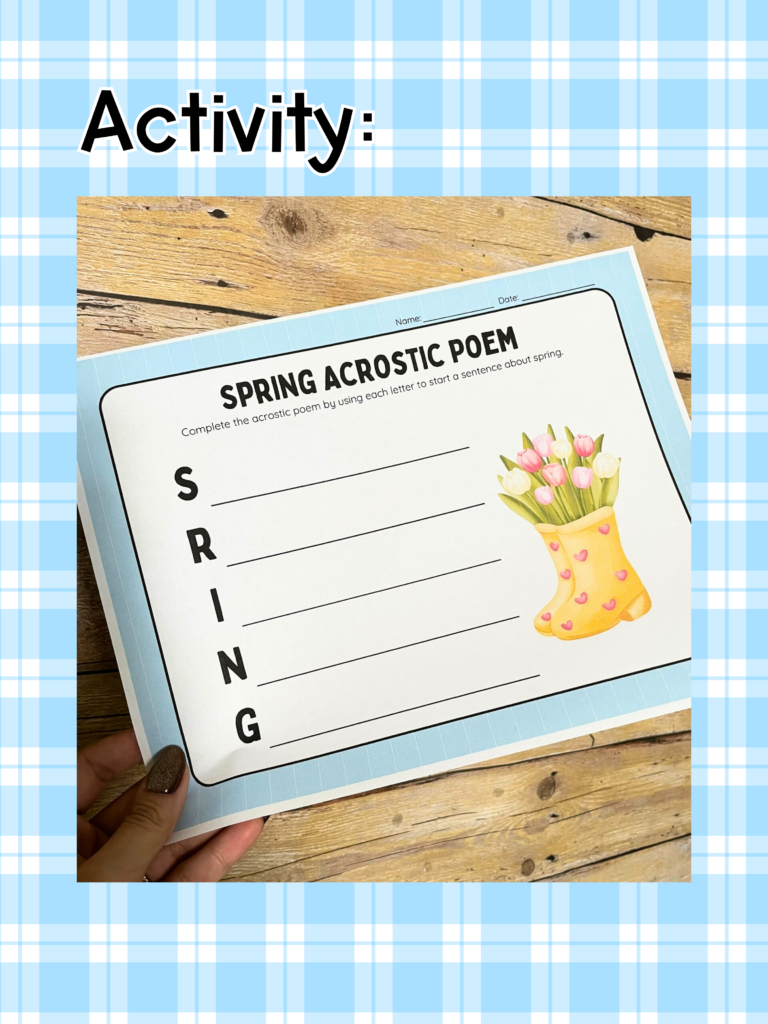
In this activity, students will explore poetry through acrostic poems while celebrating the sights, sounds, and feelings of spring. They’ll brainstorm spring vocabulary, connect words to personal experiences, and create a poem where each letter in the word SPRING (or another spring-themed word) begins a descriptive line.
This low-prep activity builds creativity, vocabulary, and early poetry skills while giving students a joyful way to express what spring means to them.
Materials Needed:
- Writing paper or planning sheets
- Markers, crayons, or colored pencils
- Chart paper for brainstorming
- Large construction paper
- (optional) Spring acrostic poem template
- (optional) Spring word bank
- (optional) Spring-themed stickers or craft supplies
- (optional) Spring Acrostic Poem writing resource
Instructions:
- Introduce Acrostic Poetry: Explain to students that an acrostic poem is a poem where the first letter of each line spells a word vertically. Share an example using the word SPRING, and model how each line describes something about spring (weather, nature, animals, activities, or feelings).
- Brainstorm Spring Ideas: As a class, brainstorm words and phrases connected to spring. Think about:
- Weather (sunny, rainy, breezy)
- Nature (flowers, grass, trees, buds)
- Animals (birds, butterflies, bees)
- Activities (playing outside, gardening, picnics)
- Feelings (happy, hopeful, calm)
- Record ideas on chart paper. If using the Spring Acrostic Poem writing resource, give students the brainstorm sheet to record ideas.
- Plan the Acrostic Poem: Have students write the word SPRING (or another spring word such as FLOWER, BLOOM, or RAIN) vertically on their planning sheet.
- Students choose a word or phrase for each letter that describes spring. Encourage descriptive language and sensory details (what they see, hear, smell, and feel).
- Draft the Poem: Students write one line for each letter, forming a complete acrostic poem. Remind them that poems don’t need to rhyme, but they should make sense and connect to the theme of spring.
- Write the Final Poem: Once drafts are complete, students publish their poems in their best handwriting. Encourage them to add a title.
- Illustrate the Poem: Students draw spring-themed illustrations around or beneath their poem. They may add color, stickers, or small craft elements to bring their poem to life.
- Assembling the Writing Activity: Glue the final poem onto the right side of a large construction paper. Students decorate the front flap with spring drawings and a title. When folded, it becomes a poetry “book.”
- Spring Poetry Showcase: Host a Spring Poetry Gallery Walk where students display their poems. Classmates walk around, read poems, and leave positive comments or compliments.
Differentiation:
- For Emerging Writers:
- Provide a word bank with spring vocabulary.
- Allow students to dictate ideas to an adult or partner.
- Use sentence starters (e.g., “S is for…”)
- For On-Level Writers:
- Encourage students to use adjectives and sensory details.
- Ask students to explain their word choices orally or in writing.
- For Advanced Writers:
- Invite students to write acrostics using longer spring words (BUTTERFLY, GARDEN, RAINBOW).
- Challenge students to include figurative language such as similes or personification.
- Encourage writing a second acrostic poem with a different word.
- For Multilingual Learners:
- Pair with a partner for brainstorming.
- Provide picture-supported word banks.
- Allow use of home language first, then translate with support.
Remember, you can pin this blog post for future reference.
Cross-Subject Integration:
- 🌱 Science: Go outside for a short spring walk and record signs of spring.
- 🎨 Art: Paint spring scenes using bright colors.
- 💬 SEL: Discuss how noticing small changes can make us feel calm and happy.

Final Thoughts
Spring reminds students that big seasonal changes begin with small, beautiful signs. When children learn to notice them, the world becomes a little more magical.
I’d love to see your Spring Senses Wheels! Tag me on Instagram @LittleYellowStarTeaches so I can celebrate your spring observers.
Here’s to fresh air, blooming curiosity, and bright beginnings. 🌸
Prima at LittleYellowStar
* * *

Other Blog Posts That You Might Enjoy:
- 15 Minutes Daily Social And Emotional Learning Activities For The Classroom (SEL Made Easy)
- How To Offer Growth Mindset Praise Effectively
- 3 Activities To Introduce Growth Mindset